Murray Gell-Mann IQ
Murray Gell-Mann's IQ was never published. LifeScore uses about 165 (range 150 to 180) as an editorial marker for the prodigy who entered Yale at 15, proposed quarks and won the 1969 Nobel Prize.
Gell-Mann's IQ is 165. What's yours?
25 questions · about 12 minutes
Think you're smarter than Murray Gell Mann? Try question 1.
Which option completes the grid? One tap, no sign-up.
Key facts
- Estimated IQ
- IQ 165
- Known for
- Quarks and the Eightfold Way
- Lived
- Physicist, 1929–2019
- Basis
- No documented estimate; editorial marker from the record
- Confidence
- Very low. Born after 1850, so outside the Cox 1926 study. No IQ test result is known.
Gell-Mann never published a score. 165 is an editorial marker for a documented child prodigy who classified the subatomic world.
Murray Gell-Mann in brief
Murray Gell-Mann was born in New York in 1929, the son of immigrants. A child prodigy, he entered Yale at 15 and earned his doctorate from MIT at 21. At Caltech from 1955 he brought order to the zoo of new particles, proposing the Eightfold Way and quarks. He won the 1969 Nobel Prize in Physics, later helped found the Santa Fe Institute to study complex systems, and died in 2019.
What was Murray Gell-Mann's IQ?
No test result is known. LifeScore lists about 165 as an editorial marker, range 150 to 180. It rests on documented precocity, his classification of particles, the quark model and the breadth of his interests in languages, history and natural history.
What are quarks?
Quarks are the particles that make up protons and neutrons. Gell-Mann, and independently George Zweig, proposed them in 1964 to explain patterns among particles. Experiments at Stanford in the late 1960s found evidence that protons do have smaller parts inside.
What is the Eightfold Way?
It is Gell-Mann's 1961 scheme for sorting particles into families by their properties, named after the Buddhist path. It predicted a missing particle, the omega-minus, which was found in 1964 with the properties he expected.
Where does the word quark come from?
Gell-Mann had a sound like "kwork" in mind for the new particles, then found the line "Three quarks for Muster Mark!" in James Joyce's Finnegans Wake. The number three fitted, because protons and neutrons each contain three quarks, so he adopted the spelling while keeping his own pronunciation.
How smart was Murray Gell-Mann?
- 01
The Eightfold Way
A 1961 classification of particles that predicted the omega-minus. - 02
Quarks
The 1964 proposal that hadrons are built from smaller particles. - 03
Nobel Prize 1969
Awarded for his contributions to the classification of elementary particles. - 04
Santa Fe Institute
Co-founded the institute for the study of complex systems in 1984.
How Gell-Mann thought
Gell-Mann found order by classification. He arranged dozens of particles into tables, noticed the gaps, and predicted what would fill them. That is pattern completion at the frontier of physics, the same skill a matrix puzzle measures in miniature.
The evidence behind the estimate
An estimate built from the historical record, not a recovered test score.
What supports it
- He entered Yale at 15 and earned a doctorate at 21.
- The Eightfold Way correctly predicted the omega-minus particle.
- He won the 1969 Nobel Prize in Physics alone.
What it cannot prove
- George Zweig proposed quarks independently at the same time.
- Achievement reflects education, opportunity, persistence and collaboration as well as raw reasoning ability.
- An editorial marker is a comparison aid built from achievement, not a measurement, and two careful readers could place it ten points apart.
Gell-Mann compared with Feynman, Fermi, Dirac
| Figure | Estimate | Range |
|---|---|---|
| Murray Gell-Mann | 165 | 150–180 |
| Richard Feynman | 160+ | 145–170 |
| Enrico Fermi | 160+ | 150–170 |
| Paul Dirac | 165+ | 155–175 |
How would you score?
Where would you land next to Murray Gell-Mann?
Murray Gell-Mann's 165 is an estimate from the historical record, with a working range of 150 to 180. On the standard IQ scale an IQ of 165 sits at the 99.99926th percentile: about 1 in 136,000 people score that high. Nobody can test Gell-Mann now. You can find out where you sit on the same scale.
- 100Average adult50th percentile
- 130Gifted linetop 2%, about 1 in 44
- 165Gell-Mann's99.99926th percentile, about 1 in 136,000
- ?Youscored on the same scale
25 questions · about 12 minutes
Psychological profile
Murray Gell-Mann's IQ is represented here by a retrospective estimate of 165, not a verified test result. Murray Gell-Mann is best known for exceptional pattern finding. The useful question is what the surviving evidence shows, not whether a precise modern score can be recovered.
Erudite and exacting. A polymath who corrected people's pronunciation of their own names and loved languages and birds.
The dominant archetype here is The Classifier. This archetype shapes decision patterns: what feels natural, what creates friction, and what blind spots tend to emerge.
Estimated IQ is 165. This is a rough estimate based on documented accomplishments and contemporary accounts, not a literal measurement.
Key traits
Pattern Finding
He entered Yale at 15 and finished a PhD at MIT at 21.Precocity
He took the word quark from a line in James Joyce's Finnegans Wake.Erudition
He spoke or read many languages and was a keen birdwatcher.
One thing most people do not know
He and Richard Feynman were colleagues and rivals at Caltech for decades.
Murray Gell-Mann: common questions
Was Murray Gell-Mann a genius?
What personality type was Murray Gell-Mann?
What can we learn from Murray Gell-Mann?
The IQ-style test the NFL used
Murray Gell-Mann's IQ is an estimate. Yours could be real.
Before the draft, NFL teams gave prospects the Wonderlic: 50 questions in 12 minutes, and almost nobody finishes. We collected 241 reported player scores, each with its source. The average working adult scores about 21.
People with similar IQ estimates
Murray Gell-Mann's estimate of 165 falls in the profoundly gifted IQ range. Want your own number rather than Murray's? Take the free IQ test or the quick IQ test. See what an IQ of 165 means, place it on the IQ chart or check how rare it is with the IQ rarity calculator.
- Lev Landau's IQPhysicist, estimated 165165
- Norbert Wiener's IQMathematician, estimated 165165
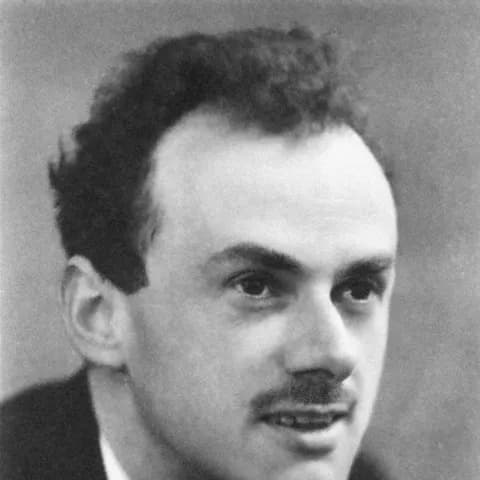 Paul Dirac's IQTheoretical Physicist, estimated 165+165+
- Thomas Young's IQPhysician & Polymath, estimated 165165
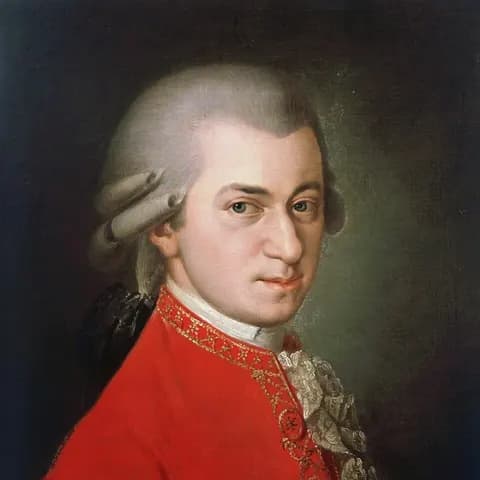 Wolfgang Amadeus Mozart's IQComposer, estimated 165+165+
Rankings that include Gell-Mann
- The highest IQ scientists in historyRanked 11 of 74
- The highest IQ Nobel Prize winnersRanked 2 of 35
Keep exploring
- Abstract Conceptual ThinkingSign of high intelligence
- Rapid Learning SpeedSign of high intelligence
- Sherlock Holmes' IQSherlock Holmes (canon), fan estimate 165
- Bruce Banner's IQMarvel Cinematic Universe, fan estimate 165
People also search for
All 307 historical IQ estimates, ranked with ranges and sources.
Gell-Mann's IQ is 165. What's yours?
Gell-Mann's estimate comes from the historical record. Yours can come from a real test: 25 visual reasoning questions.
25 questions · about 12 minutes
Sources
- Murray Gell-Mann, biographical, Nobel Prize. Official biography covering his education and the 1969 prize.
- Murray Gell-Mann, Encyclopaedia Britannica. Summarises the Eightfold Way and the quark model.
- Cox, C. M. (1926). The Early Mental Traits of Three Hundred Geniuses. Stanford University Press.
- Simonton, D. K. (2009). Genius 101. Springer.
- Cattell, R. B. (1971). Abilities: Their Structure, Growth, and Action. Houghton Mifflin.
Last reviewed October 2026. How we estimate historical IQ