Akbar the Great IQ
Akbar the Great's IQ is unknown; no test or study figure exists. LifeScore uses about 140 (range 125 to 155) as an editorial marker for the Mughal emperor who probably never learned to read but built an empire, a vast library and a policy of tolerance.
Akbar's IQ is 140. What's yours?
25 questions · about 12 minutes
Think you're smarter than Akbar the Great? Try question 1.
Which option completes the grid? One tap, no sign-up.
Key facts
- Estimated IQ
- IQ 140
- Known for
- Expanding the Mughal Empire and religious tolerance
- Lived
- Mughal Emperor, 1542–1605
- Basis
- No documented estimate; editorial marker from the record
- Confidence
- Very low. No IQ test or published estimate exists. Cox's 1926 study left out people whose fame came mainly from birth, such as hereditary rulers, so there is no Cox figure either.
Akbar has no test or estimate. 140 is an editorial marker for an emperor who probably could not read yet built a vast library and empire.
Akbar the Great in brief
Akbar was born in Umarkot, in what is now Pakistan, in 1542, while his father Humayun was in exile. He became emperor at 13 and took full control at about 18. Over nearly 50 years he expanded the Mughal Empire across most of northern and central India, built a new capital at Fatehpur Sikri and reformed taxation. He abolished the tax on non-Muslims and hosted debates among Hindus, Muslims, Jains, Zoroastrians and Christians. He probably never learned to read. He died in 1605.
What was Akbar's IQ?
No figure exists. LifeScore lists about 140 as an editorial marker, range 125 to 155. It rests on his military and administrative success and his intellectual curiosity, which he exercised by listening rather than reading.
Was Akbar illiterate?
Most historians think so; some suggest dyslexia. He had books read aloud to him daily and reportedly remembered what he heard in detail. His case is a reminder that literacy and intelligence are not the same thing.
What was the Din-i Ilahi?
A spiritual movement or circle of disciples Akbar founded around 1582, drawing on several religions. It had few followers and faded after his death, but it reflected his interest in a shared moral ground across faiths.
How smart was Akbar the Great?
- 01
Mughal expansion
Conquered most of northern and central India. - 02
Tax reform
A land revenue system designed with Todar Mal. - 03
Religious tolerance
Abolished the jizya tax on non-Muslims in 1564. - 04
Fatehpur Sikri
Built a new imperial capital.
How Akbar thought
Akbar learned by listening and debating. He gathered scholars of different religions and had them argue in front of him, testing each view. Using structured debate as a tool for thinking is a powerful method, and it worked without written text.
The evidence behind the estimate
An estimate built from the historical record, not a recovered test score.
What supports it
- The Akbarnama, the official chronicle of his reign, survives.
- His library and its illustrated manuscripts are documented.
- His administrative reforms are well recorded.
What it cannot prove
- Court chronicles praised him lavishly.
- A ruler's record mixes personal ability with advisers, inherited power and circumstance.
- An editorial marker is a comparison aid built from achievement, not a measurement, and two careful readers could place it ten points apart.
Akbar compared with Ashoka, Suleiman, Khan
| Figure | Estimate | Range |
|---|---|---|
| Akbar the Great | 140 | 125–155 |
| Ashoka | 135 | 120–150 |
| Suleiman the Magnificent | 140 | 125–155 |
| Genghis Khan | 130+ | 115–140 |
How would you score?
Where would you land next to Akbar the Great?
Akbar the Great's 140 is an estimate from the historical record, with a working range of 125 to 155. On the standard IQ scale an IQ of 140 sits at the 99.62nd percentile: about 1 in 261 people score that high. Nobody can test Akbar now. You can find out where you sit on the same scale.
- 100Average adult50th percentile
- 130Gifted linetop 2%, about 1 in 44
- 140Akbar's99.62nd percentile, about 1 in 261
- ?Youscored on the same scale
25 questions · about 12 minutes
Psychological profile
Akbar the Great's IQ is represented here by a retrospective estimate of 140, not a verified test result. Akbar the Great is best known for exceptional curiosity. The useful question is what the surviving evidence shows, not whether a precise modern score can be recovered.
Curious, tolerant and commanding. A ruler who had books read to him every day and questioned scholars of every faith.
The dominant archetype here is The Curious Emperor. This archetype shapes decision patterns: what feels natural, what creates friction, and what blind spots tend to emerge.
Estimated IQ is 140. This is a rough estimate based on documented accomplishments and contemporary accounts, not a literal measurement.
Key traits
Curiosity
He is widely believed to have been illiterate, possibly dyslexic, yet his library held about 24,000 manuscripts.Strategy
His House of Worship at Fatehpur Sikri hosted debates among many religions.Memory
His finance minister Todar Mal designed a land revenue system used for centuries.
One thing most people do not know
He reportedly ran an experiment raising children without spoken language to see which language they would speak; they did not speak at all.
Akbar the Great: common questions
Was Akbar the Great a genius?
What personality type was Akbar the Great?
What can we learn from Akbar the Great?
The IQ-style test the NFL used
Akbar the Great's IQ is an estimate. Yours could be real.
Before the draft, NFL teams gave prospects the Wonderlic: 50 questions in 12 minutes, and almost nobody finishes. We collected 241 reported player scores, each with its source. The average working adult scores about 21.
People with similar IQ estimates
Akbar the Great's estimate of 140 falls in the genius level IQ range. Want your own number rather than Akbar's? Take the free IQ test or the quick IQ test. See what an IQ of 140 means, place it on the IQ chart or check how rare it is with the IQ rarity calculator.
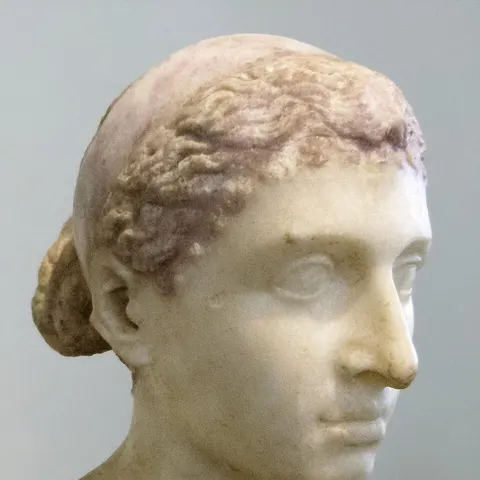 Cleopatra's IQPharaoh of Egypt, estimated 140140
- Margaret Thatcher's IQUK Prime Minister, estimated 140+140+
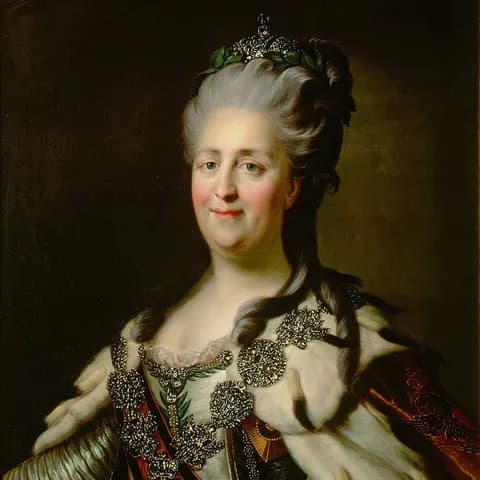 Catherine the Great's IQEmpress of Russia, estimated 140+140+
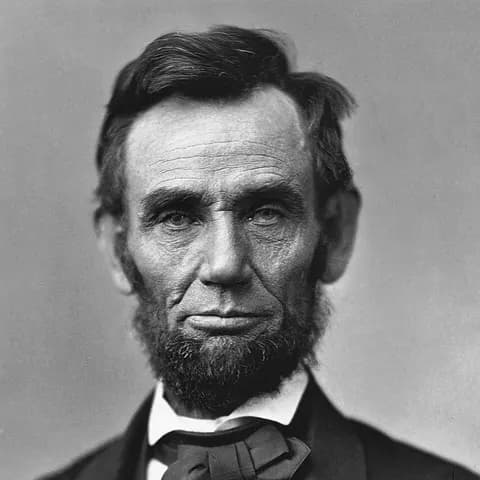 Abraham Lincoln's IQPresident of the United States, estimated 140+140+
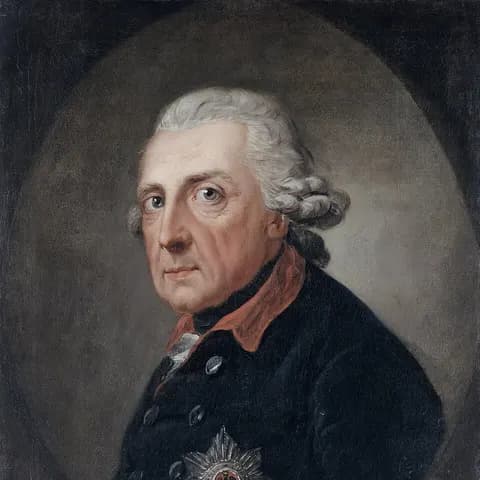 Frederick the Great's IQKing of Prussia, estimated 140+140+
Rankings that include Akbar
- The smartest kings, queens and emperors in historyRanked 6 of 18
Keep exploring
- Complex Problem DecompositionSign of high intelligence
- Creative Divergent ThinkingSign of high intelligence
- Armin Arlert's IQAttack on Titan, fan estimate 140
- Izaya Orihara's IQDurarara!!, fan estimate 140
People also search for
All 307 historical IQ estimates, ranked with ranges and sources.
Akbar's IQ is 140. What's yours?
Akbar's estimate comes from the historical record. Yours can come from a real test: 25 visual reasoning questions.
25 questions · about 12 minutes
Sources
- Akbar, Encyclopaedia Britannica. Summarises his reign, reforms and religious policy.
- Akbar, Wikipedia. Covers his life, literacy and the House of Worship.
- Cox, C. M. (1926). The Early Mental Traits of Three Hundred Geniuses. Stanford University Press.
- Simonton, D. K. (2009). Genius 101. Springer.
- Cattell, R. B. (1971). Abilities: Their Structure, Growth, and Action. Houghton Mifflin.
Last reviewed October 2026. How we estimate historical IQ