Ashoka IQ
Ashoka's IQ is unknown; he ruled over 2,200 years ago. LifeScore uses about 135 (range 120 to 150) as an editorial marker for the Mauryan emperor who renounced war after Kalinga and governed through edicts carved across India.
Ashoka's IQ is 135. What's yours?
25 questions · about 12 minutes
Think you're smarter than Ashoka? Try question 1.
Which option completes the grid? One tap, no sign-up.
Key facts
- Estimated IQ
- IQ 135
- Known for
- Rock edicts and spreading Buddhism after the Kalinga war
- Lived
- Mauryan Emperor, c. 304–232 BC
- Basis
- No documented estimate; editorial marker from the record
- Confidence
- Very low. Lived more than 2,000 years before IQ testing and long before the Cox 1926 period. No test or published estimate exists.
Ashoka has no test or estimate. 135 is an editorial marker for an emperor who ran a subcontinental state and changed its moral course.
Ashoka in brief
Ashoka was a grandson of Chandragupta Maurya, founder of the Mauryan Empire, and ruled most of the Indian subcontinent from about 268 to 232 BC. After a brutal conquest of Kalinga, on the east coast, he renounced war, embraced Buddhism and governed by dhamma, a moral code of non-violence and tolerance. He had his edicts carved on rocks and pillars across his empire, the earliest surviving written documents from India, and sent Buddhist missionaries abroad.
What was Ashoka's IQ?
No figure exists. LifeScore lists about 135 as an editorial marker, range 120 to 150. It rests on running one of the largest empires of the ancient world and devising a new way to govern through public moral messages, though very little is known about his personal life.
What happened at Kalinga?
Around 261 BC Ashoka conquered the kingdom of Kalinga. His own Rock Edict 13 says 100,000 people were killed and 150,000 deported, and expresses deep remorse. Afterwards he renounced wars of conquest.
What are the edicts of Ashoka?
Inscriptions on rocks and polished stone pillars across India, Nepal, Pakistan and Afghanistan. They promote non-violence, respect for all religions, care for animals and good government, and they are the earliest dated writing from India.
How do we know about Ashoka?
Mainly from his own edicts and from later Buddhist chronicles from Sri Lanka and northern India. The chronicles add legends, such as stories of a cruel youth, that cannot be checked. An edict found at Maski in 1915 names him directly, which linked the inscriptions to the king of the chronicles.
How smart was Ashoka?
- 01
The Mauryan Empire
Ruled most of the Indian subcontinent. - 02
The edicts
The earliest surviving written documents from India. - 03
Spread of Buddhism
Sent missions to Sri Lanka and beyond. - 04
Public welfare
Wells, rest houses and medical care for people and animals.
How Ashoka thought
Ashoka reasoned morally and at scale. He saw that persuasion carved in public places could shape behaviour across a huge, diverse empire, and wrote in local languages so people could understand. That is policy thinking about communication.
The evidence behind the estimate
An estimate built from the historical record, not a recovered test score.
What supports it
- His edicts survive in about 33 inscriptions.
- Archaeology confirms the extent of the Mauryan Empire.
- Later Buddhist texts describe his life, though with legends.
What it cannot prove
- Much of his biography comes from later religious texts.
- A ruler's record mixes personal ability with advisers, inherited power and circumstance.
- An editorial marker is a comparison aid built from achievement, not a measurement, and two careful readers could place it ten points apart.
Ashoka compared with Akbar, Alexander, Confucius
| Figure | Estimate | Range |
|---|---|---|
| Ashoka | 135 | 120–150 |
| Akbar the Great | 140 | 125–155 |
| Alexander the Great | 150+ | 135–160 |
| Confucius | 145+ | 130–155 |
How would you score?
Where would you land next to Ashoka?
Ashoka's 135 is an estimate from the historical record, with a working range of 120 to 150. On the standard IQ scale an IQ of 135 sits at the 99th percentile: about 1 in 102 people score that high. Nobody can test Ashoka now. You can find out where you sit on the same scale.
- 100Average adult50th percentile
- 130Gifted linetop 2%, about 1 in 44
- 135Ashoka's99th percentile, about 1 in 102
- ?Youscored on the same scale
25 questions · about 12 minutes
Psychological profile
Ashoka's IQ is represented here by a retrospective estimate of 135, not a verified test result. Ashoka is best known for exceptional moral reasoning. The useful question is what the surviving evidence shows, not whether a precise modern score can be recovered.
Ruthless, then remorseful. A conqueror who turned his empire into a project of moral reform.
The dominant archetype here is The Reformer King. This archetype shapes decision patterns: what feels natural, what creates friction, and what blind spots tend to emerge.
Estimated IQ is 135. This is a rough estimate based on documented accomplishments and contemporary accounts, not a literal measurement.
Key traits
Moral Reasoning
His edicts were written in several scripts and languages, including Greek and Aramaic in the northwest.Administration
His lion capital at Sarnath is now the national emblem of India.Communication
His edicts were forgotten until James Prinsep deciphered the Brahmi script in 1837.
One thing most people do not know
The 24-spoked wheel in the centre of India's flag comes from his pillars.
Ashoka: common questions
Was Ashoka a genius?
What personality type was Ashoka?
What can we learn from Ashoka?
The IQ-style test the NFL used
Ashoka's IQ is an estimate. Yours could be real.
Before the draft, NFL teams gave prospects the Wonderlic: 50 questions in 12 minutes, and almost nobody finishes. We collected 241 reported player scores, each with its source. The average working adult scores about 21.
People with similar IQ estimates
Ashoka's estimate of 135 falls in the gifted IQ range. Want your own number rather than Ashoka's? Take the free IQ test or the quick IQ test. See what an IQ of 135 means, place it on the IQ chart or check how rare it is with the IQ rarity calculator.
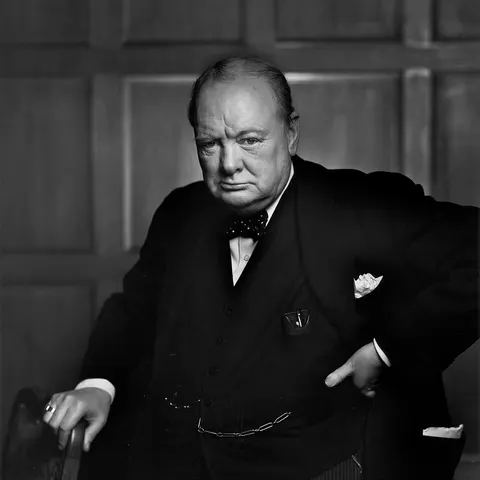 Winston Churchill's IQPrime Minister, estimated 135135
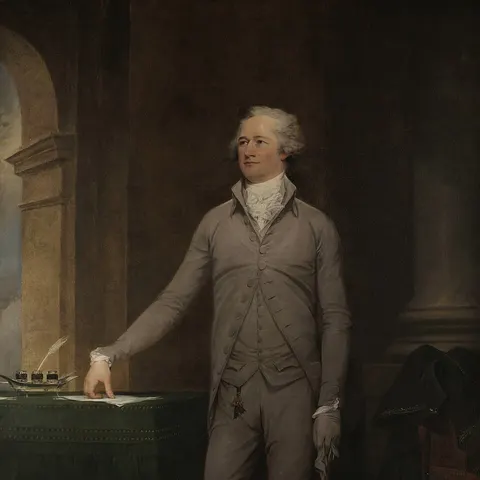 Alexander Hamilton's IQUS Founding Father & Treasury Secretary, estimated 135+135+
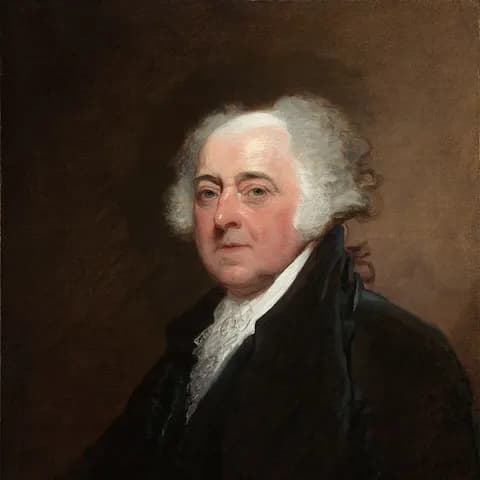 John Adams' IQ2nd US President & Founding Father, estimated 135+135+
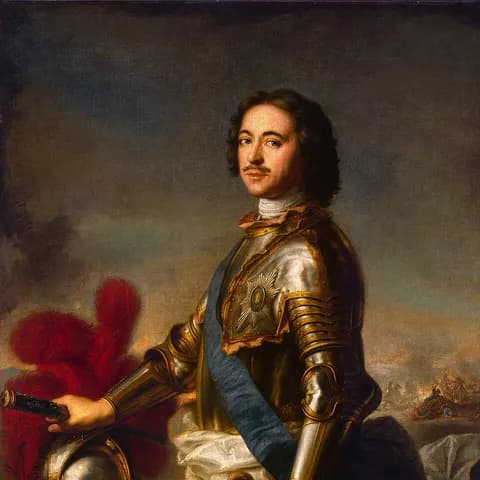 Peter the Great's IQTsar and Emperor of Russia, estimated 135+135+
- Garry Kasparov's IQChess Grandmaster, estimated 135135
Rankings that include Ashoka
- The smartest kings, queens and emperors in historyRanked 11 of 18
Keep exploring
- Emotional Signs of High IntelligenceSign of high intelligence
- Quick Pattern RecognitionSign of high intelligence
- Atticus Finch's IQTo Kill a Mockingbird, fan estimate 135
- Kaguya Shinomiya's IQKaguya-sama: Love Is War, fan estimate 135
People also search for
All 307 historical IQ estimates, ranked with ranges and sources.
Ashoka's IQ is 135. What's yours?
Ashoka's estimate comes from the historical record. Yours can come from a real test: 25 visual reasoning questions.
25 questions · about 12 minutes
Sources
- Ashoka, Encyclopaedia Britannica. Summarises his reign, conversion and edicts.
- Edicts of Ashoka, Wikipedia. Describes the inscriptions, languages and decipherment.
- Cox, C. M. (1926). The Early Mental Traits of Three Hundred Geniuses. Stanford University Press.
- Simonton, D. K. (2009). Genius 101. Springer.
- Cattell, R. B. (1971). Abilities: Their Structure, Growth, and Action. Houghton Mifflin.
Last reviewed October 2026. How we estimate historical IQ