Chien-Shiung Wu IQ
Chien-Shiung Wu's IQ is unknown. LifeScore uses about 155 (range 140 to 170) as an editorial marker for the experimentalist whose 1957 test proved parity is violated, a result that won others the Nobel Prize.
Chien-Shiung Wu's IQ is 155. What's yours?
25 questions · about 12 minutes
Think you're smarter than Chien Shiung Wu? Try question 1.
Which option completes the grid? One tap, no sign-up.
Key facts
- Estimated IQ
- IQ 155
- Known for
- The Wu experiment, which overturned the conservation of parity
- Lived
- Physicist, 1912–1997
- Basis
- No documented estimate; editorial marker from the record
- Confidence
- Very low. Born after 1850, so outside the Cox 1926 study. No IQ test result is known.
Wu has no test score. 155 is an editorial marker for an experimentalist whose precision overturned a basic assumption of physics.
Chien-Shiung Wu in brief
Chien-Shiung Wu was born near Shanghai in 1912; her father ran a school for girls. She studied physics at National Central University and moved to the United States in 1936, earning a doctorate at Berkeley. She worked on the Manhattan Project and then at Columbia University. In 1956 to 1957 her experiment showed that nature distinguishes left from right in the weak force. She died in New York in 1997.
What was Chien-Shiung Wu's IQ?
No test score exists. LifeScore lists about 155 as an editorial marker, range 140 to 170. It reflects experimental work so precise that it settled questions theorists could only pose, from beta decay to parity violation.
What was the Wu experiment?
In 1956 Lee and Yang suggested that the weak nuclear force might not treat left and right equally. Wu cooled radioactive cobalt-60 near absolute zero, lined up its nuclei in a magnetic field and found electrons came out more in one direction. Parity, a supposed symmetry of nature, was broken.
Why didn't Wu win the Nobel Prize?
The 1957 physics prize went to Lee and Yang for the theory. The committee did not include Wu, and many physicists have since called the omission unjust. She won the first Wolf Prize in Physics in 1978.
How smart was Chien-Shiung Wu?
- 01
Parity violation
The 1957 experiment that changed the understanding of the weak force. - 02
Beta decay
Her careful measurements confirmed Fermi's theory of beta decay. - 03
Wolf Prize 1978
The first recipient of the Wolf Prize in Physics. - 04
Manhattan Project
Worked on radiation detectors and uranium enrichment.
How Chien-Shiung Wu thought
Wu was famous for designing experiments that left no loophole. She anticipated every possible source of error, built the controls and only then trusted the result. That disciplined error-checking is a form of reasoning that timed tests rarely reward but research demands.
The evidence behind the estimate
An estimate built from the historical record, not a recovered test score.
What supports it
- Her 1957 Physical Review paper reported the parity violation result.
- She was elected to the US National Academy of Sciences in 1958.
- She won the Wolf Prize and the National Medal of Science.
What it cannot prove
- The parity experiment was a collaboration with the National Bureau of Standards.
- She worked against formal barriers to women in science, so her recorded output understates what she could have done with equal access.
- An editorial marker is a comparison aid built from achievement, not a measurement, and two careful readers could place it ten points apart.
Chien-Shiung Wu compared with Meitner, Marie Curie, Fermi
| Figure | Estimate | Range |
|---|---|---|
| Chien-Shiung Wu | 155 | 140–170 |
| Lise Meitner | 155 | 140–170 |
| Marie Curie | 150 | 140–160 |
| Enrico Fermi | 160+ | 150–170 |
How would you score?
Where would you land next to Chien-Shiung Wu?
Chien-Shiung Wu's 155 is an estimate from the historical record, with a working range of 140 to 170. On the standard IQ scale an IQ of 155 sits at the 99.99th percentile: about 1 in 8,137 people score that high. Nobody can test Chien-Shiung Wu now. You can find out where you sit on the same scale.
- 100Average adult50th percentile
- 130Gifted linetop 2%, about 1 in 44
- 155Chien-Shiung Wu's99.99th percentile, about 1 in 8,137
- ?Youscored on the same scale
25 questions · about 12 minutes
Psychological profile
Chien-Shiung Wu's IQ is represented here by a retrospective estimate of 155, not a verified test result. Chien-Shiung Wu is best known for exceptional experimental precision. The useful question is what the surviving evidence shows, not whether a precise modern score can be recovered.
Exacting, determined and meticulous. Colleagues called her the First Lady of Physics.
The dominant archetype here is The Precision Experimenter. This archetype shapes decision patterns: what feels natural, what creates friction, and what blind spots tend to emerge.
Estimated IQ is 155. This is a rough estimate based on documented accomplishments and contemporary accounts, not a literal measurement.
Key traits
Experimental Precision
Her 1957 experiment with cobalt-60 at very low temperature showed parity is not conserved.Determination
Tsung-Dao Lee and Chen-Ning Yang, who proposed the idea, won the 1957 Nobel Prize; she did not.Rigour
She became the first woman president of the American Physical Society in 1975.
One thing most people do not know
An asteroid, 2752 Wu Chien-Shiung, is named after her.
Chien-Shiung Wu: common questions
Was Chien-Shiung Wu a genius?
What personality type was Chien-Shiung Wu?
What can we learn from Chien-Shiung Wu?
The IQ-style test the NFL used
Chien-Shiung Wu's IQ is an estimate. Yours could be real.
Before the draft, NFL teams gave prospects the Wonderlic: 50 questions in 12 minutes, and almost nobody finishes. We collected 241 reported player scores, each with its source. The average working adult scores about 21.
People with similar IQ estimates
Chien-Shiung Wu's estimate of 155 falls in the genius level IQ range. Want your own number rather than Chien-Shiung's? Take the free IQ test or the quick IQ test. See what an IQ of 155 means, place it on the IQ chart or check how rare it is with the IQ rarity calculator.
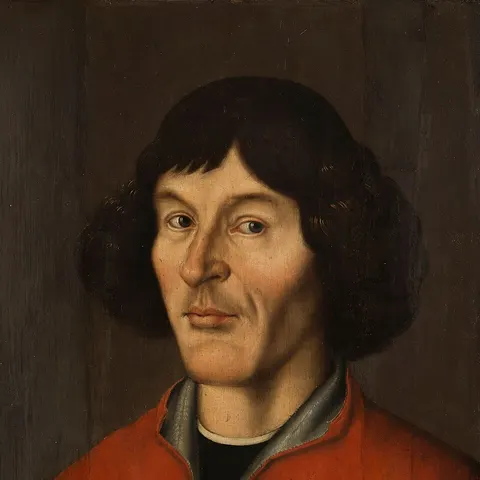 Nicolaus Copernicus' IQAstronomer, estimated 155+155+
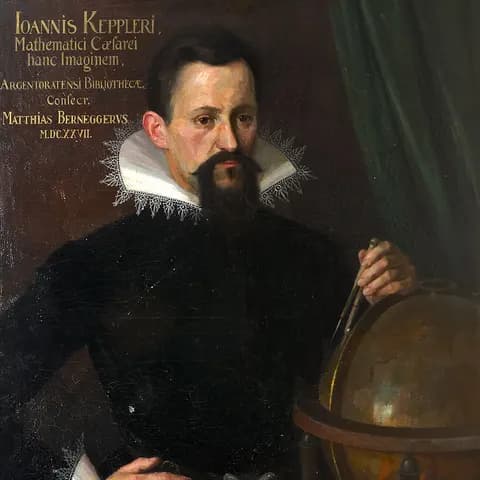 Johannes Kepler's IQAstronomer & Mathematician, estimated 155+155+
- John Nash's IQMathematician, estimated 155155
- Lise Meitner's IQPhysicist, estimated 155155
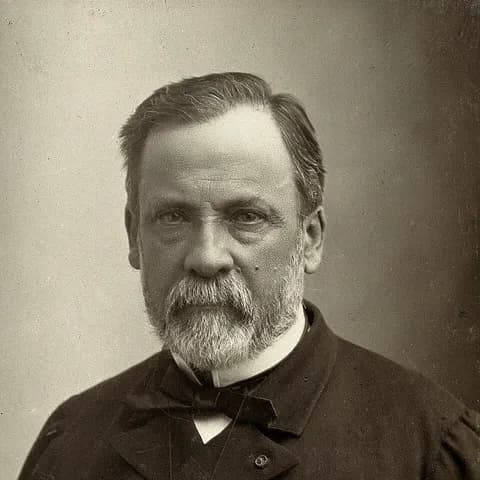 Louis Pasteur's IQMicrobiologist, estimated 155+155+
Rankings that include Chien-Shiung Wu
- The highest IQ scientists in historyRanked 33 of 74
- The smartest women in historyRanked 3 of 39
Keep exploring
- Abstract Conceptual ThinkingSign of high intelligence
- Quick Pattern RecognitionSign of high intelligence
- Light Yagami's IQDeath Note, fan estimate 155
- Kurisu Makise's IQSteins;Gate, fan estimate 155
People also search for
All 307 historical IQ estimates, ranked with ranges and sources.
Chien-Shiung Wu's IQ is 155. What's yours?
Chien-Shiung Wu's estimate comes from the historical record. Yours can come from a real test: 25 visual reasoning questions.
25 questions · about 12 minutes
Sources
- Chien-Shiung Wu, Encyclopaedia Britannica. Summarises her life, the parity experiment and honours.
- Wu experiment, Wikipedia. Explains the 1956 to 1957 experiment and its significance.
- Cox, C. M. (1926). The Early Mental Traits of Three Hundred Geniuses. Stanford University Press.
- Simonton, D. K. (2009). Genius 101. Springer.
- Cattell, R. B. (1971). Abilities: Their Structure, Growth, and Action. Houghton Mifflin.
Last reviewed October 2026. How we estimate historical IQ