Euclid IQ
Euclid's IQ is unknown. No biography, test or study exists, so LifeScore uses an editorial marker of about 155 (range 140 to 170) based on The Elements, the 13-book system that taught geometry for over 2,000 years.
Euclid's IQ is 155. What's yours?
25 questions · about 12 minutes
Think you're smarter than Euclid? Try question 1.
Which option completes the grid? One tap, no sign-up.
Key facts
- Estimated IQ
- IQ 155
- Known for
- The Elements, the most influential mathematics textbook ever written
- Lived
- Mathematician, Fl. c. 300 BC
- Basis
- No documented estimate; editorial marker from the record
- Confidence
- Very low. Lived long before IQ testing and before the period Cox 1926 covered. No test or published estimate exists.
Almost nothing is known about Euclid the person, so any number rests on one surviving body of work. 155 is a marker for the man who organised Greek geometry into a single deductive system.
Euclid in brief
Euclid taught mathematics in Alexandria around 300 BC, when the city was the intellectual capital of the Greek world under Ptolemy I. Nothing reliable survives about his birth, family or death. What survives is his work: The Elements, the Data, the Optics and other texts that turned Greek geometry into a connected chain of proofs. For more than two thousand years, learning geometry meant learning Euclid.
What was Euclid's IQ?
Nobody knows. Euclid lived around 300 BC in Alexandria and left no personal record, and he was far too early for any IQ study. LifeScore lists about 155 as an editorial marker, with a wide range of 140 to 170, because the only evidence is the quality and structure of his writing.
Why is The Elements so important?
It was the first great example of the axiomatic method: start from a few stated assumptions and prove everything else in order. It was used as a textbook into the twentieth century and is often said to be second only to the Bible in the number of editions printed.
Did Euclid discover all of geometry himself?
No. Historians think much of The Elements gathers earlier work by people such as Eudoxus and Theaetetus. What made it last was the arrangement: every result follows from earlier ones, which turned a collection of facts into a system.
How smart was Euclid?
- 01
The Elements
Thirteen books covering plane geometry, number theory and solid geometry, built from definitions and five postulates. - 02
Infinitely many primes
Book IX, Proposition 20 shows that no finite list of primes can be complete. - 03
The Euclidean algorithm
His method for the greatest common divisor of two numbers is still used in computers today. - 04
The parallel postulate
His fifth postulate was questioned for 2,000 years and led, in the 1800s, to non-Euclidean geometry.
How Euclid thought
Euclid thought in dependencies. Before proving anything he asked what had to be true first, and he wrote proofs that a reader could check line by line. That habit of making every step visible is the core of mathematical reasoning, and it is close to what matrix-style IQ items reward: find the rule, then apply it without skipping a step.
The evidence behind the estimate
An estimate built from the historical record, not a recovered test score.
What supports it
- The Elements survives in many manuscripts and organises Greek mathematics into a single deductive chain.
- Proclus, writing about 750 years later, is the main ancient source on Euclid and places him in Alexandria under Ptolemy I.
- His other surviving works, such as the Data and the Optics, use the same rigorous style.
What it cannot prove
- Almost no facts about his life survive, so there is no record of childhood ability.
- Some of his results were inherited from earlier mathematicians.
- An editorial marker is a comparison aid built from achievement, not a measurement, and two careful readers could place it ten points apart.
Euclid compared with Archimedes, Pythagoras, Hypatia
| Figure | Estimate | Range |
|---|---|---|
| Euclid | 155 | 140–170 |
| Archimedes | 165+ | 155–175 |
| Pythagoras | 155+ | 140–165 |
| Hypatia | 145+ | 130–155 |
How would you score?
Where would you land next to Euclid?
Euclid's 155 is an estimate from the historical record, with a working range of 140 to 170. On the standard IQ scale an IQ of 155 sits at the 99.99th percentile: about 1 in 8,137 people score that high. Nobody can test Euclid now. You can find out where you sit on the same scale.
- 100Average adult50th percentile
- 130Gifted linetop 2%, about 1 in 44
- 155Euclid's99.99th percentile, about 1 in 8,137
- ?Youscored on the same scale
25 questions · about 12 minutes
Psychological profile
Euclid's IQ is represented here by a retrospective estimate of 155, not a verified test result. Euclid is best known for exceptional deductive rigour. The useful question is what the surviving evidence shows, not whether a precise modern score can be recovered.
A systematiser more than a discoverer. He took the scattered geometry of his day and rebuilt it from five postulates.
The dominant archetype here is The Architect. This archetype shapes decision patterns: what feels natural, what creates friction, and what blind spots tend to emerge.
Estimated IQ is 155. This is a rough estimate based on documented accomplishments and contemporary accounts, not a literal measurement.
Key traits
Deductive Rigour
The Elements proves 465 propositions from a handful of definitions, postulates and common notions.Systematising
Many of the results were older; his achievement was the order, with each proof resting only on earlier ones.Economy of Proof
Book IX contains a proof that there are infinitely many primes that is still taught almost word for word.
One thing most people do not know
Proclus tells a story that when a king asked for an easier route to geometry, Euclid replied that there is no royal road.
Euclid: common questions
Was Euclid a genius?
What personality type was Euclid?
What can we learn from Euclid?
The IQ-style test the NFL used
Euclid's IQ is an estimate. Yours could be real.
Before the draft, NFL teams gave prospects the Wonderlic: 50 questions in 12 minutes, and almost nobody finishes. We collected 241 reported player scores, each with its source. The average working adult scores about 21.
People with similar IQ estimates
Euclid's estimate of 155 falls in the genius level IQ range. Want your own number rather than Euclid's? Take the free IQ test or the quick IQ test. See what an IQ of 155 means, place it on the IQ chart or check how rare it is with the IQ rarity calculator.
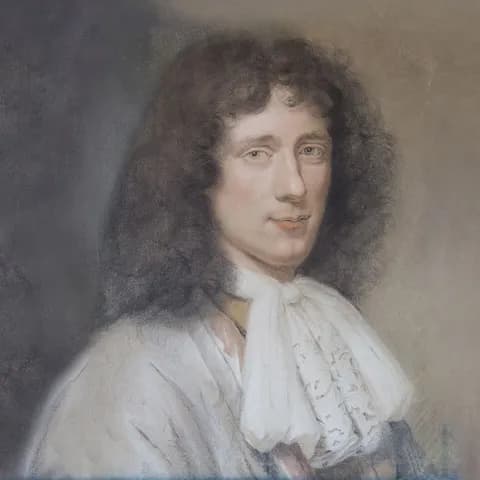 Christiaan Huygens' IQPhysicist & Astronomer, estimated 155+155+
- Edward Teller's IQPhysicist, estimated 155155
 J. Robert Oppenheimer's IQTheoretical Physicist, estimated 155+155+
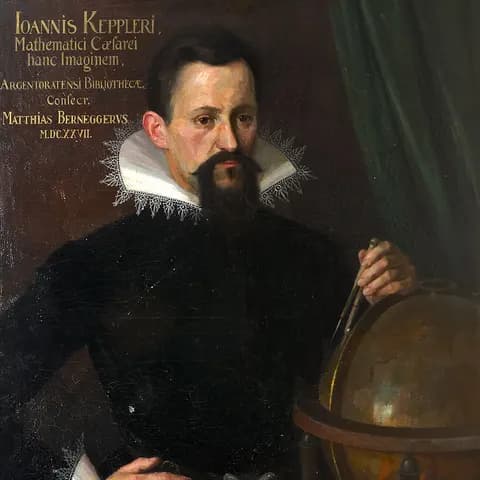 Johannes Kepler's IQAstronomer & Mathematician, estimated 155+155+
- John Nash's IQMathematician, estimated 155155
Rankings that include Euclid
- The highest IQ mathematicians in historyRanked 30 of 42
Keep exploring
- Strong Logical ReasoningSign of high intelligence
- Cross-Domain Pattern TransferSign of high intelligence
- Light Yagami's IQDeath Note, fan estimate 155
- Kurisu Makise's IQSteins;Gate, fan estimate 155
People also search for
All 307 historical IQ estimates, ranked with ranges and sources.
Euclid's IQ is 155. What's yours?
Euclid's estimate comes from the historical record. Yours can come from a real test: 25 visual reasoning questions.
25 questions · about 12 minutes
Sources
- Euclid of Alexandria biography, MacTutor, University of St Andrews. Covers what little is known of his life and the contents of The Elements.
- Euclid, Encyclopaedia Britannica. Summarises The Elements and its influence on mathematics teaching.
- Cox, C. M. (1926). The Early Mental Traits of Three Hundred Geniuses. Stanford University Press.
- Simonton, D. K. (2009). Genius 101. Springer.
- Cattell, R. B. (1971). Abilities: Their Structure, Growth, and Action. Houghton Mifflin.
Last reviewed October 2026. How we estimate historical IQ