The highest IQ mathematicians in history
Alan Turing tops this list of 42 mathematicians at 170+. Mathematics is the field where reasoning ability shows most directly in the work itself, but almost none of these people took an IQ test; each number is an estimate with its method on the profile.
Alan Turing: 170+. What's yours?
25 questions · about 12 minutes
What would you score? Try question 1.
Which option completes the grid? One tap, no sign-up.
All 42, ranked
| # | Name | Estimate |
|---|---|---|
| 1 | 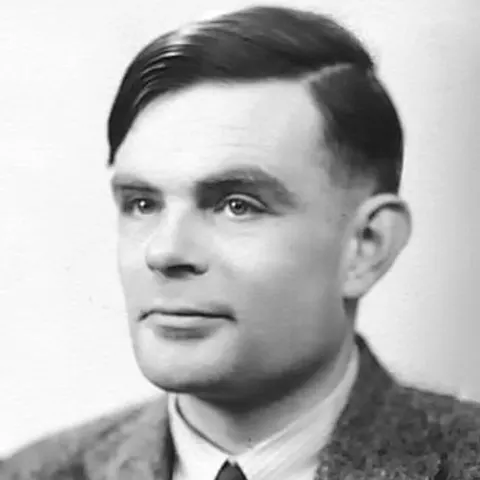 Alan Turing Mathematician & Computer Scientist | 170+ |
| 2 | 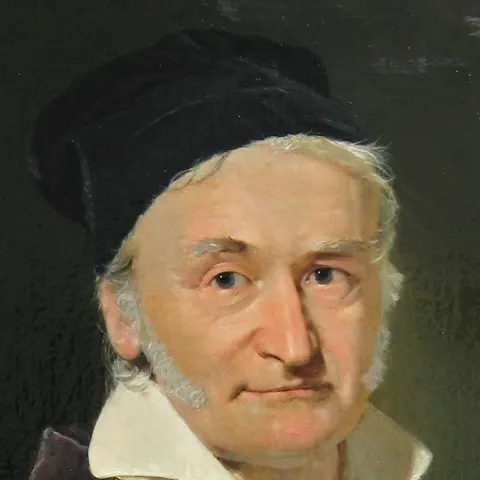 Carl Friedrich Gauss Mathematician & Physicist, 1777 to 1855 | 170+ |
| 3 | 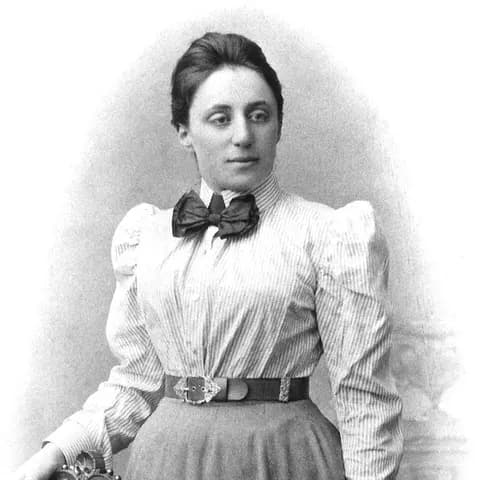 Emmy Noether Mathematician | 170+ |
| 4 | 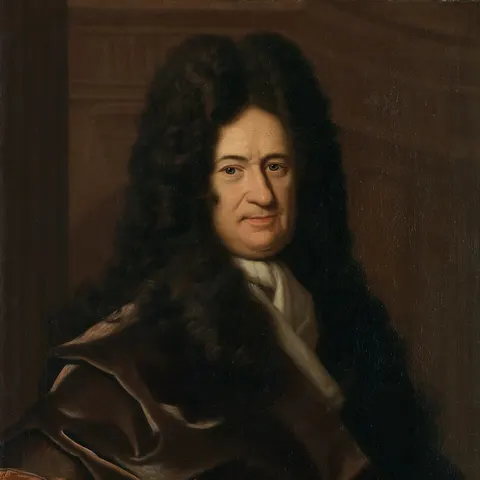 Gottfried Leibniz Mathematician & Philosopher | 170+ |
| 5 | John von Neumann Mathematician & Computer Pioneer, 1903 to 1957 | 170+ |
| 6 | 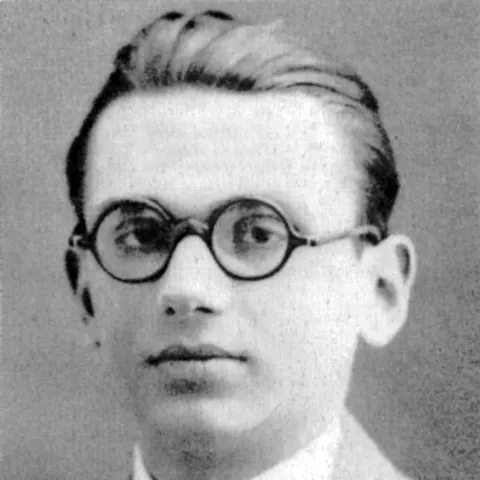 Kurt Gödel Logician & Mathematician, 1906 to 1978 | 170+ |
| 7 | 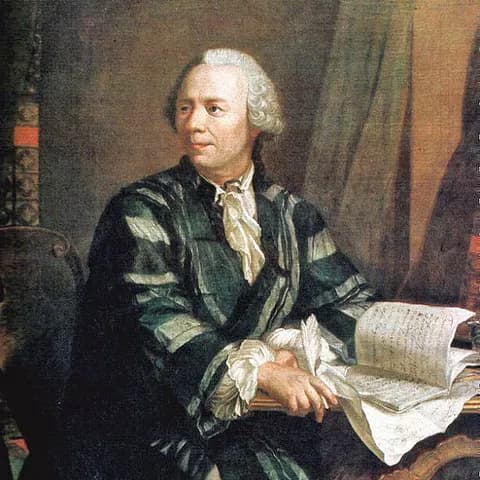 Leonhard Euler Mathematician, 1707 to 1783 | 170+ |
| 8 | 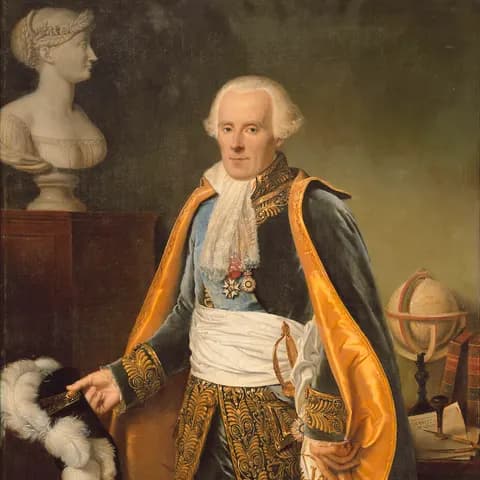 Pierre-Simon Laplace Mathematician & Astronomer, 1749 to 1827 | 170+ |
| 9 | 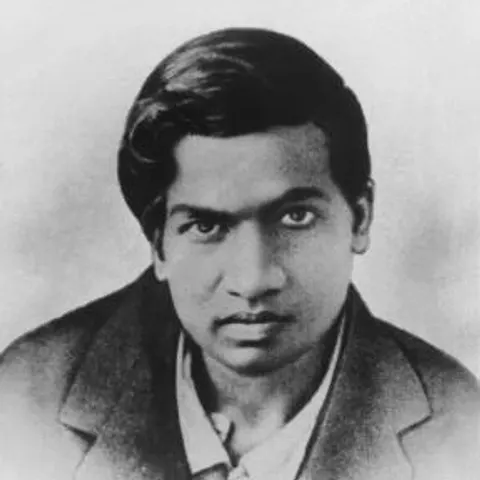 Srinivasa Ramanujan Mathematician, 1887 to 1920 | 170+ |
| 10 | Alexander Grothendieck Mathematician, 1928 to 2014 | 165 |
| 11 | 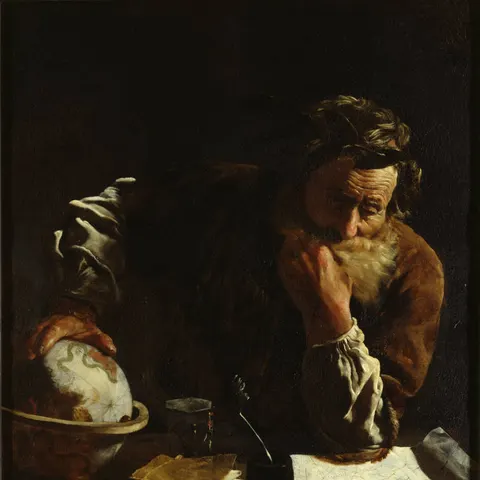 Archimedes Mathematician & Inventor, c. 287 to 212 BC | 165+ |
| 12 | Bernhard Riemann Mathematician, 1826 to 1866 | 165 |
| 13 | Blaise Pascal Mathematician & Philosopher | 165+ |
| 14 | David Hilbert Mathematician, 1862 to 1943 | 165 |
| 15 | Évariste Galois Mathematician, 1811 to 1832 | 165 |
| 16 | Henri Poincaré Mathematician & Physicist, 1854 to 1912 | 165 |
| 17 | Joseph-Louis Lagrange Mathematician, 1736 to 1813 | 165 |
| 18 | Norbert Wiener Mathematician, 1894 to 1964 | 165 |
| 19 | Charles Babbage Mathematician & Inventor, 1791 to 1871 | 160 |
| 20 | Claude Shannon Mathematician & Engineer, 1916 to 2001 | 160 |
| 21 | Freeman Dyson Physicist & Mathematician, 1923 to 2020 | 160 |
| 22 | Georg Cantor Mathematician, 1845 to 1918 | 160 |
| 23 | Ibn al-Haytham Mathematician & Physicist, c. 965 to c. 1040 | 160 |
| 24 | 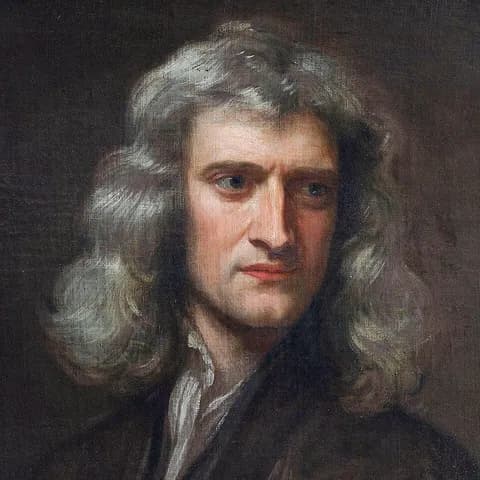 Isaac Newton Physicist & Mathematician, 1643 to 1727 | 160+ |
| 25 | Maryam Mirzakhani Mathematician, 1977 to 2017 | 160 |
| 26 | Niels Henrik Abel Mathematician, 1802 to 1829 | 160 |
| 27 | Paul Erdős Mathematician, 1913 to 1996 | 160 |
| 28 | Pierre de Fermat Mathematician & Lawyer, 1601 to 1665 | 160 |
| 29 | 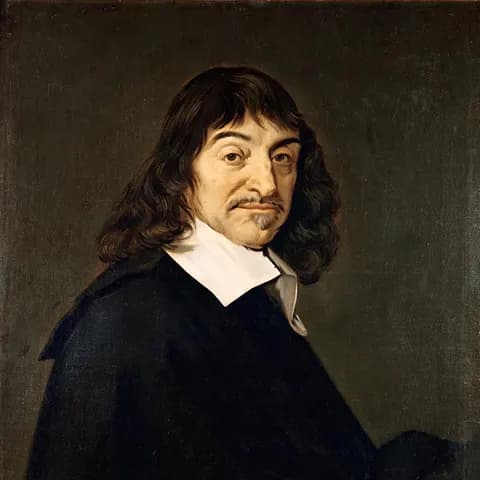 René Descartes Philosopher & Mathematician | 160+ |
| 30 | Euclid Mathematician, Fl. c. 300 BC | 155 |
| 31 | 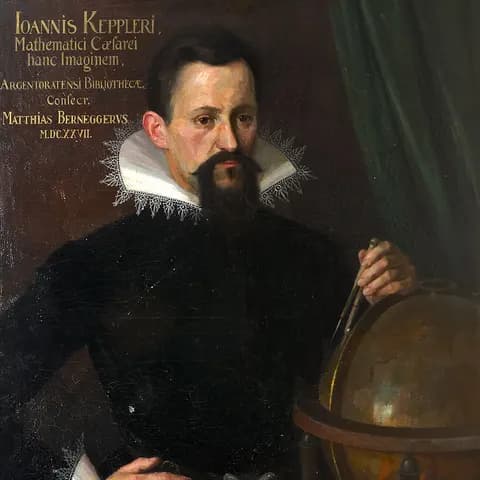 Johannes Kepler Astronomer & Mathematician, 1571 to 1630 | 155+ |
| 32 | John Nash Mathematician, 1928 to 2015 | 155 |
| 33 | Omar Khayyam Mathematician, Astronomer & Poet, 1048 to 1131 | 155 |
| 34 | Pythagoras Mathematician & Philosopher | 155+ |
| 35 | Sofia Kovalevskaya Mathematician, 1850 to 1891 | 155 |
| 36 | Al-Khwarizmi Mathematician & Astronomer, c. 780 to c. 850 | 150 |
| 37 | Émilie du Châtelet Mathematician & Physicist, 1706 to 1749 | 150 |
| 38 | Sophie Germain Mathematician, 1776 to 1831 | 150 |
| 39 | 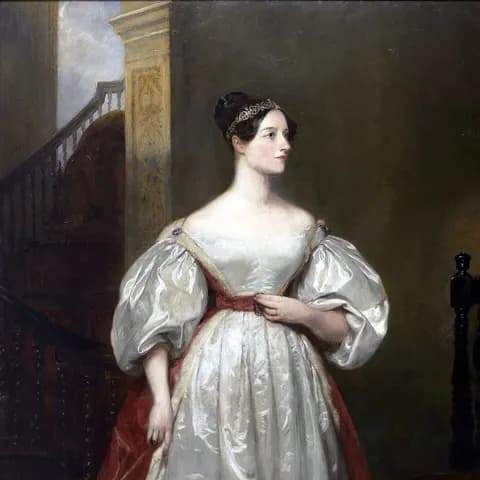 Ada Lovelace Mathematician (Early Computing), 1815 to 1852 | 145 |
| 40 | Fibonacci Mathematician, c. 1170 to c. 1250 | 145 |
| 41 | 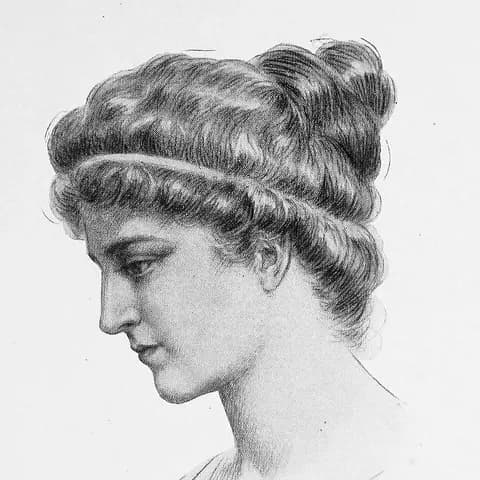 Hypatia Mathematician & Philosopher, c. 355 to 415 | 145+ |
| 42 | Katherine Johnson NASA Mathematician, 1918 to 2020 | 145 |
Estimate: the working figure on each profile, with its range. None is a measured test score unless the basis says so.
About this list
If any field should line up with IQ, it is mathematics: abstract patterns, long chains of deduction and problems with one right answer are exactly what reasoning tests sample. That is why so many of the highest historical estimates belong to mathematicians, and why so many popular "genius" claims cluster here. It is also why the evidence deserves extra care.
Leibniz, Pascal, Descartes and Laplace have Cox 1926 figures because their childhoods were documented in detail: Pascal is said to have worked out Euclid's early propositions for himself, and Leibniz taught himself Latin from his father's library. Gauss and Euler, surprisingly, have no confirmed Cox figure, so their numbers are editorial. For the 19th and 20th centuries the numbers are editorial markers, set from documented achievement such as a proof, a prize or a new field, and labelled with very low confidence.
How would you score?
Where would you land next to Alan Turing?
Alan Turing's 170+ is an estimate from the historical record, with a working range of 155 to 180. On the standard IQ scale an IQ of 170 sits at the 99.99984th percentile: about 1 in 653,000 people score that high. Nobody can test Alan Turing now. You can find out where you sit on the same scale.
- 100Average adult50th percentile
- 130Gifted linetop 2%, about 1 in 44
- 170+Alan Turing's99.99984th percentile, about 1 in 653,000
- ?Youscored on the same scale
25 questions · about 12 minutes
What the ranking shows
The list rewards early, documented brilliance. Galois and Abel did work in their teens and early twenties that reshaped algebra before they died young; Ramanujan arrived in Cambridge with notebooks of results nobody had taught him. Prodigies with a record of what they did at each age receive high estimates because that is what historiometric methods measure.
Late developers sit lower than their importance. Weierstrass, not on this list yet, did his best work in his forties; Riemann was a shy, slow-publishing student. Mathematical greatness is not the same as early speed, and the ranking cannot capture depth, taste or the patience to work on one problem for a decade.
There is one modern exception to "no test scores": Terence Tao, who has a separate profile, scored 760 on the SAT maths section at eight. He is left off this list because living people with claimed scores would distort a ranking of estimates. The same rule keeps out other reported prodigies.
Matrix puzzles and mathematical minds
The modern tests closest to mathematical reasoning are matrix and number-series puzzles: find the rule, apply it, check it. That is the same habit of mind these mathematicians used at the highest level. The LifeScore test uses timed visual reasoning items of that kind, which is the most direct way to see how your own pattern-finding compares.
Frequently asked questions
Who was the smartest mathematician ever?
Did Ramanujan have a high IQ?
Is maths ability the same as IQ?
Why is Terence Tao not on this list?
More IQ rankings
- The highest IQ scientists in history74 people, ranked with ranges and sources
- The smartest chess players and their IQs6 people, ranked with ranges and sources
- The highest IQ philosophers in history43 people, ranked with ranges and sources
- Every historical figure, rankedThe full index with confidence levels
- Famous IQs in historySearch and filter every profile by field and era
- All IQ rankingsPeople, characters, majors and universities
Where would you rank on this list?
Take the test and compare your score with the people above.
25 questions · about 12 minutes