Émilie du Châtelet IQ
Émilie du Châtelet's IQ is unknown; no test or confirmed study figure exists. LifeScore uses about 150 (range 135 to 165) as an editorial marker for the physicist whose French Principia is still the standard edition.
Châtelet's IQ is 150. What's yours?
25 questions · about 12 minutes
Think you're smarter than Emilie Du Chatelet? Try question 1.
Which option completes the grid? One tap, no sign-up.
Key facts
- Estimated IQ
- IQ 150
- Known for
- The French translation of Newton's Principia, still in use
- Lived
- Mathematician & Physicist, 1706–1749
- Basis
- No documented estimate; editorial marker from the record
- Confidence
- Very low. Born inside the period Cox 1926 covered, but we could not confirm a Cox figure from an accessible tabulation, so none is quoted. No IQ test was ever given.
Du Châtelet has no test and no Cox figure we could confirm. 150 is an editorial marker for the physicist whose Principia translation is still the standard French text.
Émilie du Châtelet in brief
Gabrielle Émilie Le Tonnelier de Breteuil, later Marquise du Châtelet, was born in Paris in 1706. Her father, a court official, let her study mathematics, languages and fencing. With Voltaire, her companion for 15 years, she set up a laboratory at Cirey. She wrote Institutions de physique (1740) and translated Newton's Principia into French with her own commentary, finishing days before she died after childbirth in 1749.
What was Émilie du Châtelet's IQ?
No figure exists. LifeScore lists about 150 as an editorial marker, range 135 to 165. It rests on her languages as a child, her synthesis of Newton and Leibniz in Institutions de physique and her translation and commentary on Newton's Principia.
What did du Châtelet contribute to physics?
She argued, using experiments by Willem 's Gravesande in which balls were dropped into clay, that the energy of motion is proportional to mass times speed squared, not mass times speed. That idea became the modern concept of kinetic energy.
What was her relationship with Voltaire?
They lived and worked together at her husband's estate at Cirey from 1735, writing, experimenting and debating. Voltaire said she was a great man whose only fault was being a woman, praise that reflects the attitudes of the time.
How smart was Émilie du Châtelet?
- 01
Principia translation
Published in 1759, still the standard French version. - 02
Institutions de physique (1740)
A synthesis of Newtonian physics and Leibniz's metaphysics. - 03
Kinetic energy
Championed energy proportional to speed squared. - 04
Essay on fire
An entry for the Paris Academy's 1738 prize, published by the Academy.
How Châtelet thought
Du Châtelet reasoned across rival systems. She took Newton's mathematics and Leibniz's concepts, which their followers saw as enemies, and combined what each did best. That is integrative reasoning of a high order.
The evidence behind the estimate
An estimate built from the historical record, not a recovered test score.
What supports it
- Her Principia translation and commentary were published in 1756 and 1759.
- Her Institutions de physique was translated and widely discussed.
- Her work on vis viva influenced later understanding of energy.
What it cannot prove
- She worked against formal barriers to women in science, so her recorded output understates what she could have done with equal access.
- Some of her published work was revised with mathematicians such as Clairaut.
- An editorial marker is a comparison aid built from achievement, not a measurement, and two careful readers could place it ten points apart.
Châtelet compared with Newton, Voltaire, Leibniz
| Figure | Estimate | Range |
|---|---|---|
| Émilie du Châtelet | 150 | 135–165 |
| Isaac Newton | 160+ | 160–190 |
| Voltaire | 170+ | 170–190 |
| Gottfried Leibniz | 170+ | 170–205 |
How would you score?
Where would you land next to Émilie du Châtelet?
Émilie du Châtelet's 150 is an estimate from the historical record, with a working range of 135 to 165. On the standard IQ scale an IQ of 150 sits at the 99.96th percentile: about 1 in 2,330 people score that high. Nobody can test Châtelet now. You can find out where you sit on the same scale.
- 100Average adult50th percentile
- 130Gifted linetop 2%, about 1 in 44
- 150Châtelet's99.96th percentile, about 1 in 2,330
- ?Youscored on the same scale
25 questions · about 12 minutes
Psychological profile
Émilie du Châtelet's IQ is represented here by a retrospective estimate of 150, not a verified test result. Émilie du Châtelet is best known for exceptional mathematical physics. The useful question is what the surviving evidence shows, not whether a precise modern score can be recovered.
Bold, brilliant and unconventional. She gambled, fenced and dressed for court while mastering Newton and Leibniz.
The dominant archetype here is The Interpreter. This archetype shapes decision patterns: what feels natural, what creates friction, and what blind spots tend to emerge.
Estimated IQ is 150. This is a rough estimate based on documented accomplishments and contemporary accounts, not a literal measurement.
Key traits
Mathematical Physics
By 12 she reportedly read Latin, Italian, Greek and German.Languages
She dressed as a man to join mathematicians in a Paris café that barred women.Boldness
She backed the idea that the energy of a moving body depends on the square of its speed.
One thing most people do not know
She used her mathematics to win at cards and used the winnings to buy books.
Émilie du Châtelet: common questions
Was Émilie du Châtelet a genius?
What personality type was Émilie du Châtelet?
What can we learn from Émilie du Châtelet?
The IQ-style test the NFL used
Émilie du Châtelet's IQ is an estimate. Yours could be real.
Before the draft, NFL teams gave prospects the Wonderlic: 50 questions in 12 minutes, and almost nobody finishes. We collected 241 reported player scores, each with its source. The average working adult scores about 21.
People with similar IQ estimates
Émilie du Châtelet's estimate of 150 falls in the genius level IQ range. Want your own number rather than Émilie's? Take the free IQ test or the quick IQ test. See what an IQ of 150 means, place it on the IQ chart or check how rare it is with the IQ rarity calculator.
- Rosalind Franklin's IQChemist & X-ray Crystallographer, estimated 150+150+
- Sophie Germain's IQMathematician, estimated 150150
- Tycho Brahe's IQAstronomer, estimated 150150
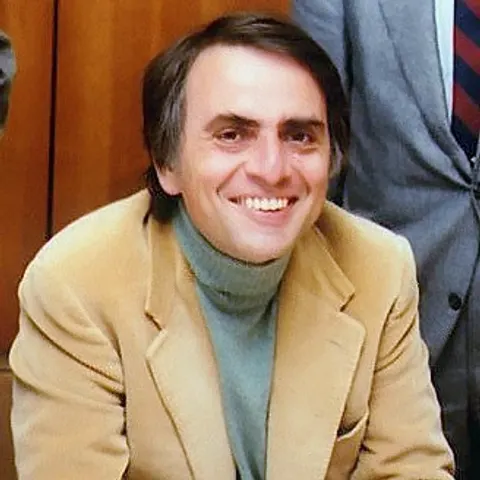 Carl Sagan's IQAstronomer & Science Communicator, estimated 150+150+
- Al-Khwarizmi's IQMathematician & Astronomer, estimated 150150
Rankings that include Châtelet
- The highest IQ scientists in historyRanked 53 of 74
- The highest IQ mathematicians in historyRanked 37 of 42
- The smartest women in historyRanked 8 of 39
Keep exploring
- Complex Problem DecompositionSign of high intelligence
- Strong Self-Teaching AbilitySign of high intelligence
- Tyrion Lannister's IQGame of Thrones, fan estimate 150
- Erwin Smith's IQAttack on Titan, fan estimate 150
People also search for
All 307 historical IQ estimates, ranked with ranges and sources.
Châtelet's IQ is 150. What's yours?
Châtelet's estimate comes from the historical record. Yours can come from a real test: 25 visual reasoning questions.
25 questions · about 12 minutes
Sources
- Émilie du Châtelet, Stanford Encyclopedia of Philosophy. Covers her life, Institutions de physique and her Principia translation.
- Émilie du Châtelet, Encyclopaedia Britannica. Summarises her life, translation and physics.
- Cox, C. M. (1926). The Early Mental Traits of Three Hundred Geniuses. Stanford University Press.
- Simonton, D. K. (2009). Genius 101. Springer.
- Cattell, R. B. (1971). Abilities: Their Structure, Growth, and Action. Houghton Mifflin.
Last reviewed October 2026. How we estimate historical IQ