Tycho Brahe IQ
Tycho Brahe's IQ is unknown; no test or confirmed study figure exists. LifeScore uses about 150 (range 135 to 165) as an editorial marker for the astronomer whose precise naked-eye data made Kepler's laws possible.
Brahe's IQ is 150. What's yours?
25 questions · about 12 minutes
Think you're smarter than Tycho Brahe? Try question 1.
Which option completes the grid? One tap, no sign-up.
Key facts
- Estimated IQ
- IQ 150
- Known for
- The most precise naked-eye astronomy ever done
- Lived
- Astronomer, 1546–1601
- Basis
- No documented estimate; editorial marker from the record
- Confidence
- Very low. Born inside the period Cox 1926 covered, but we could not confirm a Cox figure from an accessible tabulation, so none is quoted. No IQ test was ever given.
Tycho has no test and no confirmed Cox figure. 150 is an editorial marker for an observer whose data let Kepler find the laws of planetary motion.
Tycho Brahe in brief
Tycho Brahe was born into a Danish noble family in 1546 and was drawn to astronomy as a teenager by a predicted solar eclipse. In 1572 he observed a new star and showed it lay beyond the Moon. King Frederick II gave him the island of Hven, where he built the observatory of Uraniborg and gathered two decades of precise measurements. He moved to Prague in 1599 and died there in 1601.
What was Tycho Brahe's IQ?
No figure exists. LifeScore lists about 150 as an editorial marker, range 135 to 165. It rests on his 1572 supernova analysis, his instruments and two decades of systematic measurement, not on theory, where his model of the planets turned out wrong.
What did Tycho Brahe discover?
He showed that the new star of 1572 and the comet of 1577 lay beyond the Moon, which overturned the belief that the heavens never change. His greatest legacy was a catalogue of star and planet positions far more precise than any before.
How did Tycho Brahe die?
He fell ill after a banquet in Prague in October 1601 and died eleven days later. The traditional story blames a burst bladder from staying at table out of politeness. Studies of his remains in 1901 and 2010 found no evidence that he was poisoned.
How smart was Tycho Brahe?
- 01
The 1572 supernova
He proved the new star was far beyond the Moon. - 02
Uraniborg
His island observatory on Hven, with instruments of his own design. - 03
Star catalogue
Positions for about 1,000 stars, precise to a minute or two of arc. - 04
Data for Kepler
His planetary records were the basis of Kepler's laws.
How Brahe thought
Tycho believed theory should wait for better data. He improved instruments, repeated measurements and corrected for errors such as the bending of light by the atmosphere. Patient, systematic accuracy was his form of intelligence.
The evidence behind the estimate
An estimate built from the historical record, not a recovered test score.
What supports it
- His published analysis of the 1572 nova was a landmark in astronomy.
- His observation records were the most precise of the pre-telescope era.
- Kepler relied on his data for the laws of planetary motion.
What it cannot prove
- His own geo-heliocentric model of the planets was wrong.
- His observatory employed many assistants.
- An editorial marker is a comparison aid built from achievement, not a measurement, and two careful readers could place it ten points apart.
Brahe compared with Kepler, Copernicus, Galileo
| Figure | Estimate | Range |
|---|---|---|
| Tycho Brahe | 150 | 135–165 |
| Johannes Kepler | 155+ | 155–175 |
| Nicolaus Copernicus | 155+ | 140–165 |
| Galileo Galilei | 160+ | 160–185 |
How would you score?
Where would you land next to Tycho Brahe?
Tycho Brahe's 150 is an estimate from the historical record, with a working range of 135 to 165. On the standard IQ scale an IQ of 150 sits at the 99.96th percentile: about 1 in 2,330 people score that high. Nobody can test Brahe now. You can find out where you sit on the same scale.
- 100Average adult50th percentile
- 130Gifted linetop 2%, about 1 in 44
- 150Brahe's99.96th percentile, about 1 in 2,330
- ?Youscored on the same scale
25 questions · about 12 minutes
Psychological profile
Tycho Brahe's IQ is represented here by a retrospective estimate of 150, not a verified test result. Tycho Brahe is best known for exceptional precision. The useful question is what the surviving evidence shows, not whether a precise modern score can be recovered.
Proud, flamboyant and meticulous. A nobleman who built the best observatory in Europe and ran it like a court.
The dominant archetype here is The Measurer. This archetype shapes decision patterns: what feels natural, what creates friction, and what blind spots tend to emerge.
Estimated IQ is 150. This is a rough estimate based on documented accomplishments and contemporary accounts, not a literal measurement.
Key traits
Precision
He lost part of his nose in a duel as a student in 1566 and wore a metal replacement.Instrument Design
His measurements were precise to about one or two minutes of arc, without a telescope.Ambition
Johannes Kepler used his records to show planetary orbits are ellipses.
One thing most people do not know
He kept a tame elk that reportedly died after drinking too much beer and falling down the stairs.
Tycho Brahe: common questions
Was Tycho Brahe a genius?
What personality type was Tycho Brahe?
What can we learn from Tycho Brahe?
The IQ-style test the NFL used
Tycho Brahe's IQ is an estimate. Yours could be real.
Before the draft, NFL teams gave prospects the Wonderlic: 50 questions in 12 minutes, and almost nobody finishes. We collected 241 reported player scores, each with its source. The average working adult scores about 21.
People with similar IQ estimates
Tycho Brahe's estimate of 150 falls in the genius level IQ range. Want your own number rather than Tycho's? Take the free IQ test or the quick IQ test. See what an IQ of 150 means, place it on the IQ chart or check how rare it is with the IQ rarity calculator.
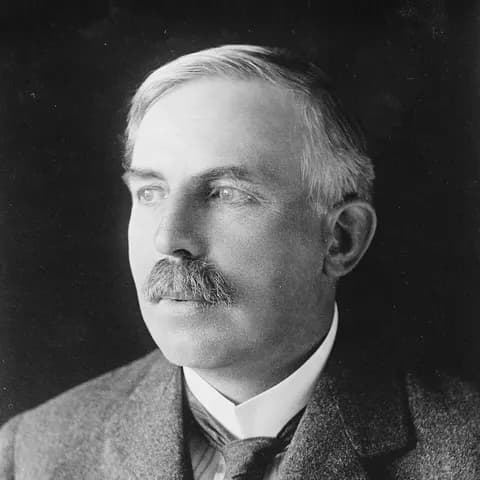 Ernest Rutherford's IQPhysicist, estimated 150+150+
- Francis Crick's IQMolecular Biologist, estimated 150150
- Humphry Davy's IQChemist, estimated 150150
- Jean Piaget's IQDevelopmental Psychologist, estimated 150150
- John Dalton's IQChemist & Physicist, estimated 150150
Rankings that include Brahe
- The highest IQ scientists in historyRanked 63 of 74
Keep exploring
- Efficient Information ProcessingSign of high intelligence
- Problems Only Highly Intelligent People FaceSign of high intelligence
- Tyrion Lannister's IQGame of Thrones, fan estimate 150
- Erwin Smith's IQAttack on Titan, fan estimate 150
People also search for
All 307 historical IQ estimates, ranked with ranges and sources.
Brahe's IQ is 150. What's yours?
Brahe's estimate comes from the historical record. Yours can come from a real test: 25 visual reasoning questions.
25 questions · about 12 minutes
Sources
- Tycho Brahe, Encyclopaedia Britannica. Summarises his observations, Uraniborg and his model.
- Tycho Brahe, Wikipedia. Covers his life, the duel, Hven and his death in Prague.
- Cox, C. M. (1926). The Early Mental Traits of Three Hundred Geniuses. Stanford University Press.
- Simonton, D. K. (2009). Genius 101. Springer.
- Cattell, R. B. (1971). Abilities: Their Structure, Growth, and Action. Houghton Mifflin.
Last reviewed October 2026. How we estimate historical IQ