John Dalton IQ
John Dalton's IQ is unknown; no test or confirmed study figure exists. LifeScore uses about 150 (range 135 to 165) as an editorial marker for the largely self-taught Quaker teacher who founded modern atomic theory.
Dalton's IQ is 150. What's yours?
25 questions · about 12 minutes
Think you're smarter than John Dalton? Try question 1.
Which option completes the grid? One tap, no sign-up.
Key facts
- Estimated IQ
- IQ 150
- Known for
- Modern atomic theory and the first study of colour blindness
- Lived
- Chemist & Physicist, 1766–1844
- Basis
- No documented estimate; editorial marker from the record
- Confidence
- Very low. Born inside the period Cox 1926 covered, but we could not confirm a Cox figure from an accessible tabulation, so none is quoted. No IQ test was ever given.
Dalton has no test and no Cox figure we could confirm. 150 is an editorial marker for a largely self-taught teacher who founded modern atomic theory.
John Dalton in brief
John Dalton was born in 1766 to a Quaker weaving family in Cumberland, England. He started teaching at a village school at the age of 12 and later moved to Manchester, where he taught mathematics and natural philosophy and kept daily weather records for 57 years. From his study of gases he developed the modern atomic theory, published in A New System of Chemical Philosophy from 1808. He died in Manchester in 1844.
What was John Dalton's IQ?
No figure exists. LifeScore lists about 150 as an editorial marker, range 135 to 165. It rests on largely self-taught mastery of science, his atomic theory and his careful work on gases and colour blindness, all done while earning a living as a teacher.
What is Dalton's atomic theory?
It says elements are made of tiny atoms, all atoms of one element are alike in weight, and compounds form when atoms combine in simple whole-number ratios. It explained why substances combine in fixed proportions and gave chemistry its first table of relative atomic weights.
Was Dalton colour blind?
Yes. In 1794 he described his own condition, which made red look much like green. He guessed the fluid in his eye was tinted blue. A DNA test on his preserved eye in 1995 showed he lacked one type of colour receptor.
How smart was John Dalton?
- 01
Atomic theory
The first modern theory of atoms with relative weights. - 02
Law of partial pressures
The pressure of a gas mixture is the sum of the pressures of its parts. - 03
Colour blindness
The first scientific description of the condition, from his own case. - 04
Meteorology
Decades of weather records and early work on the atmosphere.
How Dalton thought
Dalton reasoned from careful numbers to simple rules. He noticed that elements combine in whole-number ratios and asked what would have to be true of matter for that to happen. His answer, discrete atoms with fixed weights, came from the pattern in the data.
The evidence behind the estimate
An estimate built from the historical record, not a recovered test score.
What supports it
- A New System of Chemical Philosophy (1808 onwards) set out atomic theory and weights.
- His paper on colour vision of 1794 is a landmark in vision science.
- He was elected to the Royal Society and to the French Academy of Sciences.
What it cannot prove
- Some of his atomic weights and formulas were wrong.
- Much of his education was informal, so there is little early record.
- An editorial marker is a comparison aid built from achievement, not a measurement, and two careful readers could place it ten points apart.
Dalton compared with Lavoisier, Faraday, Mendeleev
| Figure | Estimate | Range |
|---|---|---|
| John Dalton | 150 | 135–165 |
| Antoine Lavoisier | 150+ | 150–170 |
| Michael Faraday | 150+ | 150–170 |
| Dmitri Mendeleev | 150+ | 140–160 |
How would you score?
Where would you land next to John Dalton?
John Dalton's 150 is an estimate from the historical record, with a working range of 135 to 165. On the standard IQ scale an IQ of 150 sits at the 99.96th percentile: about 1 in 2,330 people score that high. Nobody can test Dalton now. You can find out where you sit on the same scale.
- 100Average adult50th percentile
- 130Gifted linetop 2%, about 1 in 44
- 150Dalton's99.96th percentile, about 1 in 2,330
- ?Youscored on the same scale
25 questions · about 12 minutes
Psychological profile
John Dalton's IQ is represented here by a retrospective estimate of 150, not a verified test result. John Dalton is best known for exceptional systematic observation. The useful question is what the surviving evidence shows, not whether a precise modern score can be recovered.
Plain, methodical and patient. A Quaker teacher who kept careful records every day for decades.
The dominant archetype here is The Recorder. This archetype shapes decision patterns: what feels natural, what creates friction, and what blind spots tend to emerge.
Estimated IQ is 150. This is a rough estimate based on documented accomplishments and contemporary accounts, not a literal measurement.
Key traits
Systematic Observation
He was running a school at 12 and largely educated himself in mathematics and science.Self-teaching
He described his own colour blindness in 1794, and it is still called Daltonism.Persistence
He kept a weather diary of about 200,000 observations.
One thing most people do not know
About 40,000 people reportedly filed past his coffin in Manchester town hall in 1844.
John Dalton: common questions
Was John Dalton a genius?
What personality type was John Dalton?
What can we learn from John Dalton?
The IQ-style test the NFL used
John Dalton's IQ is an estimate. Yours could be real.
Before the draft, NFL teams gave prospects the Wonderlic: 50 questions in 12 minutes, and almost nobody finishes. We collected 241 reported player scores, each with its source. The average working adult scores about 21.
People with similar IQ estimates
John Dalton's estimate of 150 falls in the genius level IQ range. Want your own number rather than John's? Take the free IQ test or the quick IQ test. See what an IQ of 150 means, place it on the IQ chart or check how rare it is with the IQ rarity calculator.
- Al-Khwarizmi's IQMathematician & Astronomer, estimated 150150
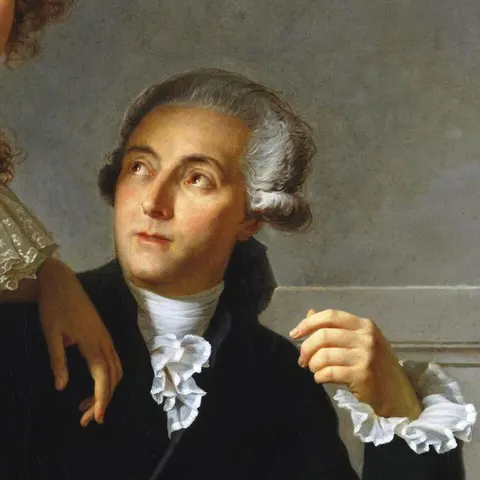 Antoine Lavoisier's IQChemist, estimated 150+150+
- Barbara McClintock's IQGeneticist, estimated 150150
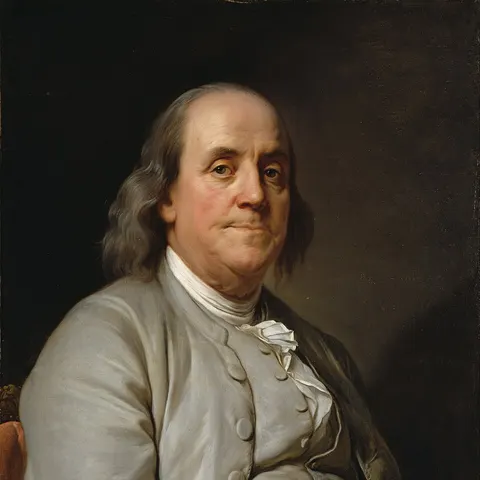 Benjamin Franklin's IQPolymath & Founding Father, estimated 150+150+
- Carl Linnaeus' IQBotanist, estimated 150150
Rankings that include Dalton
- The highest IQ scientists in historyRanked 57 of 74
Keep exploring
- Efficient Information ProcessingSign of high intelligence
- Cross-Domain Pattern TransferSign of high intelligence
- Tyrion Lannister's IQGame of Thrones, fan estimate 150
- Erwin Smith's IQAttack on Titan, fan estimate 150
People also search for
All 307 historical IQ estimates, ranked with ranges and sources.
Dalton's IQ is 150. What's yours?
Dalton's estimate comes from the historical record. Yours can come from a real test: 25 visual reasoning questions.
25 questions · about 12 minutes
Sources
- John Dalton, Encyclopaedia Britannica. Summarises his life, atomic theory and colour blindness.
- John Dalton, Wikipedia. Covers his teaching career, research and the 1995 DNA study of his eye.
- Cox, C. M. (1926). The Early Mental Traits of Three Hundred Geniuses. Stanford University Press.
- Simonton, D. K. (2009). Genius 101. Springer.
- Cattell, R. B. (1971). Abilities: Their Structure, Growth, and Action. Houghton Mifflin.
Last reviewed October 2026. How we estimate historical IQ