Humphry Davy IQ
Humphry Davy's IQ is unknown; no test or confirmed study figure exists. LifeScore uses about 150 (range 135 to 165) as an editorial marker for the largely self-taught chemist who isolated potassium and sodium in 1807.
Davy's IQ is 150. What's yours?
25 questions · about 12 minutes
Think you're smarter than Humphry Davy? Try question 1.
Which option completes the grid? One tap, no sign-up.
Key facts
- Estimated IQ
- IQ 150
- Known for
- Isolating sodium and potassium; the miner's safety lamp
- Lived
- Chemist, 1778–1829
- Basis
- No documented estimate; editorial marker from the record
- Confidence
- Very low. Born inside the period Cox 1926 covered, but we could not confirm a Cox figure from an accessible tabulation, so none is quoted. No IQ test was ever given.
Davy has no test and no Cox figure we could confirm. 150 is an editorial marker for a self-taught chemist who discovered several elements before 35.
Humphry Davy in brief
Humphry Davy was born in Penzance, Cornwall, in 1778 and was apprenticed to a surgeon-apothecary after his father died. Largely self-taught in chemistry, he studied nitrous oxide at Bristol, then became a star lecturer at the Royal Institution in London. Using a powerful battery he isolated potassium, sodium and several other elements, invented a safety lamp for miners and became President of the Royal Society. He died in Geneva in 1829.
What was Humphry Davy's IQ?
No figure exists. LifeScore lists about 150 as an editorial marker, range 135 to 165. It reflects his self-education in chemistry, the isolation of several elements by electrolysis and the safety lamp, plus real gifts as a writer and lecturer.
What elements did Humphry Davy discover?
In 1807 he used electric current to isolate potassium and sodium, the first metals ever obtained by electrolysis. In 1808 he isolated calcium, barium, strontium and magnesium, and he showed that chlorine is an element.
What was the Davy lamp?
A miner's lamp, introduced in 1815, with the flame enclosed in fine wire gauze. The gauze absorbed heat so the flame could not ignite the explosive gas in coal mines. Davy refused to patent it.
Did Davy discover Michael Faraday?
In effect, yes. Faraday, a young bookbinder, attended Davy's lectures in 1812, wrote up his notes and sent them to Davy, who hired him as a laboratory assistant in 1813. Faraday went on to surpass his teacher, and Davy is said to have called him his greatest discovery, though the quote may be a later invention.
How smart was Humphry Davy?
- 01
Electrolysis of metals
Isolated potassium and sodium in 1807. - 02
New elements
Calcium, barium, strontium and magnesium in 1808. - 03
The safety lamp
Reduced deaths from mine explosions. - 04
President of the Royal Society
Elected in 1820.
How Davy thought
Davy combined bold hypotheses with dramatic experiments. When he guessed that electricity could break apart compounds thought to be elements, he built a larger battery and tried it. That is confident, hypothesis-driven reasoning.
The evidence behind the estimate
An estimate built from the historical record, not a recovered test score.
What supports it
- He isolated several new elements in two years.
- He became professor at the Royal Institution in his early twenties.
- He was elected President of the Royal Society.
What it cannot prove
- Some of his conclusions were rushed, and he was jealous of Faraday's later success.
- Achievement reflects education, opportunity, persistence and collaboration as well as raw reasoning ability.
- An editorial marker is a comparison aid built from achievement, not a measurement, and two careful readers could place it ten points apart.
Davy compared with Faraday, Lavoisier, Dalton
| Figure | Estimate | Range |
|---|---|---|
| Humphry Davy | 150 | 135–165 |
| Michael Faraday | 150+ | 150–170 |
| Antoine Lavoisier | 150+ | 150–170 |
| John Dalton | 150 | 135–165 |
How would you score?
Where would you land next to Humphry Davy?
Humphry Davy's 150 is an estimate from the historical record, with a working range of 135 to 165. On the standard IQ scale an IQ of 150 sits at the 99.96th percentile: about 1 in 2,330 people score that high. Nobody can test Davy now. You can find out where you sit on the same scale.
- 100Average adult50th percentile
- 130Gifted linetop 2%, about 1 in 44
- 150Davy's99.96th percentile, about 1 in 2,330
- ?Youscored on the same scale
25 questions · about 12 minutes
Psychological profile
Humphry Davy's IQ is represented here by a retrospective estimate of 150, not a verified test result. Humphry Davy is best known for exceptional experimental flair. The useful question is what the surviving evidence shows, not whether a precise modern score can be recovered.
Brilliant, vain and charismatic. A poet-chemist whose lectures drew fashionable London crowds.
The dominant archetype here is The Showman. This archetype shapes decision patterns: what feels natural, what creates friction, and what blind spots tend to emerge.
Estimated IQ is 150. This is a rough estimate based on documented accomplishments and contemporary accounts, not a literal measurement.
Key traits
Experimental Flair
He was largely self-taught in chemistry from books while an apprentice.Self-teaching
He wrote poetry and was friends with Coleridge and Wordsworth.Eloquence
He hired the young Michael Faraday as his assistant in 1813.
One thing most people do not know
He experimented on himself with nitrous oxide and recorded its effects in detail.
Humphry Davy: common questions
Was Humphry Davy a genius?
What personality type was Humphry Davy?
What can we learn from Humphry Davy?
The IQ-style test the NFL used
Humphry Davy's IQ is an estimate. Yours could be real.
Before the draft, NFL teams gave prospects the Wonderlic: 50 questions in 12 minutes, and almost nobody finishes. We collected 241 reported player scores, each with its source. The average working adult scores about 21.
People with similar IQ estimates
Humphry Davy's estimate of 150 falls in the genius level IQ range. Want your own number rather than Humphry's? Take the free IQ test or the quick IQ test. See what an IQ of 150 means, place it on the IQ chart or check how rare it is with the IQ rarity calculator.
- Francis Crick's IQMolecular Biologist, estimated 150150
- John Dalton's IQChemist & Physicist, estimated 150150
- Mary Somerville's IQScientist & Writer, estimated 150150
- Max Planck's IQTheoretical Physicist, estimated 150+150+
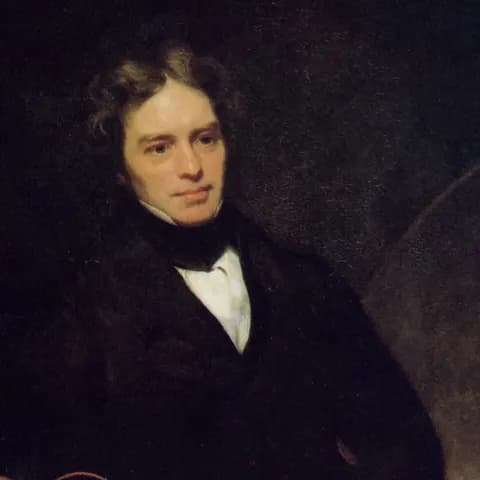 Michael Faraday's IQPhysicist & Chemist, estimated 150+150+
Rankings that include Davy
- The highest IQ scientists in historyRanked 56 of 74
Keep exploring
- Complex Problem DecompositionSign of high intelligence
- Hidden Signs You're Highly IntelligentSign of high intelligence
- Tyrion Lannister's IQGame of Thrones, fan estimate 150
- Erwin Smith's IQAttack on Titan, fan estimate 150
People also search for
All 307 historical IQ estimates, ranked with ranges and sources.
Davy's IQ is 150. What's yours?
Davy's estimate comes from the historical record. Yours can come from a real test: 25 visual reasoning questions.
25 questions · about 12 minutes
Sources
- Sir Humphry Davy, Encyclopaedia Britannica. Summarises his life, discoveries and safety lamp.
- Humphry Davy, Wikipedia. Covers his education, Royal Institution career and relationship with Faraday.
- Cox, C. M. (1926). The Early Mental Traits of Three Hundred Geniuses. Stanford University Press.
- Simonton, D. K. (2009). Genius 101. Springer.
- Cattell, R. B. (1971). Abilities: Their Structure, Growth, and Action. Houghton Mifflin.
Last reviewed October 2026. How we estimate historical IQ