Francis Crick IQ
Francis Crick's IQ was never published. LifeScore uses about 150 (range 135 to 165) as an editorial marker for the physicist turned biologist who co-discovered the double helix and worked out how the genetic code is read.
Crick's IQ is 150. What's yours?
25 questions · about 12 minutes
Think you're smarter than Francis Crick? Try question 1.
Which option completes the grid? One tap, no sign-up.
Key facts
- Estimated IQ
- IQ 150
- Known for
- Co-discovering the double helix structure of DNA
- Lived
- Molecular Biologist, 1916–2004
- Basis
- No documented estimate; editorial marker from the record
- Confidence
- Very low. Born after 1850, so outside the Cox 1926 study. No IQ test result is known.
Crick has no published score. 150 is an editorial marker for the theorist who co-solved DNA and then mapped how genetic information flows.
Francis Crick in brief
Francis Crick was born in Northampton, England, in 1916 and studied physics at University College London. The war interrupted his doctorate; he designed naval mines. Afterwards he switched to biology and joined the Cavendish Laboratory in Cambridge, where in 1953 he and James Watson built the double-helix model of DNA using X-ray data from Rosalind Franklin and Maurice Wilkins. He later moved to the Salk Institute to study consciousness and died in 2004.
What was Francis Crick's IQ?
No test score is known. LifeScore lists about 150 as an editorial marker, range 135 to 165. It reflects his late switch into biology, the double helix, the central dogma and his work on the triplet code, all theoretical insights drawn from other people's data.
Did Crick steal Rosalind Franklin's data?
Watson and Crick used Franklin's X-ray results, including Photo 51 and a research report, without her knowledge; Wilkins and Max Perutz shared them. They did not credit her fully in 1953. Historians now see her work as essential to the discovery.
What did Crick do after DNA?
He worked out with Sydney Brenner that the genetic code is read in groups of three bases, proposed the adaptor molecule later found as transfer RNA, and from 1976 studied consciousness at the Salk Institute, writing The Astonishing Hypothesis in 1994.
How smart was Francis Crick?
- 01
The double helix
The 1953 DNA model, built with James Watson. - 02
The central dogma
His 1958 framework for how information flows in cells. - 03
The triplet code
With Brenner, showed in 1961 that genes are read three bases at a time. - 04
Nobel Prize 1962
Shared with Watson and Wilkins.
How Crick thought
Crick worked by argument. He took experimental clues from many labs, talked through what structure could explain all of them, and tested the idea against the numbers. He was willing to be loudly wrong on the way to being right.
The evidence behind the estimate
An estimate built from the historical record, not a recovered test score.
What supports it
- He co-authored the 1953 Nature paper on the structure of DNA.
- He shared the 1962 Nobel Prize in Physiology or Medicine.
- His theoretical papers shaped molecular biology for decades.
What it cannot prove
- The double helix depended on Rosalind Franklin's experimental data.
- Achievement reflects education, opportunity, persistence and collaboration as well as raw reasoning ability.
- An editorial marker is a comparison aid built from achievement, not a measurement, and two careful readers could place it ten points apart.
Crick compared with Rosalind Franklin, Pauling, Darwin
| Figure | Estimate | Range |
|---|---|---|
| Francis Crick | 150 | 135–165 |
| Rosalind Franklin | 150+ | 140–160 |
| Linus Pauling | 160 | 145–175 |
| Charles Darwin | 140+ | 140–165 |
How would you score?
Where would you land next to Francis Crick?
Francis Crick's 150 is an estimate from the historical record, with a working range of 135 to 165. On the standard IQ scale an IQ of 150 sits at the 99.96th percentile: about 1 in 2,330 people score that high. Nobody can test Crick now. You can find out where you sit on the same scale.
- 100Average adult50th percentile
- 130Gifted linetop 2%, about 1 in 44
- 150Crick's99.96th percentile, about 1 in 2,330
- ?Youscored on the same scale
25 questions · about 12 minutes
Psychological profile
Francis Crick's IQ is represented here by a retrospective estimate of 150, not a verified test result. Francis Crick is best known for exceptional theoretical insight. The useful question is what the surviving evidence shows, not whether a precise modern score can be recovered.
Talkative, irreverent and fast. A physicist turned biologist who thought best in conversation.
The dominant archetype here is The Theorist. This archetype shapes decision patterns: what feels natural, what creates friction, and what blind spots tend to emerge.
Estimated IQ is 150. This is a rough estimate based on documented accomplishments and contemporary accounts, not a literal measurement.
Key traits
Theoretical Insight
He switched from physics to biology at about 31 and had no PhD when he co-discovered the double helix.Conversation
His central dogma of 1958 described information flowing from DNA to RNA to protein.Boldness
He spent his last decades on the neuroscience of consciousness.
One thing most people do not know
Crick and Watson announced their result in The Eagle pub in Cambridge, saying they had found the secret of life.
Francis Crick: common questions
Was Francis Crick a genius?
What personality type was Francis Crick?
What can we learn from Francis Crick?
The IQ-style test the NFL used
Francis Crick's IQ is an estimate. Yours could be real.
Before the draft, NFL teams gave prospects the Wonderlic: 50 questions in 12 minutes, and almost nobody finishes. We collected 241 reported player scores, each with its source. The average working adult scores about 21.
People with similar IQ estimates
Francis Crick's estimate of 150 falls in the genius level IQ range. Want your own number rather than Francis's? Take the free IQ test or the quick IQ test. See what an IQ of 150 means, place it on the IQ chart or check how rare it is with the IQ rarity calculator.
- Dorothy Hodgkin's IQChemist, estimated 150150
- Émilie du Châtelet's IQMathematician & Physicist, estimated 150150
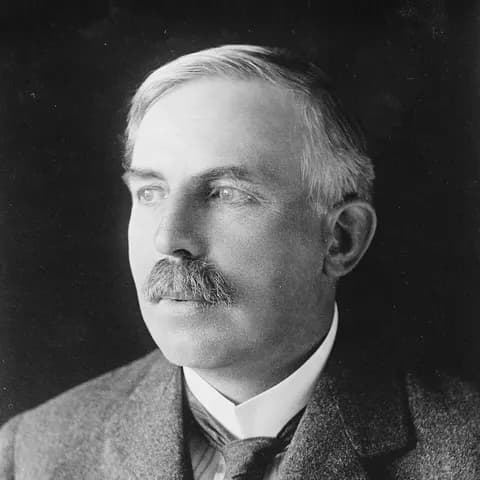 Ernest Rutherford's IQPhysicist, estimated 150+150+
- Humphry Davy's IQChemist, estimated 150150
- Jean Piaget's IQDevelopmental Psychologist, estimated 150150
Rankings that include Crick
- The highest IQ scientists in historyRanked 55 of 74
- The highest IQ Nobel Prize winnersRanked 20 of 35
Keep exploring
- Abstract Conceptual ThinkingSign of high intelligence
- Emotional Signs of High IntelligenceSign of high intelligence
- Tyrion Lannister's IQGame of Thrones, fan estimate 150
- Erwin Smith's IQAttack on Titan, fan estimate 150
People also search for
All 307 historical IQ estimates, ranked with ranges and sources.
Crick's IQ is 150. What's yours?
Crick's estimate comes from the historical record. Yours can come from a real test: 25 visual reasoning questions.
25 questions · about 12 minutes
Sources
- Francis Crick, biographical, Nobel Prize. Official biography covering his education and DNA work.
- Francis Crick, Encyclopaedia Britannica. Summarises the double helix and his later research.
- Cox, C. M. (1926). The Early Mental Traits of Three Hundred Geniuses. Stanford University Press.
- Simonton, D. K. (2009). Genius 101. Springer.
- Cattell, R. B. (1971). Abilities: Their Structure, Growth, and Action. Houghton Mifflin.
Last reviewed October 2026. How we estimate historical IQ