Mary Somerville IQ
Mary Somerville's IQ is unknown; no test or confirmed study figure exists. LifeScore uses about 150 (range 135 to 165) as an editorial marker for the self-taught Scot who translated Laplace and inspired the word scientist.
Somerville's IQ is 150. What's yours?
25 questions · about 12 minutes
Think you're smarter than Mary Somerville? Try question 1.
Which option completes the grid? One tap, no sign-up.
Key facts
- Estimated IQ
- IQ 150
- Known for
- The Mechanism of the Heavens; the person "scientist" was coined about
- Lived
- Scientist & Writer, 1780–1872
- Basis
- No documented estimate; editorial marker from the record
- Confidence
- Very low. Born inside the period Cox 1926 covered, but we could not confirm a Cox figure from an accessible tabulation, so none is quoted. No IQ test was ever given.
Somerville has no test and no Cox figure we could confirm. 150 is an editorial marker for a largely self-taught mathematician who explained Laplace to Britain.
Mary Somerville in brief
Mary Somerville was born in Jedburgh, Scotland, in 1780 and had only a year of formal schooling. She taught herself algebra and Euclid as a teenager and later studied mathematics seriously with the support of her second husband. Her 1831 translation and expansion of Laplace's celestial mechanics, The Mechanism of the Heavens, made her famous. She wrote further bestselling science books and died in Naples in 1872, aged 91.
What was Mary Somerville's IQ?
No figure exists. LifeScore lists about 150 as an editorial marker, range 135 to 165. It reflects her mastery of advanced mathematics with almost no schooling and her ability to explain the whole of physical science in one connected book.
Was Mary Somerville the first scientist?
Not the first person to do science, but the word was coined in connection with her. Reviewing her 1834 book On the Connexion of the Physical Sciences, William Whewell suggested "scientist" as a general term for people who study the sciences.
Why is Somerville College named after her?
Somerville Hall, founded in Oxford in 1879 as one of the first colleges for women, was named in her honour because she was a symbol of what women could achieve in learning. It is now Somerville College.
How smart was Mary Somerville?
- 01
The Mechanism of the Heavens (1831)
An English version and explanation of Laplace's celestial mechanics. - 02
On the Connexion of the Physical Sciences
A bestselling 1834 synthesis of the sciences. - 03
Royal Astronomical Society
One of its first two women members, in 1835. - 04
Physical Geography
An 1848 book used in schools and universities.
How Somerville thought
Somerville's gift was synthesis: she saw how astronomy, light, electricity and magnetism fitted together and explained the connections. Her book on the connections even suggested that irregularities in the orbit of Uranus might reveal an unseen planet, years before Neptune was found.
The evidence behind the estimate
An estimate built from the historical record, not a recovered test score.
What supports it
- Her translation of Laplace was used as a textbook at Cambridge.
- She was elected to the Royal Astronomical Society and received its honours.
- Her books sold widely and were reprinted many times.
What it cannot prove
- She worked against formal barriers to women in science, so her recorded output understates what she could have done with equal access.
- Her main contribution was explanation and synthesis rather than new theorems.
- An editorial marker is a comparison aid built from achievement, not a measurement, and two careful readers could place it ten points apart.
Somerville compared with Ada Lovelace, Germain, Laplace
| Figure | Estimate | Range |
|---|---|---|
| Mary Somerville | 150 | 135–165 |
| Ada Lovelace | 145 | 135–155 |
| Sophie Germain | 150 | 135–165 |
| Pierre-Simon Laplace | 170+ | 170–190 |
How would you score?
Where would you land next to Mary Somerville?
Mary Somerville's 150 is an estimate from the historical record, with a working range of 135 to 165. On the standard IQ scale an IQ of 150 sits at the 99.96th percentile: about 1 in 2,330 people score that high. Nobody can test Somerville now. You can find out where you sit on the same scale.
- 100Average adult50th percentile
- 130Gifted linetop 2%, about 1 in 44
- 150Somerville's99.96th percentile, about 1 in 2,330
- ?Youscored on the same scale
25 questions · about 12 minutes
Psychological profile
Mary Somerville's IQ is represented here by a retrospective estimate of 150, not a verified test result. Mary Somerville is best known for exceptional self-teaching. The useful question is what the surviving evidence shows, not whether a precise modern score can be recovered.
Modest, warm and endlessly curious. A self-taught scholar who connected the sciences for general readers.
The dominant archetype here is The Explainer. This archetype shapes decision patterns: what feels natural, what creates friction, and what blind spots tend to emerge.
Estimated IQ is 150. This is a rough estimate based on documented accomplishments and contemporary accounts, not a literal measurement.
Key traits
Self-teaching
She first met algebra in a fashion magazine puzzle and taught herself from books.Synthesis
William Whewell's 1834 review of her book used the new word "scientist".Clarity
She and Caroline Herschel became the first women members of the Royal Astronomical Society in 1835.
One thing most people do not know
She tutored the young Ada Lovelace and introduced her to Charles Babbage.
Mary Somerville: common questions
Was Mary Somerville a genius?
What personality type was Mary Somerville?
What can we learn from Mary Somerville?
The IQ-style test the NFL used
Mary Somerville's IQ is an estimate. Yours could be real.
Before the draft, NFL teams gave prospects the Wonderlic: 50 questions in 12 minutes, and almost nobody finishes. We collected 241 reported player scores, each with its source. The average working adult scores about 21.
People with similar IQ estimates
Mary Somerville's estimate of 150 falls in the genius level IQ range. Want your own number rather than Mary's? Take the free IQ test or the quick IQ test. See what an IQ of 150 means, place it on the IQ chart or check how rare it is with the IQ rarity calculator.
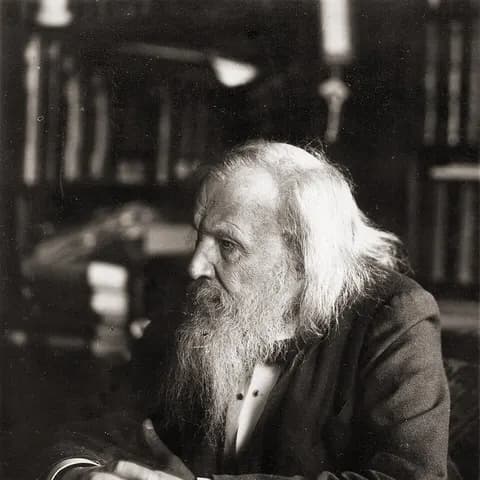 Dmitri Mendeleev's IQChemist, estimated 150+150+
- Dorothy Hodgkin's IQChemist, estimated 150150
- Émilie du Châtelet's IQMathematician & Physicist, estimated 150150
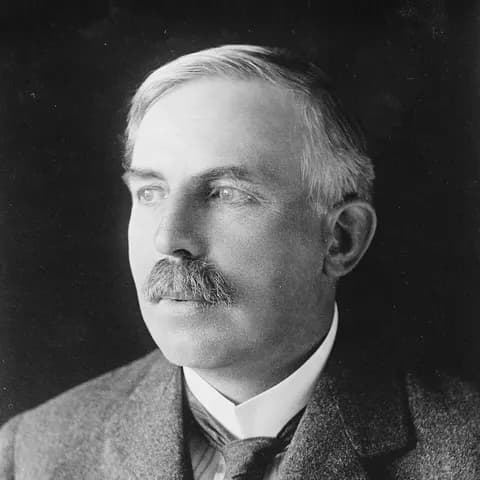 Ernest Rutherford's IQPhysicist, estimated 150+150+
- Francis Crick's IQMolecular Biologist, estimated 150150
Rankings that include Somerville
- The highest IQ scientists in historyRanked 59 of 74
- The smartest women in historyRanked 13 of 39
Keep exploring
- Quick Pattern RecognitionSign of high intelligence
- Strong Logical ReasoningSign of high intelligence
- Tyrion Lannister's IQGame of Thrones, fan estimate 150
- Erwin Smith's IQAttack on Titan, fan estimate 150
People also search for
All 307 historical IQ estimates, ranked with ranges and sources.
Somerville's IQ is 150. What's yours?
Somerville's estimate comes from the historical record. Yours can come from a real test: 25 visual reasoning questions.
25 questions · about 12 minutes
Sources
- Mary Fairfax Somerville biography, MacTutor, University of St Andrews. Covers her self-education, books and honours.
- Mary Somerville, Encyclopaedia Britannica. Summarises her life and works.
- Cox, C. M. (1926). The Early Mental Traits of Three Hundred Geniuses. Stanford University Press.
- Simonton, D. K. (2009). Genius 101. Springer.
- Cattell, R. B. (1971). Abilities: Their Structure, Growth, and Action. Houghton Mifflin.
Last reviewed October 2026. How we estimate historical IQ