Charles Babbage IQ
Charles Babbage's IQ is unknown; no test or confirmed study figure exists. LifeScore uses about 160 (range 145 to 175) as an editorial marker for the mathematician who designed a programmable computer in the 1830s.
Babbage's IQ is 160. What's yours?
25 questions · about 12 minutes
Think you're smarter than Charles Babbage? Try question 1.
Which option completes the grid? One tap, no sign-up.
Key facts
- Estimated IQ
- IQ 160
- Range
- IQ 145 to 175
- Known for
- Designing the first general-purpose computer
- Lived
- Mathematician & Inventor, 1791–1871
- Basis
- No documented estimate; editorial marker from the record
- Confidence
- Very low. Born inside the period Cox 1926 covered, but we could not confirm a Cox figure from an accessible tabulation, so none is quoted. No IQ test was ever given.
Babbage has no test and no Cox figure we could confirm. 160 is an editorial marker for the designer of a programmable computer a century before electronics.
Charles Babbage in brief
Charles Babbage was born in London in 1791 and studied mathematics at Cambridge, where he co-founded the Analytical Society. Frustrated by errors in printed tables, he designed the Difference Engine in the 1820s and then the far more ambitious Analytical Engine, a general-purpose programmable machine. Neither was completed in his lifetime. He was Lucasian Professor of Mathematics at Cambridge and worked with Ada Lovelace. He died in London in 1871.
What was Charles Babbage's IQ?
No figure exists. LifeScore lists about 160 as an editorial marker, range 145 to 175. It rests on the design of the Analytical Engine, which anticipated the structure of modern computers, and on his work in mathematics, economics and cryptography.
Did Babbage build a computer?
Not a complete one. He built part of the Difference Engine, but funding, engineering limits and disputes stopped him. In 1991 the Science Museum completed his Difference Engine No. 2 to his drawings, using tolerances achievable in his time, and it calculated correctly.
What was the Analytical Engine?
A design for a steam-powered machine that could follow any sequence of operations read from punched cards, with a memory, a processing unit and conditional branching. Ada Lovelace wrote what is often called the first program for it in 1843.
How smart was Charles Babbage?
- 01
The Difference Engine
A machine to calculate mathematical tables without error. - 02
The Analytical Engine
The first design for a general-purpose programmable computer. - 03
Lucasian Professor
Held Newton's former chair at Cambridge. - 04
Economy of Machinery
An 1832 book on factory production that influenced economists.
How Babbage thought
Babbage generalised. Having designed a machine for one kind of calculation, he asked what a machine for any calculation would need, and arrived at memory, processor and program. That leap from a specific tool to a general architecture is extraordinary abstract reasoning.
The evidence behind the estimate
An estimate built from the historical record, not a recovered test score.
What supports it
- His detailed designs survive and were built successfully in 1991.
- He held the Lucasian chair at Cambridge.
- He published on mathematics, economics, statistics and code-breaking.
What it cannot prove
- He never completed a working machine in his lifetime.
- Ada Lovelace contributed key ideas on what the engine could do.
- An editorial marker is a comparison aid built from achievement, not a measurement, and two careful readers could place it ten points apart.
Babbage compared with Ada Lovelace, Turing, Leibniz
| Figure | Estimate | Range |
|---|---|---|
| Charles Babbage | 160 | 145–175 |
| Ada Lovelace | 145 | 135–155 |
| Alan Turing | 170+ | 155–180 |
| Gottfried Leibniz | 170+ | 170–205 |
How would you score?
Where would you land next to Charles Babbage?
Charles Babbage's 160 is an estimate from the historical record, with a working range of 145 to 175. On the standard IQ scale an IQ of 160 sits at the 99.997th percentile: about 1 in 31,600 people score that high. Nobody can test Babbage now. You can find out where you sit on the same scale.
- 100Average adult50th percentile
- 130Gifted linetop 2%, about 1 in 44
- 160Babbage's99.997th percentile, about 1 in 31,600
- ?Youscored on the same scale
25 questions · about 12 minutes
Psychological profile
Charles Babbage's IQ is represented here by a retrospective estimate of 160, not a verified test result. Charles Babbage is best known for exceptional systems design. The useful question is what the surviving evidence shows, not whether a precise modern score can be recovered.
Brilliant, combative and impractical. A visionary who quarrelled with funders and street musicians alike.
The dominant archetype here is The Visionary. This archetype shapes decision patterns: what feels natural, what creates friction, and what blind spots tend to emerge.
Estimated IQ is 160. This is a rough estimate based on documented accomplishments and contemporary accounts, not a literal measurement.
Key traits
Systems Design
His Analytical Engine had a store (memory), a mill (processor) and punched-card programs.Mathematical Insight
He held the Lucasian chair at Cambridge, once Newton's, from 1828 to 1839.Ambition
The Science Museum in London built his Difference Engine No. 2 from his plans in 1991, and it worked.
One thing most people do not know
Half of his brain is preserved at the Hunterian Museum in London and the other half at the Science Museum.
Charles Babbage: common questions
Was Charles Babbage a genius?
What personality type was Charles Babbage?
What can we learn from Charles Babbage?
The IQ-style test the NFL used
Charles Babbage's IQ is an estimate. Yours could be real.
Before the draft, NFL teams gave prospects the Wonderlic: 50 questions in 12 minutes, and almost nobody finishes. We collected 241 reported player scores, each with its source. The average working adult scores about 21.
People with similar IQ estimates
Charles Babbage's estimate of 160 falls in the profoundly gifted IQ range. Want your own number rather than Charles's? Take the free IQ test or the quick IQ test. See what an IQ of 160 means, place it on the IQ chart or check how rare it is with the IQ rarity calculator.
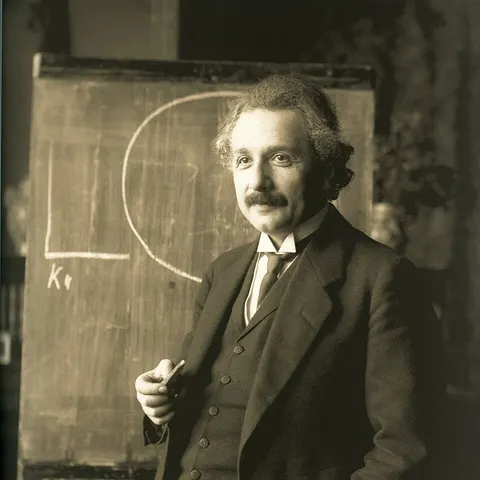 Albert Einstein's IQPhysicist, estimated 160+160+
- Ibn al-Haytham's IQMathematician & Physicist, estimated 160160
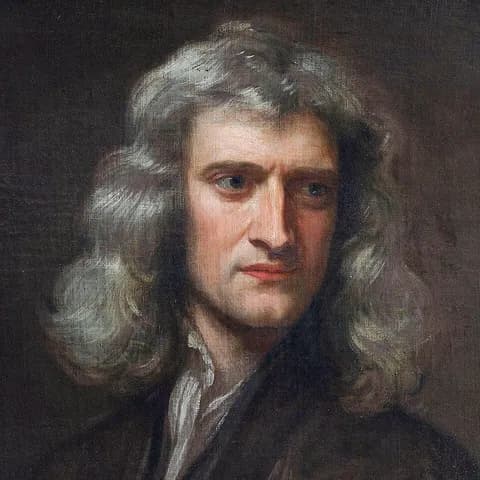 Isaac Newton's IQPhysicist & Mathematician, estimated 160+160+
- Josiah Willard Gibbs' IQPhysicist & Chemist, estimated 160160
- Leo Szilard's IQPhysicist, estimated 160160
Rankings that include Babbage
- The highest IQ scientists in historyRanked 16 of 74
- The highest IQ mathematicians in historyRanked 19 of 42
- The highest IQ inventors in historyRanked 2 of 21
Keep exploring
- Strong Logical ReasoningSign of high intelligence
- High Tolerance for AmbiguitySign of high intelligence
- L Lawliet's IQDeath Note, fan estimate 160
- Tony Stark's IQIron Man, fan estimate 160
People also search for
All 307 historical IQ estimates, ranked with ranges and sources.
Babbage's IQ is 160. What's yours?
Babbage's estimate comes from the historical record. Yours can come from a real test: 25 visual reasoning questions.
25 questions · about 12 minutes
Sources
- Charles Babbage, Encyclopaedia Britannica. Summarises his engines and career.
- Difference Engine No. 2, Science Museum Group. The engine built to his design and completed in 1991.
- Cox, C. M. (1926). The Early Mental Traits of Three Hundred Geniuses. Stanford University Press.
- Simonton, D. K. (2009). Genius 101. Springer.
- Cattell, R. B. (1971). Abilities: Their Structure, Growth, and Action. Houghton Mifflin.
Last reviewed October 2026. How we estimate historical IQ