David Hilbert IQ
David Hilbert's IQ is unknown. No test or published estimate exists. LifeScore uses about 165 (range 150 to 180) as an editorial marker for the mathematician whose 23 problems shaped twentieth-century research.
Hilbert's IQ is 165. What's yours?
25 questions · about 12 minutes
Think you're smarter than David Hilbert? Try question 1.
Which option completes the grid? One tap, no sign-up.
Key facts
- Estimated IQ
- IQ 165
- Known for
- Hilbert's 23 problems, Hilbert space and the axioms of geometry
- Lived
- Mathematician, 1862–1943
- Basis
- No documented estimate; editorial marker from the record
- Confidence
- Very low. Born after 1850, so outside the Cox 1926 study. No IQ test result is known.
Hilbert has no test or published estimate. 165 is an editorial marker for the mathematician who set the twentieth century's agenda in one lecture.
David Hilbert in brief
David Hilbert was born in Königsberg in 1862 and spent most of his career at the University of Göttingen, which he and Felix Klein made the leading mathematics department in the world. He worked in one field after another, each time leaving it transformed. In 1933 the Nazi government expelled many of his Jewish colleagues and students, and he died in a depleted Göttingen in 1943.
What was David Hilbert's IQ?
No figure exists. LifeScore lists about 165 as an editorial marker, range 150 to 180. It rests on first-rank work in several fields, invariant theory, number theory, geometry, analysis and logic, and on his role in setting the direction of the whole subject.
What are Hilbert's 23 problems?
At the 1900 International Congress of Mathematicians in Paris, Hilbert presented a list of 23 open problems, including the continuum hypothesis and the Riemann hypothesis. Solving one became a mark of distinction. Some are solved, some are still open, and a few were too vague to settle.
What is Hilbert's programme?
It was his plan to put all of mathematics on a complete, consistent set of axioms and prove that consistency by finite means. In 1931 Kurt Gödel showed that this cannot be done in full, one of the great turning points in logic.
How smart was David Hilbert?
- 01
The 23 problems
The 1900 list that guided mathematical research for a century. - 02
Foundations of Geometry
His 1899 book gave Euclidean geometry a complete modern set of axioms. - 03
Hilbert space
The infinite-dimensional spaces now used as the mathematics of quantum mechanics. - 04
Göttingen school
He trained dozens of doctoral students and attracted Noether, Weyl and von Neumann.
How Hilbert thought
Hilbert thought in axioms and in programmes. He would clear a field down to its essential assumptions, then ask what followed. He also thought strategically about mathematics itself: which problems, if solved, would move everything forward.
The evidence behind the estimate
An estimate built from the historical record, not a recovered test score.
What supports it
- His 1900 problem list is widely regarded as the most influential lecture in modern mathematics.
- He made foundational contributions in at least five separate fields.
- His students and colleagues included many of the leading mathematicians of the century.
What it cannot prove
- Part of his influence came from position and organisation, not only individual ability.
- Gödel showed that his central foundational hope could not be met.
- An editorial marker is a comparison aid built from achievement, not a measurement, and two careful readers could place it ten points apart.
Hilbert compared with Poincaré, Noether, Gödel
| Figure | Estimate | Range |
|---|---|---|
| David Hilbert | 165 | 150–180 |
| Henri Poincaré | 165 | 150–180 |
| Emmy Noether | 170+ | 155–180 |
| Kurt Gödel | 170+ | 160–180 |
How would you score?
Where would you land next to David Hilbert?
David Hilbert's 165 is an estimate from the historical record, with a working range of 150 to 180. On the standard IQ scale an IQ of 165 sits at the 99.99926th percentile: about 1 in 136,000 people score that high. Nobody can test Hilbert now. You can find out where you sit on the same scale.
- 100Average adult50th percentile
- 130Gifted linetop 2%, about 1 in 44
- 165Hilbert's99.99926th percentile, about 1 in 136,000
- ?Youscored on the same scale
25 questions · about 12 minutes
Psychological profile
David Hilbert's IQ is represented here by a retrospective estimate of 165, not a verified test result. David Hilbert is best known for exceptional axiomatic thinking. The useful question is what the surviving evidence shows, not whether a precise modern score can be recovered.
Optimistic and direct. He believed every mathematical problem could be solved and organised a generation to try.
The dominant archetype here is The Organiser. This archetype shapes decision patterns: what feels natural, what creates friction, and what blind spots tend to emerge.
Estimated IQ is 165. This is a rough estimate based on documented accomplishments and contemporary accounts, not a literal measurement.
Key traits
Axiomatic Thinking
His 1900 Paris lecture listed problems that guided research for a hundred years.Breadth
He made Göttingen the world centre of mathematics before the Nazi purge of 1933.Leadership
His epitaph reads "Wir müssen wissen. Wir werden wissen": we must know, we will know.
One thing most people do not know
Asked by a Nazi minister in 1934 how mathematics in Göttingen was doing now it was free of Jewish influence, he reportedly replied that there was really none any more.
David Hilbert: common questions
Was David Hilbert a genius?
What personality type was David Hilbert?
What can we learn from David Hilbert?
The IQ-style test the NFL used
David Hilbert's IQ is an estimate. Yours could be real.
Before the draft, NFL teams gave prospects the Wonderlic: 50 questions in 12 minutes, and almost nobody finishes. We collected 241 reported player scores, each with its source. The average working adult scores about 21.
People with similar IQ estimates
David Hilbert's estimate of 165 falls in the profoundly gifted IQ range. Want your own number rather than David's? Take the free IQ test or the quick IQ test. See what an IQ of 165 means, place it on the IQ chart or check how rare it is with the IQ rarity calculator.
- Murray Gell-Mann's IQPhysicist, estimated 165165
- Norbert Wiener's IQMathematician, estimated 165165
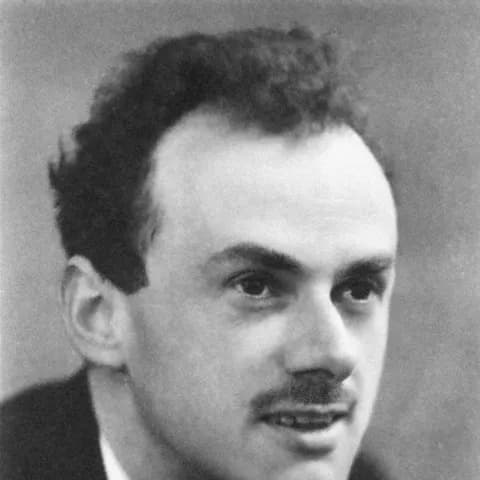 Paul Dirac's IQTheoretical Physicist, estimated 165+165+
- Thomas Young's IQPhysician & Polymath, estimated 165165
- Wolfgang Pauli's IQPhysicist, estimated 165165
Rankings that include Hilbert
- The highest IQ mathematicians in historyRanked 14 of 42
Keep exploring
- Strong Logical ReasoningSign of high intelligence
- Rapid Learning SpeedSign of high intelligence
- Sherlock Holmes' IQSherlock Holmes (canon), fan estimate 165
- Bruce Banner's IQMarvel Cinematic Universe, fan estimate 165
People also search for
All 307 historical IQ estimates, ranked with ranges and sources.
Hilbert's IQ is 165. What's yours?
Hilbert's estimate comes from the historical record. Yours can come from a real test: 25 visual reasoning questions.
25 questions · about 12 minutes
Sources
- David Hilbert biography, MacTutor, University of St Andrews. Covers his work, his problems and the Göttingen school.
- Hilbert's problems, Wikipedia. Lists the 23 problems and their current status.
- Cox, C. M. (1926). The Early Mental Traits of Three Hundred Geniuses. Stanford University Press.
- Simonton, D. K. (2009). Genius 101. Springer.
- Cattell, R. B. (1971). Abilities: Their Structure, Growth, and Action. Houghton Mifflin.
Last reviewed October 2026. How we estimate historical IQ