Wolfgang Pauli IQ
Wolfgang Pauli's IQ is unknown. No test was published. LifeScore uses about 165 (range 150 to 180) as an editorial marker for the Nobel laureate behind the exclusion principle, who wrote a classic review of relativity at 21.
Pauli's IQ is 165. What's yours?
25 questions · about 12 minutes
Think you're smarter than Wolfgang Pauli? Try question 1.
Which option completes the grid? One tap, no sign-up.
Key facts
- Estimated IQ
- IQ 165
- Known for
- The Pauli exclusion principle and predicting the neutrino
- Lived
- Physicist, 1900–1958
- Basis
- No documented estimate; editorial marker from the record
- Confidence
- Very low. Born after 1850, so outside the Cox 1926 study. No IQ test result is known.
Pauli has no test score. 165 is an editorial marker for a precocious physicist whose 1921 review of relativity, written at 21, impressed Einstein.
Wolfgang Pauli in brief
Wolfgang Pauli was born in Vienna in 1900; his godfather was the physicist and philosopher Ernst Mach. He studied in Munich under Arnold Sommerfeld, worked with Max Born and Niels Bohr, and spent most of his career at ETH Zurich. He formulated the exclusion principle in 1925, proposed the neutrino in 1930 and received the Nobel Prize in Physics in 1945. He died in Zurich in 1958.
What was Wolfgang Pauli's IQ?
No score exists. LifeScore lists about 165 as an editorial marker, range 150 to 180. The case rests on unusual precocity, an authoritative review of relativity at 21, and the exclusion principle, which explains the structure of the periodic table.
What is the Pauli exclusion principle?
It says no two electrons in an atom can be in exactly the same quantum state. That is why electrons fill separate shells, why atoms have size and why chemistry works the way it does. Pauli stated it in 1925 and won the 1945 Nobel Prize for it.
What is the Pauli effect?
A running joke among physicists that experimental equipment broke when Pauli was nearby. Colleagues collected stories of apparatus failing as he walked in. Pauli, who was interested in Jung's idea of synchronicity, took the joke more seriously than most.
How smart was Wolfgang Pauli?
- 01
Exclusion principle
The 1925 rule that explains electron shells and the periodic table. - 02
The neutrino
In 1930 he proposed an undetected particle to save energy conservation in beta decay; it was found in 1956. - 03
Spin matrices
His mathematical treatment of electron spin is still standard. - 04
Nobel Prize 1945
Awarded for the discovery of the exclusion principle.
How Pauli thought
Pauli tested ideas by trying to break them. He was rarely the first to publish but often the first to see exactly what was wrong with an argument, and colleagues sent him drafts to face his criticism before publishing. That kind of rigorous error-spotting is a strong reasoning skill in its own right.
The evidence behind the estimate
An estimate built from the historical record, not a recovered test score.
What supports it
- His 1921 encyclopedia article on relativity was a standard reference for decades.
- He won the 1945 Nobel Prize in Physics for the exclusion principle.
- He predicted the neutrino 26 years before it was detected.
What it cannot prove
- His reputation for brilliance owes something to his famous wit.
- Achievement reflects education, opportunity, persistence and collaboration as well as raw reasoning ability.
- An editorial marker is a comparison aid built from achievement, not a measurement, and two careful readers could place it ten points apart.
Pauli compared with Heisenberg, Dirac, Fermi
| Figure | Estimate | Range |
|---|---|---|
| Wolfgang Pauli | 165 | 150–180 |
| Werner Heisenberg | 155+ | 145–165 |
| Paul Dirac | 165+ | 155–175 |
| Enrico Fermi | 160+ | 150–170 |
How would you score?
Where would you land next to Wolfgang Pauli?
Wolfgang Pauli's 165 is an estimate from the historical record, with a working range of 150 to 180. On the standard IQ scale an IQ of 165 sits at the 99.99926th percentile: about 1 in 136,000 people score that high. Nobody can test Pauli now. You can find out where you sit on the same scale.
- 100Average adult50th percentile
- 130Gifted linetop 2%, about 1 in 44
- 165Pauli's99.99926th percentile, about 1 in 136,000
- ?Youscored on the same scale
25 questions · about 12 minutes
Psychological profile
Wolfgang Pauli's IQ is represented here by a retrospective estimate of 165, not a verified test result. Wolfgang Pauli is best known for exceptional precision. The useful question is what the surviving evidence shows, not whether a precise modern score can be recovered.
Sharp, sarcastic and exacting. Known as the conscience of physics for his blunt criticism of weak ideas.
The dominant archetype here is The Critic. This archetype shapes decision patterns: what feels natural, what creates friction, and what blind spots tend to emerge.
Estimated IQ is 165. This is a rough estimate based on documented accomplishments and contemporary accounts, not a literal measurement.
Key traits
Precision
At 21 he wrote a 237-page encyclopedia article on relativity that Einstein reviewed with admiration.Critical Judgement
He dismissed a muddled paper as "not even wrong", a phrase physicists still use.Precocity
He worked for years with Carl Jung on the meaning of his dreams and on synchronicity.
One thing most people do not know
He announced the neutrino in a letter that began "Dear radioactive ladies and gentlemen".
Wolfgang Pauli: common questions
Was Wolfgang Pauli a genius?
What personality type was Wolfgang Pauli?
What can we learn from Wolfgang Pauli?
The IQ-style test the NFL used
Wolfgang Pauli's IQ is an estimate. Yours could be real.
Before the draft, NFL teams gave prospects the Wonderlic: 50 questions in 12 minutes, and almost nobody finishes. We collected 241 reported player scores, each with its source. The average working adult scores about 21.
People with similar IQ estimates
Wolfgang Pauli's estimate of 165 falls in the profoundly gifted IQ range. Want your own number rather than Wolfgang's? Take the free IQ test or the quick IQ test. See what an IQ of 165 means, place it on the IQ chart or check how rare it is with the IQ rarity calculator.
- Norbert Wiener's IQMathematician, estimated 165165
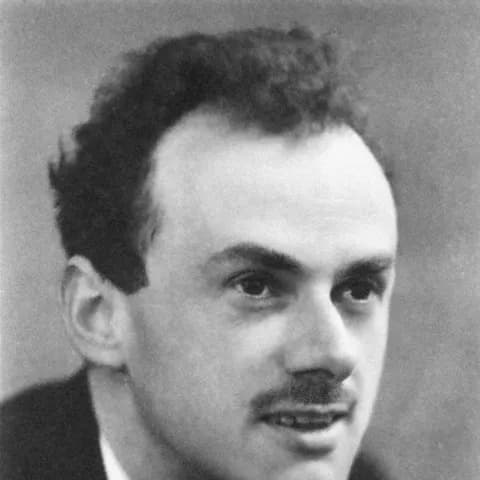 Paul Dirac's IQTheoretical Physicist, estimated 165+165+
- Thomas Young's IQPhysician & Polymath, estimated 165165
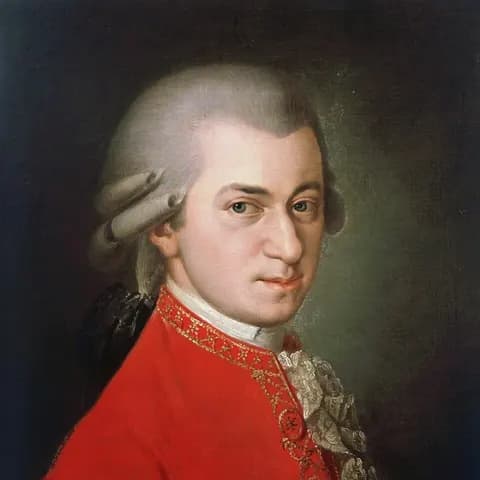 Wolfgang Amadeus Mozart's IQComposer, estimated 165+165+
 Archimedes' IQMathematician & Inventor, estimated 165+165+
Rankings that include Pauli
- The highest IQ scientists in historyRanked 14 of 74
- The highest IQ Nobel Prize winnersRanked 4 of 35
Keep exploring
- High Working Memory CapacitySign of high intelligence
- Signs of High Emotional Intelligence (EQ)Sign of high intelligence
- Sherlock Holmes' IQSherlock Holmes (canon), fan estimate 165
- Bruce Banner's IQMarvel Cinematic Universe, fan estimate 165
People also search for
All 307 historical IQ estimates, ranked with ranges and sources.
Pauli's IQ is 165. What's yours?
Pauli's estimate comes from the historical record. Yours can come from a real test: 25 visual reasoning questions.
25 questions · about 12 minutes
Sources
- Wolfgang Pauli, biographical, Nobel Prize. Official biography covering his education and research.
- Wolfgang Pauli, Encyclopaedia Britannica. Summarises the exclusion principle and the neutrino proposal.
- Cox, C. M. (1926). The Early Mental Traits of Three Hundred Geniuses. Stanford University Press.
- Simonton, D. K. (2009). Genius 101. Springer.
- Cattell, R. B. (1971). Abilities: Their Structure, Growth, and Action. Houghton Mifflin.
Last reviewed October 2026. How we estimate historical IQ