Omar Khayyam IQ
Omar Khayyam's IQ is unknown; he died in 1131. LifeScore uses about 155 (range 140 to 170) as an editorial marker for a scholar who solved cubic equations geometrically, built a calendar and wrote famous poetry.
Khayyam's IQ is 155. What's yours?
25 questions · about 12 minutes
Think you're smarter than Omar Khayyam? Try question 1.
Which option completes the grid? One tap, no sign-up.
Key facts
- Estimated IQ
- IQ 155
- Known for
- Geometric solutions of cubic equations, the Jalali calendar and the Rubaiyat
- Lived
- Mathematician, Astronomer & Poet, 1048–1131
- Basis
- No documented estimate; editorial marker from the record
- Confidence
- Very low. Lived long before IQ testing and before the period Cox 1926 covered. No test or published estimate exists.
Khayyam has no test or published estimate. 155 is an editorial marker for a man who did first-rate algebra, reformed a calendar and is remembered as a poet.
Omar Khayyam in brief
Omar Khayyam was born in Nishapur in Persia in 1048 and worked under the Seljuk rulers, who supported his astronomy in Isfahan. He wrote a major treatise on algebra in his twenties, led a calendar reform in the 1070s and wrote on philosophy and music. In the West he is best known for the Rubaiyat, a set of quatrains on fate and pleasure, although scholars debate how many he actually wrote.
What was Omar Khayyam's IQ?
No figure exists, from a test or a study. LifeScore lists about 155 as an editorial marker, with a range of 140 to 170. It rests on his Treatise on Demonstration of Problems of Algebra, his work on the parallel postulate, his calendar reform and the range of his writing.
What did Omar Khayyam do in mathematics?
He gave the first general classification of cubic equations and showed how to solve each type using intersecting conic sections such as parabolas and circles. He also wrote a critique of Euclid's parallel postulate that later influenced non-Euclidean geometry.
How precise was the Jalali calendar?
Very. The calendar his team designed in the 1070s used a cycle of leap years that keeps it closer to the solar year than the Gregorian calendar introduced five centuries later. A version of it is still the basis of the Iranian calendar.
How smart was Omar Khayyam?
- 01
Cubic equations
A full classification of cubics, solved by intersecting conic sections. - 02
The Jalali calendar
A solar calendar of remarkable precision, adopted in 1079. - 03
Commentary on Euclid
A study of the parallel postulate that anticipated later geometry. - 04
The Rubaiyat
Quatrains attributed to him became one of the best-known poems in the world.
How Khayyam thought
Khayyam linked algebra and geometry: when an equation could not be solved by formula, he drew two curves and found where they met. That switch between a symbolic and a visual representation is a hallmark of strong spatial and abstract reasoning.
The evidence behind the estimate
An estimate built from the historical record, not a recovered test score.
What supports it
- His algebra treatise survives and gives a systematic geometric theory of cubic equations.
- He directed the astronomical work at Isfahan that produced the Jalali calendar.
- He wrote on music theory, mechanics and philosophy as well as mathematics.
What it cannot prove
- Which quatrains he actually wrote is disputed by scholars.
- Biographical sources are sparse and partly legendary.
- An editorial marker is a comparison aid built from achievement, not a measurement, and two careful readers could place it ten points apart.
Khayyam compared with Al-Khwarizmi, Sina), Euclid
| Figure | Estimate | Range |
|---|---|---|
| Omar Khayyam | 155 | 140–170 |
| Al-Khwarizmi | 150 | 135–165 |
| Avicenna (Ibn Sina) | 165 | 150–180 |
| Euclid | 155 | 140–170 |
How would you score?
Where would you land next to Omar Khayyam?
Omar Khayyam's 155 is an estimate from the historical record, with a working range of 140 to 170. On the standard IQ scale an IQ of 155 sits at the 99.99th percentile: about 1 in 8,137 people score that high. Nobody can test Khayyam now. You can find out where you sit on the same scale.
- 100Average adult50th percentile
- 130Gifted linetop 2%, about 1 in 44
- 155Khayyam's99.99th percentile, about 1 in 8,137
- ?Youscored on the same scale
25 questions · about 12 minutes
Psychological profile
Omar Khayyam's IQ is represented here by a retrospective estimate of 155, not a verified test result. Omar Khayyam is best known for exceptional geometric insight. The useful question is what the surviving evidence shows, not whether a precise modern score can be recovered.
Sceptical, wry and wide-ranging. A mathematician by trade whose verses question certainty itself.
The dominant archetype here is The Polymath. This archetype shapes decision patterns: what feels natural, what creates friction, and what blind spots tend to emerge.
Estimated IQ is 155. This is a rough estimate based on documented accomplishments and contemporary accounts, not a literal measurement.
Key traits
Geometric Insight
He classified cubic equations into types and solved each by intersecting conic sections.Scepticism
He led the observatory at Isfahan that produced the Jalali calendar for the Seljuk sultan Malik-Shah.Range
The Rubaiyat attributed to him became famous in English through Edward FitzGerald's 1859 version.
One thing most people do not know
His tomb in Nishapur, Iran, was rebuilt in 1963 and is decorated with lines from the Rubaiyat.
Omar Khayyam: common questions
Was Omar Khayyam a genius?
What personality type was Omar Khayyam?
What can we learn from Omar Khayyam?
The IQ-style test the NFL used
Omar Khayyam's IQ is an estimate. Yours could be real.
Before the draft, NFL teams gave prospects the Wonderlic: 50 questions in 12 minutes, and almost nobody finishes. We collected 241 reported player scores, each with its source. The average working adult scores about 21.
People with similar IQ estimates
Omar Khayyam's estimate of 155 falls in the genius level IQ range. Want your own number rather than Omar's? Take the free IQ test or the quick IQ test. See what an IQ of 155 means, place it on the IQ chart or check how rare it is with the IQ rarity calculator.
- Edward Teller's IQPhysicist, estimated 155155
- Euclid's IQMathematician, estimated 155155
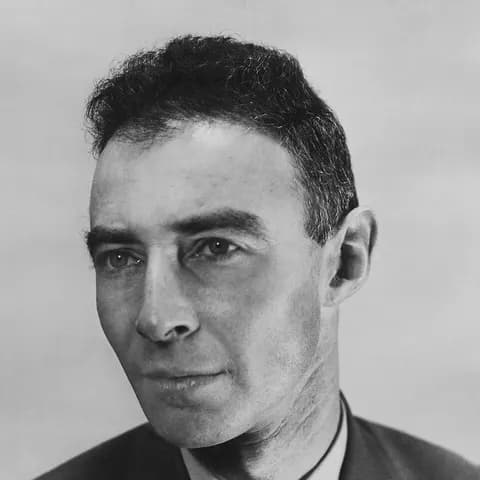 J. Robert Oppenheimer's IQTheoretical Physicist, estimated 155+155+
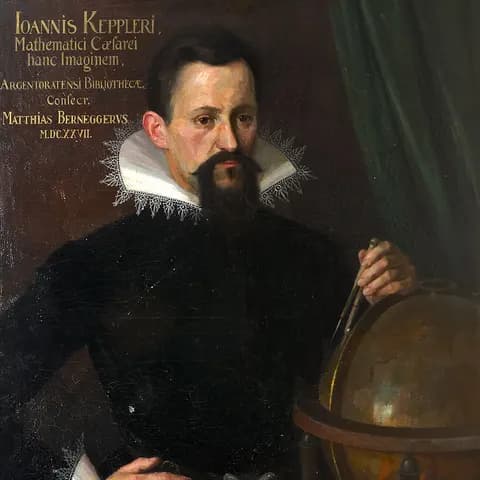 Johannes Kepler's IQAstronomer & Mathematician, estimated 155+155+
- John Nash's IQMathematician, estimated 155155
Rankings that include Khayyam
- The highest IQ scientists in historyRanked 42 of 74
- The highest IQ mathematicians in historyRanked 33 of 42
Keep exploring
- Abstract Conceptual ThinkingSign of high intelligence
- High Mental FlexibilitySign of high intelligence
- Light Yagami's IQDeath Note, fan estimate 155
- Kurisu Makise's IQSteins;Gate, fan estimate 155
People also search for
All 307 historical IQ estimates, ranked with ranges and sources.
Khayyam's IQ is 155. What's yours?
Khayyam's estimate comes from the historical record. Yours can come from a real test: 25 visual reasoning questions.
25 questions · about 12 minutes
Sources
- Omar Khayyam biography, MacTutor, University of St Andrews. Covers his algebra, calendar work and critique of the parallel postulate.
- Omar Khayyam, Encyclopaedia Britannica. Summarises his mathematics, astronomy and poetry.
- Cox, C. M. (1926). The Early Mental Traits of Three Hundred Geniuses. Stanford University Press.
- Simonton, D. K. (2009). Genius 101. Springer.
- Cattell, R. B. (1971). Abilities: Their Structure, Growth, and Action. Houghton Mifflin.
Last reviewed October 2026. How we estimate historical IQ