Claude Shannon IQ
Claude Shannon's IQ was never published. LifeScore uses about 160 (range 145 to 175) as an editorial marker for the engineer whose 1948 paper founded information theory and whose thesis at 21 linked logic to circuits.
Shannon's IQ is 160. What's yours?
25 questions · about 12 minutes
Think you're smarter than Claude Shannon? Try question 1.
Which option completes the grid? One tap, no sign-up.
Key facts
- Estimated IQ
- IQ 160
- Range
- IQ 145 to 175
- Known for
- Founding information theory and the idea of the bit
- Lived
- Mathematician & Engineer, 1916–2001
- Basis
- No documented estimate; editorial marker from the record
- Confidence
- Very low. Born after 1850, so outside the Cox 1926 study. No IQ test result is known.
Shannon has no published score. 160 is an editorial marker for the engineer who founded information theory and linked logic to circuits at 21.
Claude Shannon in brief
Claude Shannon was born in Petoskey, Michigan, in 1916 and grew up tinkering with radios and telegraphs. He studied mathematics and electrical engineering at the University of Michigan and MIT, where his 1937 master's thesis showed how to design switching circuits with Boolean logic. At Bell Labs he published A Mathematical Theory of Communication in 1948, founding information theory. He later taught at MIT, built playful machines and died in 2001.
What was Claude Shannon's IQ?
No test score is known. LifeScore lists about 160 as an editorial marker, range 145 to 175. It rests on two foundational papers, the 1937 thesis on switching circuits and the 1948 theory of communication, each of which created a field.
What is information theory?
It measures information in bits and sets the limits on how much data a channel can carry without error. Shannon showed that any noisy channel has a maximum rate, its capacity, and that clever coding can approach it. Every phone, modem and streaming service relies on it.
What did Shannon's master's thesis show?
That electrical relay circuits can carry out Boolean logic, true and false, AND and OR. That meant circuits could be designed with algebra instead of trial and error. It is the logical foundation of every digital computer.
How smart was Claude Shannon?
- 01
Switching circuit theory
His 1937 thesis linked Boolean logic to electrical circuits. - 02
Information theory
Founded in his 1948 paper at Bell Labs. - 03
Cryptography
Proved the one-time pad is unbreakable when used correctly. - 04
Computer chess
A 1950 paper on programming a computer to play chess.
How Shannon thought
Shannon found the simplest abstract model of a messy problem. He stripped meaning out of communication and asked only how many yes-or-no choices a message contains. That ruthless abstraction is exactly the skill behind hard reasoning puzzles.
The evidence behind the estimate
An estimate built from the historical record, not a recovered test score.
What supports it
- His 1937 thesis and 1948 paper are among the most cited works in engineering.
- He received the National Medal of Science and the first Kyoto Prize in 1985.
- He made early contributions to cryptography, computer chess and artificial intelligence.
What it cannot prove
- His later output was small, as he turned to hobbies.
- Achievement reflects education, opportunity, persistence and collaboration as well as raw reasoning ability.
- An editorial marker is a comparison aid built from achievement, not a measurement, and two careful readers could place it ten points apart.
Shannon compared with Turing, von Neumann, Wiener
| Figure | Estimate | Range |
|---|---|---|
| Claude Shannon | 160 | 145–175 |
| Alan Turing | 170+ | 155–180 |
| John von Neumann | 170+ | 160–190 |
| Norbert Wiener | 165 | 150–180 |
How would you score?
Where would you land next to Claude Shannon?
Claude Shannon's 160 is an estimate from the historical record, with a working range of 145 to 175. On the standard IQ scale an IQ of 160 sits at the 99.997th percentile: about 1 in 31,600 people score that high. Nobody can test Shannon now. You can find out where you sit on the same scale.
- 100Average adult50th percentile
- 130Gifted linetop 2%, about 1 in 44
- 160Shannon's99.997th percentile, about 1 in 31,600
- ?Youscored on the same scale
25 questions · about 12 minutes
Psychological profile
Claude Shannon's IQ is represented here by a retrospective estimate of 160, not a verified test result. Claude Shannon is best known for exceptional abstraction. The useful question is what the surviving evidence shows, not whether a precise modern score can be recovered.
Playful, shy and original. He juggled, rode a unicycle in the corridors and built machines for fun.
The dominant archetype here is The Tinkerer. This archetype shapes decision patterns: what feels natural, what creates friction, and what blind spots tend to emerge.
Estimated IQ is 160. This is a rough estimate based on documented accomplishments and contemporary accounts, not a literal measurement.
Key traits
Abstraction
His 1937 master's thesis is often called the most important master's thesis of the century.Playfulness
His 1948 paper introduced the word bit, credited to his colleague John Tukey.Originality
He built a mechanical mouse called Theseus that learned its way through a maze in 1950.
One thing most people do not know
He built a juggling machine and a calculator that worked in Roman numerals.
Claude Shannon: common questions
Was Claude Shannon a genius?
What personality type was Claude Shannon?
What can we learn from Claude Shannon?
The IQ-style test the NFL used
Claude Shannon's IQ is an estimate. Yours could be real.
Before the draft, NFL teams gave prospects the Wonderlic: 50 questions in 12 minutes, and almost nobody finishes. We collected 241 reported player scores, each with its source. The average working adult scores about 21.
People with similar IQ estimates
Claude Shannon's estimate of 160 falls in the profoundly gifted IQ range. Want your own number rather than Claude's? Take the free IQ test or the quick IQ test. See what an IQ of 160 means, place it on the IQ chart or check how rare it is with the IQ rarity calculator.
- Linus Pauling's IQChemist, estimated 160160
- Ludwig Boltzmann's IQPhysicist, estimated 160160
- Maryam Mirzakhani's IQMathematician, estimated 160160
- Niels Henrik Abel's IQMathematician, estimated 160160
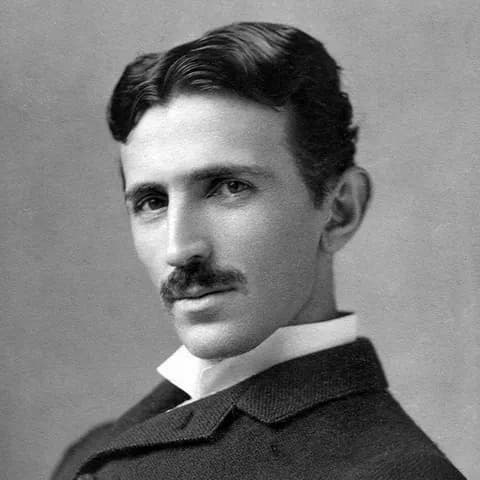 Nikola Tesla's IQInventor, estimated 160+160+
Rankings that include Shannon
- The highest IQ scientists in historyRanked 17 of 74
- The highest IQ mathematicians in historyRanked 20 of 42
- The highest IQ inventors in historyRanked 3 of 21
Keep exploring
- Quick Pattern RecognitionSign of high intelligence
- Deep Intellectual CuriositySign of high intelligence
- L Lawliet's IQDeath Note, fan estimate 160
- Tony Stark's IQIron Man, fan estimate 160
People also search for
All 307 historical IQ estimates, ranked with ranges and sources.
Shannon's IQ is 160. What's yours?
Shannon's estimate comes from the historical record. Yours can come from a real test: 25 visual reasoning questions.
25 questions · about 12 minutes
Sources
- Claude Shannon, Encyclopaedia Britannica. Summarises his thesis, information theory and later work.
- A Mathematical Theory of Communication, Wikipedia. Describes the 1948 paper and its influence.
- Cox, C. M. (1926). The Early Mental Traits of Three Hundred Geniuses. Stanford University Press.
- Simonton, D. K. (2009). Genius 101. Springer.
- Cattell, R. B. (1971). Abilities: Their Structure, Growth, and Action. Houghton Mifflin.
Last reviewed October 2026. How we estimate historical IQ