Paul Erdős IQ
Paul Erdős' IQ was never published. LifeScore uses about 160 (range 145 to 175) as an editorial marker for a former child prodigy who wrote about 1,500 papers with more than 500 co-authors.
Erdős' IQ is 160. What's yours?
25 questions · about 12 minutes
Think you're smarter than Paul Erdos? Try question 1.
Which option completes the grid? One tap, no sign-up.
Key facts
- Estimated IQ
- IQ 160
- Range
- IQ 145 to 175
- Known for
- About 1,500 papers with 500 co-authors; the Erdős number
- Lived
- Mathematician, 1913–1996
- Basis
- No documented estimate; editorial marker from the record
- Confidence
- Very low. Born after 1850, so outside the Cox 1926 study. No IQ test result is known.
Erdős has no published score. 160 is an editorial marker for the most prolific mathematician of the twentieth century, a former child prodigy at mental arithmetic.
Paul Erdős in brief
Paul Erdős was born in Budapest in 1913 to two mathematics teachers. He was a celebrated child calculator, earned his doctorate at 21 and left Hungary in 1934 as antisemitism grew. He never held a permanent job for long. Instead he travelled between universities and friends for six decades, working on problems in number theory, combinatorics and graph theory with hundreds of collaborators until his death in 1996.
What was Paul Erdős' IQ?
There is no recorded test. LifeScore lists about 160 as an editorial marker, range 145 to 175. It reflects childhood feats of calculation, a new proof of a classic theorem on primes at 18 and an output of papers that no mathematician has matched in modern times.
What is an Erdős number?
It measures collaboration distance. Erdős has number 0, his co-authors 1, their co-authors 2, and so on. Most working mathematicians have a small Erdős number, and the idea became a model for studying networks.
Did Erdős take amphetamines?
Yes, he openly used them for much of his later life. A friend bet him he could not stop for a month; he stopped, won, and complained that mathematics had been set back a month. His collaborators did not regard the drug as the source of his ability.
How smart was Paul Erdős?
- 01
About 1,500 papers
More published mathematical papers than anyone since Euler. - 02
Elementary proof of the prime number theorem
With Atle Selberg in 1949, without complex analysis. - 03
Probabilistic method
He pioneered using probability to prove that objects exist, a key tool in combinatorics. - 04
Wolf Prize 1983/84
He shared the Wolf Prize in Mathematics and gave most of the money away.
How Erdős thought
Erdős was a problem solver and a problem poser. He asked short, sharp questions that opened whole fields, and he solved them in conversation, moving fast between cases. His style shows the speed and working memory that timed reasoning tests try to capture.
The evidence behind the estimate
An estimate built from the historical record, not a recovered test score.
What supports it
- His published output, around 1,500 papers, is documented in bibliographies of his work.
- At 20 he gave a new proof of Chebyshev's theorem that there is always a prime between n and 2n.
- He was elected to academies across the world and won the Wolf Prize.
What it cannot prove
- Much of his output was collaborative, which makes individual credit hard to weigh.
- Childhood stories come from friends and biographers, not tests.
- An editorial marker is a comparison aid built from achievement, not a measurement, and two careful readers could place it ten points apart.
Erdős compared with Ramanujan, von Neumann, Euler
| Figure | Estimate | Range |
|---|---|---|
| Paul Erdős | 160 | 145–175 |
| Srinivasa Ramanujan | 170+ | 155–185 |
| John von Neumann | 170+ | 160–190 |
| Leonhard Euler | 170+ | 160–180 |
How would you score?
Where would you land next to Paul Erdős?
Paul Erdős' 160 is an estimate from the historical record, with a working range of 145 to 175. On the standard IQ scale an IQ of 160 sits at the 99.997th percentile: about 1 in 31,600 people score that high. Nobody can test Erdős now. You can find out where you sit on the same scale.
- 100Average adult50th percentile
- 130Gifted linetop 2%, about 1 in 44
- 160Erdős'99.997th percentile, about 1 in 31,600
- ?Youscored on the same scale
25 questions · about 12 minutes
Psychological profile
Paul Erdős's IQ is represented here by a retrospective estimate of 160, not a verified test result. Paul Erdős is best known for exceptional problem posing. The useful question is what the surviving evidence shows, not whether a precise modern score can be recovered.
Restless, generous and entirely devoted to mathematics. He owned almost nothing and travelled from collaborator to collaborator.
The dominant archetype here is The Wanderer. This archetype shapes decision patterns: what feels natural, what creates friction, and what blind spots tend to emerge.
Estimated IQ is 160. This is a rough estimate based on documented accomplishments and contemporary accounts, not a literal measurement.
Key traits
Problem Posing
As a small child in Budapest he could work out how many seconds a person had lived.Collaboration
He lived out of a suitcase for decades, arriving at a colleague's door and announcing that his brain was open.Mental Calculation
He offered cash prizes for problems he could not solve, from 25 to several thousand dollars.
One thing most people do not know
He called children "epsilons", after the Greek letter mathematicians use for small quantities.
Paul Erdős: common questions
Was Paul Erdős a genius?
What personality type was Paul Erdős?
What can we learn from Paul Erdős?
The IQ-style test the NFL used
Paul Erdős' IQ is an estimate. Yours could be real.
Before the draft, NFL teams gave prospects the Wonderlic: 50 questions in 12 minutes, and almost nobody finishes. We collected 241 reported player scores, each with its source. The average working adult scores about 21.
People with similar IQ estimates
Paul Erdős' estimate of 160 falls in the profoundly gifted IQ range. Want your own number rather than Paul's? Take the free IQ test or the quick IQ test. See what an IQ of 160 means, place it on the IQ chart or check how rare it is with the IQ rarity calculator.
- Georg Cantor's IQMathematician, estimated 160160
- Ibn al-Haytham's IQMathematician & Physicist, estimated 160160
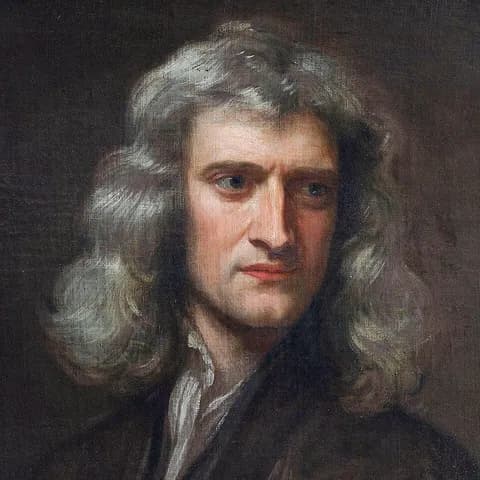 Isaac Newton's IQPhysicist & Mathematician, estimated 160+160+
- Josiah Willard Gibbs' IQPhysicist & Chemist, estimated 160160
- Leo Szilard's IQPhysicist, estimated 160160
Rankings that include Erdős
- The highest IQ mathematicians in historyRanked 27 of 42
Keep exploring
- Quick Pattern RecognitionSign of high intelligence
- Efficient Information ProcessingSign of high intelligence
- L Lawliet's IQDeath Note, fan estimate 160
- Tony Stark's IQIron Man, fan estimate 160
People also search for
All 307 historical IQ estimates, ranked with ranges and sources.
Erdős' IQ is 160. What's yours?
Erdős' estimate comes from the historical record. Yours can come from a real test: 25 visual reasoning questions.
25 questions · about 12 minutes
Sources
- Paul Erdős biography, MacTutor, University of St Andrews. Covers his childhood, his travels and his main results.
- Paul Erdős, Encyclopaedia Britannica. Summarises his output and the Erdős number.
- Cox, C. M. (1926). The Early Mental Traits of Three Hundred Geniuses. Stanford University Press.
- Simonton, D. K. (2009). Genius 101. Springer.
- Cattell, R. B. (1971). Abilities: Their Structure, Growth, and Action. Houghton Mifflin.
Last reviewed October 2026. How we estimate historical IQ