Muhammad Ali IQ
Muhammad Ali's IQ was never measured on a full IQ test. He failed the Army's qualifying test in 1964, scoring around the 16th percentile by press accounts, and the figure 78 is often quoted. LifeScore lists about 85 (range 78 to 100) as a marker.
Muhammad Ali's IQ is 85. What's yours?
25 questions · about 12 minutes
Think you're smarter than Muhammad Ali? Try question 1.
Which option completes the grid? One tap, no sign-up.
Key facts
- Estimated IQ
- IQ 85
- Known for
- Three-time heavyweight champion and draft resister
- Lived
- Boxer & Activist, 1942–2016
- Basis
- Military qualifying test (1964): below the Army cut-off
- Confidence
- Low. He took the Armed Forces Qualification Test in 1964 and failed it twice. Press reports at the time put him around the 16th percentile, and the figure 78 is often quoted; the test is not a full IQ test and we could not check the original records.
Ali failed the Army's aptitude test in 1964, a documented fact. The test measured reading and arithmetic on paper, which he struggled with, and almost certainly missed his verbal speed and wit. 85 is a marker for that result, not a measured IQ.
Muhammad Ali in brief
Muhammad Ali was born Cassius Clay in Louisville, Kentucky, in 1942. He took up boxing at 12 after his bicycle was stolen, won Olympic gold in 1960 and became heavyweight champion in 1964, when he joined the Nation of Islam and changed his name. He failed the Army's qualifying test in 1964, then in 1967 refused induction on religious grounds and was stripped of his title. The Supreme Court overturned his conviction in 1971. He regained the title twice and died in 2016.
What was Muhammad Ali's IQ?
No full IQ test result is known. He failed the Armed Forces Qualification Test in 1964, and reports put him around the 16th percentile, roughly equivalent to an IQ in the mid-80s; the number 78 is widely repeated. LifeScore lists about 85 with a range of 78 to 100.
Why did Muhammad Ali fail the Army test?
The test was a timed paper exam of vocabulary, arithmetic and reasoning. Ali had struggled to read throughout school, and some biographers suggest dyslexia. He was retested under observation and failed again, and was classified 1-Y, unfit for service.
Was Muhammad Ali smart?
His quick verbal improvisation, rhymes and press-conference wit suggest strong verbal fluency and social intelligence that a written test under time pressure would not capture. His case is a well-known example of how one test can miss real abilities.
How smart was Muhammad Ali?
- 01
Olympic gold (1960)
Light heavyweight, Rome. - 02
Heavyweight champion
Won the title three times. - 03
Ali v. United States (1971)
The Supreme Court overturned his draft conviction. - 04
Presidential Medal of Freedom
Awarded in 2005.
How Muhammad Ali thought
In the ring Ali reasoned in real time: reading opponents, setting traps such as the rope-a-dope against George Foreman in 1974. Outside it he used language as a weapon and a show. Those are fast, practical and verbal forms of intelligence.
The evidence behind the estimate
An estimate built from the historical record, not a recovered test score.
What supports it
- Army records and press reports document that he failed the 1964 test twice.
- In 1966 the Army lowered its standard, and he was reclassified 1-A.
- His school records show he struggled with reading.
What it cannot prove
- The AFQT is a military screening test, not a full IQ test.
- Reading difficulties lower scores on paper tests regardless of reasoning ability.
- The exact score has not been verified from original records.
Muhammad Ali compared with MLK, Bruce Lee, Mandela
| Figure | Estimate | Range |
|---|---|---|
| Muhammad Ali | 85 | 78–100 |
| Martin Luther King Jr. | 130+ | 120–140 |
| Bruce Lee | 130 | 115–145 |
| Nelson Mandela | 130+ | 115–140 |
How would you score?
Where would you land next to Muhammad Ali?
Muhammad Ali's 85 is an estimate from the historical record, with a working range of 78 to 100. On the standard IQ scale an IQ of 85 sits at the 15.9th percentile. Nobody can test Muhammad Ali now. You can find out where you sit on the same scale.
- 100Average adult50th percentile
- 130Gifted linetop 2%, about 1 in 44
- 85Muhammad Ali's15.9th percentile
- ?Youscored on the same scale
25 questions · about 12 minutes
Psychological profile
Muhammad Ali's IQ is represented here by a retrospective estimate of 85, not a verified test result. Muhammad Ali is best known for exceptional verbal wit. The useful question is what the surviving evidence shows, not whether a precise modern score can be recovered.
Brash, quick-witted and principled. A poet of trash talk who gave up his title for his beliefs.
The dominant archetype here is The Showman. This archetype shapes decision patterns: what feels natural, what creates friction, and what blind spots tend to emerge.
Estimated IQ is 85. This is a rough estimate based on documented accomplishments and contemporary accounts, not a literal measurement.
Key traits
Verbal Wit
After failing the test he said, "I said I was the greatest, not the smartest."Courage
He struggled with reading at school and graduated near the bottom of his class; dyslexia has been suggested.Self-belief
He composed rhyming predictions of the round in which he would win.
One thing most people do not know
He lit the Olympic cauldron at the 1996 Atlanta Games.
Muhammad Ali: common questions
Was Muhammad Ali a genius?
What personality type was Muhammad Ali?
What can we learn from Muhammad Ali?
The IQ-style test the NFL used
Muhammad Ali's IQ is an estimate. Yours could be real.
Before the draft, NFL teams gave prospects the Wonderlic: 50 questions in 12 minutes, and almost nobody finishes. We collected 241 reported player scores, each with its source. The average working adult scores about 21.
People with similar IQ estimates
Muhammad Ali's estimate of 85 falls in the low average IQ range. Want your own number rather than Muhammad's? Take the free IQ test or the quick IQ test. See what an IQ of 85 means, place it on the IQ chart or check how rare it is with the IQ rarity calculator.
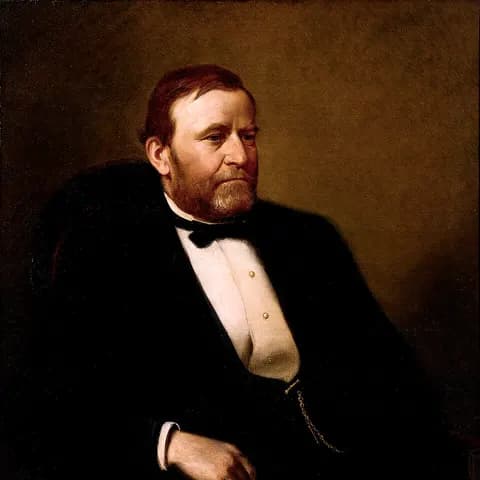 Ulysses S. Grant's IQ18th US President & Union General, estimated 115+115+
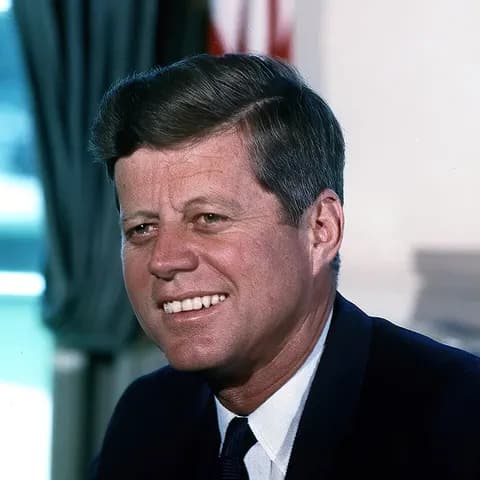 John F. Kennedy's IQUS President, estimated 119119
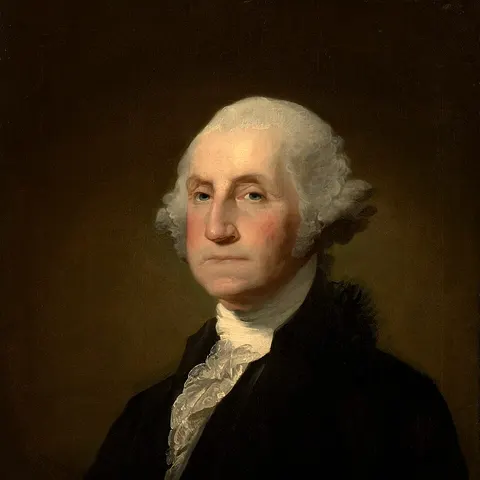 George Washington's IQUS Founding Father & President, estimated 120+120+
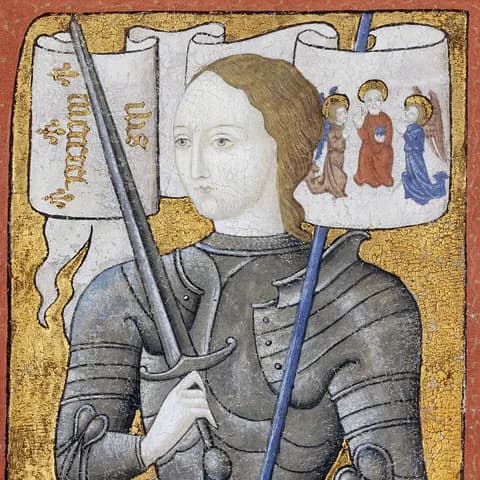 Joan of Arc's IQFrench Military Leader, estimated 120+120+
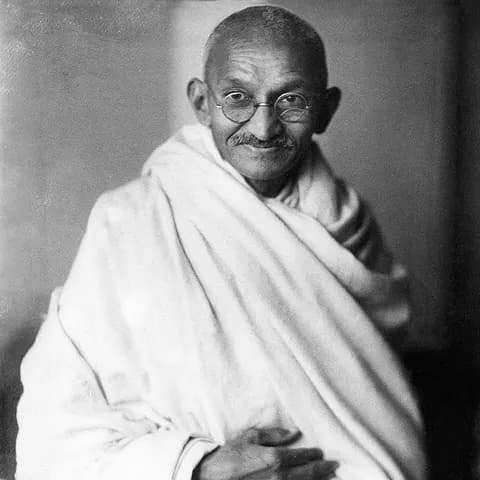 Mahatma Gandhi's IQLeader of Indian Independence, estimated 125+125+
Keep exploring
- High Tolerance for AmbiguitySign of high intelligence
- Strong Logical ReasoningSign of high intelligence
People also search for
All 307 historical IQ estimates, ranked with ranges and sources.
Muhammad Ali's IQ is 85. What's yours?
Muhammad Ali's estimate comes from the historical record. Yours can come from a real test: 25 visual reasoning questions.
25 questions · about 12 minutes
Sources
- Muhammad Ali, Encyclopaedia Britannica. Summarises his career, draft case and life.
- Muhammad Ali, Wikipedia. Covers the 1964 qualifying test, reclassification and Supreme Court case.
- Cox, C. M. (1926). The Early Mental Traits of Three Hundred Geniuses. Stanford University Press.
- Simonton, D. K. (2009). Genius 101. Springer.
- Cattell, R. B. (1971). Abilities: Their Structure, Growth, and Action. Houghton Mifflin.
Last reviewed October 2026. How we estimate historical IQ