Ulysses S. Grant IQ
Ulysses S. Grant's IQ is estimated at 108 to 130. Catharine Cox's 1926 study gave him a corrected 130, one of the lowest in her list; he never took a test. His case shows how far battlefield judgement and writing can differ from test scores.
Grant's IQ is 115+. What's yours?
25 questions · about 12 minutes
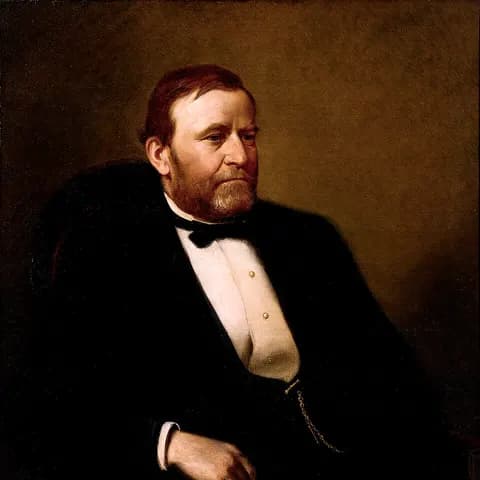
Key facts
- Estimated IQ
- 115+
- Known for
- Commanding the Union army and the Personal Memoirs
- Lived
- 18th US President & Union General, 1822–1885
- Basis
- Cox 1926 historiometric estimate
- Confidence
- Low. Grant died in 1885. No IQ test was ever given; the figure comes from a 1926 study that rated historical figures from biographies.
Cox's corrected estimate for Grant was 130, among the lowest she gave to a major figure. It shows that her method, and IQ itself, miss the strengths that made him effective.
What was Ulysses S. Grant's IQ?
Grant never took an IQ test. Catharine Cox's 1926 study gave him a corrected estimate of 130. Adjusted for the Flynn effect that is about 108, so LifeScore uses a range of 108 to 130, with 115+ as the marker. His military record is far stronger than the number.
Was Grant a good general?
Yes. He captured Fort Donelson in 1862, took Vicksburg on 4 July 1863 after a long campaign and, as general-in-chief from 1864, pressed Robert E. Lee until Lee surrendered at Appomattox on 9 April 1865. Historians rate him far higher than earlier generations did.
Why are the Personal Memoirs so highly regarded?
Grant wrote them in 1884 and 1885 while dying of throat cancer, to provide for his family after a financial swindle. He finished days before his death on 23 July 1885. Mark Twain and many later critics praised their clear, direct prose.
Where does the 130 figure come from?
The 130 is Catharine Cox's corrected estimate from her 1926 study of 301 eminent people born between 1450 and 1850. She rated each person from biographical records of what they could do as a child and young adult, then corrected for gaps in the record.
Cox's numbers sit on an old ratio-IQ scale. One secondary tabulation subtracts about 22 points for the Flynn effect, which puts Ulysses S. Grant near 110.
LifeScore lists 115+, and the working range of 110 to 130 spans both figures. None of them is a test result.
How smart was Ulysses S. Grant?
- 01
Fort Donelson and Vicksburg
He took Fort Donelson in 1862 and Vicksburg in 1863, splitting the Confederacy. - 02
Appomattox
He accepted Lee's surrender on 9 April 1865 on generous terms. - 03
The presidency
He served two terms from 1869 to 1877 and backed the Fifteenth Amendment and enforcement against the Ku Klux Klan. - 04
Personal Memoirs
He finished them days before his death in 1885, and they sold extremely well.
How Grant thought
Grant thought in terms of movement and pressure. He kept the enemy under attack on several fronts, accepted losses to keep the initiative and stayed calm when plans failed. His orders and memoirs are famously short and clear.
The evidence behind the estimate
An estimate built from the historical record, not a recovered test score.
What supports it
- Cox's 1926 study gave Grant a corrected estimate of 130, which falls to about 108 after a Flynn-effect adjustment.
- He won at Fort Donelson in 1862 and Vicksburg in 1863 and accepted Lee's surrender in 1865.
- He wrote the Personal Memoirs in about a year while dying of cancer.
What it cannot prove
- Cox rated early life, and Grant was an undistinguished student and failed in business before the war.
- Command skill rests on judgement, composure and experience, which IQ tests do not target directly.
- Cox's scale runs higher than modern deviation IQ, by roughly 22 points in one tabulation.
Grant compared with Lincoln, Napoleon, Washington
| Figure | Estimate | Range |
|---|---|---|
| Ulysses S. Grant | 115+ | 110–130 |
| Abraham Lincoln | 140+ | 130–150 |
| Napoleon Bonaparte | 145 | 125–155 |
| George Washington | 120+ | 120–140 |
Psychological profile
Ulysses S. Grant's IQ is represented here by a retrospective estimate of 115+, not a verified test result. Ulysses S. Grant is best known for exceptional composure. The useful question is what the surviving evidence shows, not whether a precise modern score can be recovered.
Calm, persistent and plain-spoken. Unremarkable as a student and in business, but exceptional under the pressure of command.
The dominant archetype here is The Strategist. This archetype shapes decision patterns: what feels natural, what creates friction, and what blind spots tend to emerge.
Estimated IQ is 115+. This is a rough estimate based on documented accomplishments and contemporary accounts, not a literal measurement.
Key traits
Composure
He did well in maths and horsemanship at West Point but graduated in the middle of his class.Persistence
He failed at farming and at several businesses before the Civil War.Clear Writing
He wrote his memoirs while terminally ill and under financial pressure.
One thing most people do not know
Mark Twain published Grant's memoirs through his own publishing house, and they earned the family about $450,000.
Ulysses S. Grant: common questions
Was Ulysses S. Grant a genius?
What personality type was Ulysses S. Grant?
What can we learn from Ulysses S. Grant?
More famous IQs
 Abraham Lincoln IQPresident of the United States140+
 Napoleon Bonaparte IQEmperor of the French145
 George Washington IQUS Founding Father & President120+
 Cleopatra IQPharaoh of Egypt140
 Winston Churchill IQPrime Minister135
 Genghis Khan IQFounder of the Mongol Empire130+
 Joan of Arc IQFrench Military Leader120+
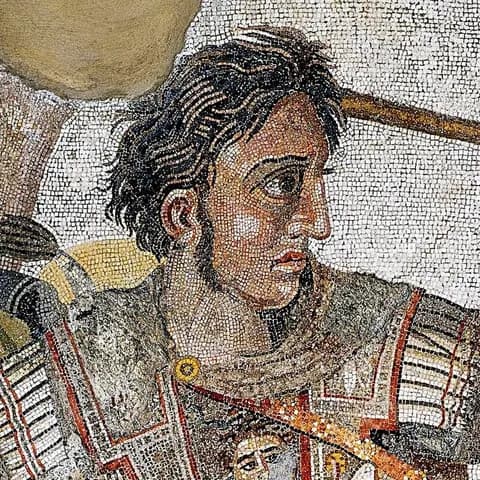 Alexander the Great IQKing of Macedonia150+
Keep exploring
- All famous IQs, ranked157 figures with ranges and sources
- What an IQ of 110 meansPercentile, rarity and classification
- What an IQ of 115 meansPercentile, rarity and classification
- What an IQ of 130 meansPercentile, rarity and classification
- Quick Pattern RecognitionSigns of high intelligence
- Rapid Learning SpeedSigns of high intelligence
- Einstein IQ testA short visual reasoning challenge
Grant's IQ is 115+. What's yours?
Grant's estimate comes from the historical record. Yours can come from a real test: 25 visual reasoning questions.
25 questions · about 12 minutes
Sources
- Ulysses S. Grant, Encyclopaedia Britannica. Biography covering his military career, presidency and Personal Memoirs.
- The Early Mental Traits of Three Hundred Geniuses (Cox, 1926), Stanford University Press, via Internet Archive. The original historiometric study. Cox rated 301 eminent people born 1450 to 1850 from records of their childhood and youth.
- Cox's IQ estimates of 301 eminent geniuses, IQ Comparison Site. Secondary tabulation of Cox's corrected estimates, with a version adjusted by about 22 points for the Flynn effect.
- Cox, C. M. (1926). The Early Mental Traits of Three Hundred Geniuses. Stanford University Press.
- Simonton, D. K. (2009). Genius 101. Springer.
- Cattell, R. B. (1971). Abilities: Their Structure, Growth, and Action. Houghton Mifflin.
- Portrait: Henry Ulke · Public domain · Wikimedia Commons
Last reviewed September 2026. How we estimate historical IQ