Paul Morphy IQ
Paul Morphy's IQ is unknown; no test or confirmed study figure exists. LifeScore uses about 150 (range 135 to 165) as an editorial marker for the New Orleans prodigy who beat Europe's best at 21 and played eight blindfold games at once.
Morphy's IQ is 150. What's yours?
25 questions · about 12 minutes
Think you're smarter than Paul Morphy? Try question 1.
Which option completes the grid? One tap, no sign-up.
Key facts
- Estimated IQ
- IQ 150
- Known for
- The unofficial world's best chess player of the 1850s
- Lived
- Chess Prodigy, 1837–1884
- Basis
- No documented estimate; editorial marker from the record
- Confidence
- Very low. Born inside the period Cox 1926 covered, but we could not confirm a Cox figure from an accessible tabulation, so none is quoted. No IQ test was ever given.
Morphy has no test and no Cox figure we could confirm. 150 is an editorial marker for a chess genius with a reportedly prodigious memory.
Paul Morphy in brief
Paul Morphy was born in New Orleans in 1837 into a wealthy, cultured family. He learned chess as a child and beat a visiting Hungarian master at 12. He earned a law degree from the University of Louisiana before he was old enough to practise, reportedly memorising the Louisiana civil code. In 1857 and 1858 he won the first American Chess Congress and crushed Europe's leading players. He then abandoned chess, failed to build a law career and died in New Orleans in 1884.
What was Paul Morphy's IQ?
No figure exists. LifeScore lists about 150 as an editorial marker, range 135 to 165. It rests on his blindfold simultaneous play, his law degree at 19 and a style of chess decades ahead of its time.
Why did Paul Morphy quit chess?
He wanted to be a lawyer, not a professional player, and saw chess as a pastime. His law career never took off, partly because of the Civil War and partly because clients saw him as a chess player. He became reclusive in later life.
What is the Opera Game?
A short game Morphy played in 1858 at the Paris opera against the Duke of Brunswick and Count Isouard. He developed quickly, sacrificed material and checkmated in 17 moves. It is still used to teach the value of development.
How smart was Paul Morphy?
- 01
First American Chess Congress (1857)
Won the tournament in New York. - 02
European tour (1858)
Defeated Anderssen, Harrwitz and others. - 03
Blindfold displays
Eight simultaneous games in Paris. - 04
Law degree
Graduated at 19.
How Morphy thought
Morphy saw that quick development and open lines win before an opponent is ready. That principle, so obvious now, was a genuine insight then. Blindfold play also points to exceptional visual memory and the ability to hold several boards in mind.
The evidence behind the estimate
An estimate built from the historical record, not a recovered test score.
What supports it
- His match and tournament results are documented.
- His blindfold exhibition in Paris was widely reported.
- He earned a law degree from the University of Louisiana in 1857.
What it cannot prove
- Chess skill correlates only modestly with IQ in research samples; at the top, practice and pattern memory matter more.
- Claims about memorising the civil code are anecdotal.
- An editorial marker is a comparison aid built from achievement, not a measurement, and two careful readers could place it ten points apart.
Morphy compared with Capablanca, Fischer, Lasker
| Figure | Estimate | Range |
|---|---|---|
| Paul Morphy | 150 | 135–165 |
| José Raúl Capablanca | 140 | 125–155 |
| Bobby Fischer | 187 | 181–187 |
| Emanuel Lasker | 155 | 140–170 |
How would you score?
Where would you land next to Paul Morphy?
Paul Morphy's 150 is an estimate from the historical record, with a working range of 135 to 165. On the standard IQ scale an IQ of 150 sits at the 99.96th percentile: about 1 in 2,330 people score that high. Nobody can test Morphy now. You can find out where you sit on the same scale.
- 100Average adult50th percentile
- 130Gifted linetop 2%, about 1 in 44
- 150Morphy's99.96th percentile, about 1 in 2,330
- ?Youscored on the same scale
25 questions · about 12 minutes
Psychological profile
Paul Morphy's IQ is represented here by a retrospective estimate of 150, not a verified test result. Paul Morphy is best known for exceptional calculation. The useful question is what the surviving evidence shows, not whether a precise modern score can be recovered.
Modest, brilliant and withdrawn. The pride and sorrow of chess, who quit at 21.
The dominant archetype here is The Prodigy. This archetype shapes decision patterns: what feels natural, what creates friction, and what blind spots tend to emerge.
Estimated IQ is 150. This is a rough estimate based on documented accomplishments and contemporary accounts, not a literal measurement.
Key traits
Calculation
He played eight blindfold games at once in Paris in 1858, winning six and drawing two.Memory
He was said to have memorised the Louisiana civil code.Positional Insight
He understood open lines and rapid development long before others explained them.
One thing most people do not know
His father, Alonzo Morphy, was a justice of the Louisiana Supreme Court.
Paul Morphy: common questions
Was Paul Morphy a genius?
What personality type was Paul Morphy?
What can we learn from Paul Morphy?
The IQ-style test the NFL used
Paul Morphy's IQ is an estimate. Yours could be real.
Before the draft, NFL teams gave prospects the Wonderlic: 50 questions in 12 minutes, and almost nobody finishes. We collected 241 reported player scores, each with its source. The average working adult scores about 21.
People with similar IQ estimates
Paul Morphy's estimate of 150 falls in the genius level IQ range. Want your own number rather than Paul's? Take the free IQ test or the quick IQ test. See what an IQ of 150 means, place it on the IQ chart or check how rare it is with the IQ rarity calculator.
 Thomas Jefferson's IQUS Founding Father, estimated 150+150+
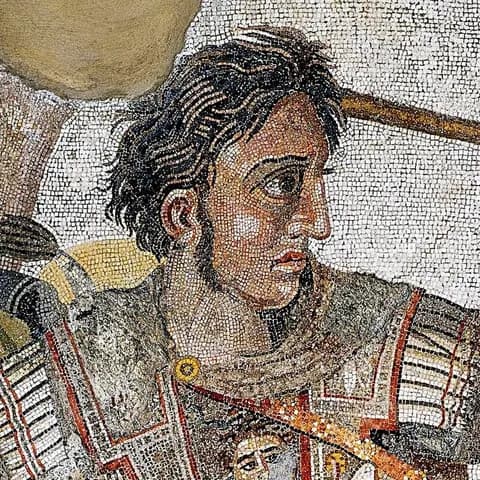 Alexander the Great's IQKing of Macedonia, estimated 150+150+
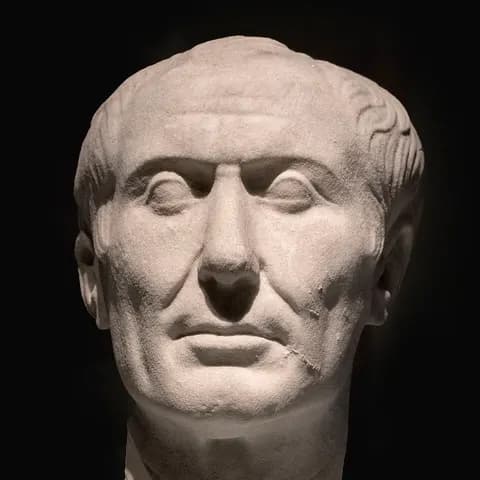 Julius Caesar's IQRoman Dictator & General, estimated 150+150+
- Augustus Caesar's IQFirst Roman Emperor, estimated 150+150+
- James A. Garfield's IQ20th US President, estimated 152152
Rankings that include Morphy
- The smartest chess players and their IQsRanked 3 of 6
Keep exploring
- Seeing Long-Range ImplicationsSign of high intelligence
- Exceptional Memory RetentionSign of high intelligence
- Tyrion Lannister's IQGame of Thrones, fan estimate 150
- Erwin Smith's IQAttack on Titan, fan estimate 150
People also search for
All 307 historical IQ estimates, ranked with ranges and sources.
Morphy's IQ is 150. What's yours?
Morphy's estimate comes from the historical record. Yours can come from a real test: 25 visual reasoning questions.
25 questions · about 12 minutes
Sources
- Paul Morphy, Encyclopaedia Britannica. Summarises his life, chess career and retirement.
- Paul Morphy, Wikipedia. Covers his games, blindfold play and later life.
- Cox, C. M. (1926). The Early Mental Traits of Three Hundred Geniuses. Stanford University Press.
- Simonton, D. K. (2009). Genius 101. Springer.
- Cattell, R. B. (1971). Abilities: Their Structure, Growth, and Action. Houghton Mifflin.
Last reviewed October 2026. How we estimate historical IQ