Edward Jenner IQ
Edward Jenner's IQ is unknown; no test or confirmed study figure exists. LifeScore uses about 140 (range 125 to 155) as an editorial marker for the country doctor who created the smallpox vaccine in 1796.
Jenner's IQ is 140. What's yours?
25 questions · about 12 minutes
Think you're smarter than Edward Jenner? Try question 1.
Which option completes the grid? One tap, no sign-up.
Key facts
- Estimated IQ
- IQ 140
- Known for
- The smallpox vaccine and the word vaccination
- Lived
- Physician, 1749–1823
- Basis
- No documented estimate; editorial marker from the record
- Confidence
- Very low. Born inside the period Cox 1926 covered, but we could not confirm a Cox figure from an accessible tabulation, so none is quoted. No IQ test was ever given.
Jenner has no test and no Cox figure we could confirm. 140 is an editorial marker for a country doctor who turned folk observation into a tested method.
Edward Jenner in brief
Edward Jenner was born in Berkeley, Gloucestershire, in 1749, the son of a vicar. He trained as a surgeon's apprentice and then in London under John Hunter, before returning to work as a country doctor. Testing a rural belief that milkmaids who caught cowpox were safe from smallpox, he inoculated a boy, James Phipps, in 1796. His 1798 report launched vaccination. He died in Berkeley in 1823.
What was Edward Jenner's IQ?
No figure exists. LifeScore lists about 140 as an editorial marker, range 125 to 155. It rests on his scientific method: he took a rural belief about cowpox, tested it, documented the cases and published the results for others to repeat.
How did Jenner discover vaccination?
In May 1796 he took material from a cowpox sore on the hand of milkmaid Sarah Nelmes and put it into a cut on eight-year-old James Phipps. Weeks later he exposed the boy to smallpox, and he did not fall ill. Jenner published 23 cases in 1798.
Was Jenner the first to use cowpox?
No. A Dorset farmer, Benjamin Jesty, had used cowpox on his family in 1774, and others had noticed the link. Jenner's contribution was testing it systematically, publishing the evidence and promoting vaccination until it spread worldwide.
Who was James Phipps?
The eight-year-old son of Jenner's gardener. In May 1796 Jenner infected him with cowpox taken from sores on the hand of a milkmaid, Sarah Nelmes, then later exposed him to smallpox. He did not fall ill. The experiment would be unethical today. Jenner later gave Phipps a cottage to live in.
How smart was Edward Jenner?
- 01
Smallpox vaccination
The 1796 experiment and 1798 report that began vaccination. - 02
The cuckoo study
Showed young cuckoos push their host's eggs out of the nest. - 03
Spreading the method
He sent vaccine and instructions around the world, often without charge. - 04
Eradication legacy
Smallpox was declared eradicated by the World Health Organization in 1980.
How Jenner thought
Jenner turned anecdote into evidence. He noticed a pattern in rural life, framed it as a testable claim and recorded each case. That move from story to controlled test is the core of scientific reasoning.
The evidence behind the estimate
An estimate built from the historical record, not a recovered test score.
What supports it
- His 1798 Inquiry documented cases of cowpox protecting against smallpox.
- His Royal Society paper on cuckoos showed careful field observation.
- Vaccination spread worldwide within a few years of his report.
What it cannot prove
- Others had used cowpox before him.
- His first experiment would not meet modern ethical standards.
- An editorial marker is a comparison aid built from achievement, not a measurement, and two careful readers could place it ten points apart.
Jenner compared with Pasteur, Salk, Fleming
| Figure | Estimate | Range |
|---|---|---|
| Edward Jenner | 140 | 125–155 |
| Louis Pasteur | 155+ | 140–165 |
| Jonas Salk | 140 | 125–155 |
| Alexander Fleming | 140 | 125–155 |
How would you score?
Where would you land next to Edward Jenner?
Edward Jenner's 140 is an estimate from the historical record, with a working range of 125 to 155. On the standard IQ scale an IQ of 140 sits at the 99.62nd percentile: about 1 in 261 people score that high. Nobody can test Jenner now. You can find out where you sit on the same scale.
- 100Average adult50th percentile
- 130Gifted linetop 2%, about 1 in 44
- 140Jenner's99.62nd percentile, about 1 in 261
- ?Youscored on the same scale
25 questions · about 12 minutes
Psychological profile
Edward Jenner's IQ is represented here by a retrospective estimate of 140, not a verified test result. Edward Jenner is best known for exceptional observation. The useful question is what the surviving evidence shows, not whether a precise modern score can be recovered.
Curious, sociable and persistent. A naturalist and doctor who took ordinary observations seriously.
The dominant archetype here is The Tester. This archetype shapes decision patterns: what feels natural, what creates friction, and what blind spots tend to emerge.
Estimated IQ is 140. This is a rough estimate based on documented accomplishments and contemporary accounts, not a literal measurement.
Key traits
Observation
He was elected to the Royal Society in 1789 for studying cuckoos, not for medicine.Experimentation
His teacher John Hunter told him: "Don't think, try."Persistence
The word vaccine comes from the Latin vacca, cow.
One thing most people do not know
Thomas Jefferson wrote to him that future nations would know smallpox only from history.
Edward Jenner: common questions
Was Edward Jenner a genius?
What personality type was Edward Jenner?
What can we learn from Edward Jenner?
The IQ-style test the NFL used
Edward Jenner's IQ is an estimate. Yours could be real.
Before the draft, NFL teams gave prospects the Wonderlic: 50 questions in 12 minutes, and almost nobody finishes. We collected 241 reported player scores, each with its source. The average working adult scores about 21.
People with similar IQ estimates
Edward Jenner's estimate of 140 falls in the genius level IQ range. Want your own number rather than Edward's? Take the free IQ test or the quick IQ test. See what an IQ of 140 means, place it on the IQ chart or check how rare it is with the IQ rarity calculator.
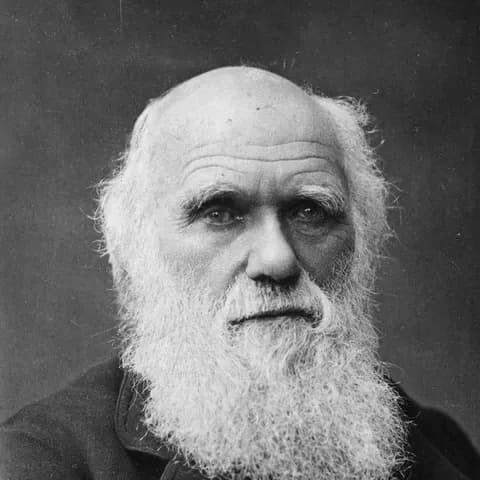 Charles Darwin's IQNaturalist & Biologist, estimated 140+140+
- Alexander Fleming's IQBacteriologist, estimated 140140
- David Wechsler's IQPsychologist, estimated 140140
- George Washington Carver's IQAgricultural Scientist, estimated 140140
- Jonas Salk's IQVirologist, estimated 140140
Rankings that include Jenner
- The highest IQ scientists in historyRanked 70 of 74
Keep exploring
- Efficient Information ProcessingSign of high intelligence
- Complex Problem DecompositionSign of high intelligence
- Armin Arlert's IQAttack on Titan, fan estimate 140
- Izaya Orihara's IQDurarara!!, fan estimate 140
People also search for
All 307 historical IQ estimates, ranked with ranges and sources.
Jenner's IQ is 140. What's yours?
Jenner's estimate comes from the historical record. Yours can come from a real test: 25 visual reasoning questions.
25 questions · about 12 minutes
Sources
- Edward Jenner, Encyclopaedia Britannica. Summarises his life and the smallpox vaccine.
- Edward Jenner, Wikipedia. Covers James Phipps, the 1798 report and the cuckoo study.
- Cox, C. M. (1926). The Early Mental Traits of Three Hundred Geniuses. Stanford University Press.
- Simonton, D. K. (2009). Genius 101. Springer.
- Cattell, R. B. (1971). Abilities: Their Structure, Growth, and Action. Houghton Mifflin.
Last reviewed October 2026. How we estimate historical IQ