Alexander Fleming IQ
Alexander Fleming's IQ is unknown. LifeScore uses about 140 (range 125 to 155) as an editorial marker for the bacteriologist who noticed mould killing bacteria in 1928 and discovered penicillin.
Fleming's IQ is 140. What's yours?
25 questions · about 12 minutes
Think you're smarter than Alexander Fleming? Try question 1.
Which option completes the grid? One tap, no sign-up.
Key facts
- Estimated IQ
- IQ 140
- Known for
- Discovering penicillin in 1928
- Lived
- Bacteriologist, 1881–1955
- Basis
- No documented estimate; editorial marker from the record
- Confidence
- Very low. Born after 1850, so outside the Cox 1926 study. No IQ test result is known.
Fleming has no test score. 140 is an editorial marker for an observant bacteriologist whose noticing of one contaminated dish changed medicine.
Alexander Fleming in brief
Alexander Fleming was born on a farm in Ayrshire, Scotland, in 1881. A small inheritance let him study medicine at St Mary's Hospital in London, where he stayed for his whole career. He served in the First World War studying infected wounds, discovered lysozyme in 1921 and penicillin in 1928. Howard Florey and Ernst Chain later turned penicillin into a usable drug, and the three shared the 1945 Nobel Prize.
What was Alexander Fleming's IQ?
No figure exists. LifeScore lists about 140 as an editorial marker, range 125 to 155. It rests on a strong academic record and on two discoveries, lysozyme and penicillin, that came from noticing and following up unexpected observations.
How did Fleming discover penicillin?
In September 1928 he returned from holiday to find mould growing on a dish of staphylococcus bacteria in his lab. Around the mould the bacteria had died. He identified the mould as Penicillium and named the substance it produced penicillin.
Did Fleming make penicillin into a drug?
No. He could not purify it in useful amounts. In 1939 to 1941 Howard Florey, Ernst Chain and colleagues at Oxford purified it and showed it cured infections. All three shared the 1945 Nobel Prize in Physiology or Medicine.
Why did penicillin take so long to reach patients?
Fleming found it in 1928 but could not purify or produce enough of it, and he moved on to other work. Between 1939 and 1941 Howard Florey, Ernst Chain and Norman Heatley at Oxford worked out how to extract and test it, and wartime factories in the United States scaled up production. Fleming, Florey and Chain shared the 1945 Nobel Prize.
How smart was Alexander Fleming?
- 01
Penicillin
Discovered in 1928, the first true antibiotic. - 02
Lysozyme
An antibacterial enzyme in tears and mucus, found in 1921. - 03
Nobel Prize 1945
Shared with Florey and Chain. - 04
Wound research
Showed in wartime that some antiseptics did more harm than good in deep wounds.
How Fleming thought
Fleming's strength was attention. Where another scientist might have thrown away a spoiled culture, he asked why the bacteria near the mould had died. Spotting the meaningful anomaly is a key part of practical intelligence.
The evidence behind the estimate
An estimate built from the historical record, not a recovered test score.
What supports it
- He won top prizes at St Mary's Hospital Medical School.
- His 1929 paper on penicillin described its antibacterial effect.
- He shared the 1945 Nobel Prize.
What it cannot prove
- Turning penicillin into a medicine was largely the work of Florey, Chain and their team.
- Luck played a real part in the discovery.
- An editorial marker is a comparison aid built from achievement, not a measurement, and two careful readers could place it ten points apart.
Fleming compared with Pasteur, Salk, Jenner
| Figure | Estimate | Range |
|---|---|---|
| Alexander Fleming | 140 | 125–155 |
| Louis Pasteur | 155+ | 140–165 |
| Jonas Salk | 140 | 125–155 |
| Edward Jenner | 140 | 125–155 |
How would you score?
Where would you land next to Alexander Fleming?
Alexander Fleming's 140 is an estimate from the historical record, with a working range of 125 to 155. On the standard IQ scale an IQ of 140 sits at the 99.62nd percentile: about 1 in 261 people score that high. Nobody can test Fleming now. You can find out where you sit on the same scale.
- 100Average adult50th percentile
- 130Gifted linetop 2%, about 1 in 44
- 140Fleming's99.62nd percentile, about 1 in 261
- ?Youscored on the same scale
25 questions · about 12 minutes
Psychological profile
Alexander Fleming's IQ is represented here by a retrospective estimate of 140, not a verified test result. Alexander Fleming is best known for exceptional observation. The useful question is what the surviving evidence shows, not whether a precise modern score can be recovered.
Quiet, observant and practical. A scientist who noticed odd results others would throw away.
The dominant archetype here is The Noticer. This archetype shapes decision patterns: what feels natural, what creates friction, and what blind spots tend to emerge.
Estimated IQ is 140. This is a rough estimate based on documented accomplishments and contemporary accounts, not a literal measurement.
Key traits
Observation
He won scholarships and prizes throughout medical school.Curiosity
He saw that mould on a staphylococcus culture had killed the bacteria around it.Practical Skill
He warned in his Nobel lecture that misuse of penicillin would breed resistant bacteria.
One thing most people do not know
He also painted pictures using bacteria of different colours as his paint.
Alexander Fleming: common questions
Was Alexander Fleming a genius?
What personality type was Alexander Fleming?
What can we learn from Alexander Fleming?
The IQ-style test the NFL used
Alexander Fleming's IQ is an estimate. Yours could be real.
Before the draft, NFL teams gave prospects the Wonderlic: 50 questions in 12 minutes, and almost nobody finishes. We collected 241 reported player scores, each with its source. The average working adult scores about 21.
People with similar IQ estimates
Alexander Fleming's estimate of 140 falls in the genius level IQ range. Want your own number rather than Alexander's? Take the free IQ test or the quick IQ test. See what an IQ of 140 means, place it on the IQ chart or check how rare it is with the IQ rarity calculator.
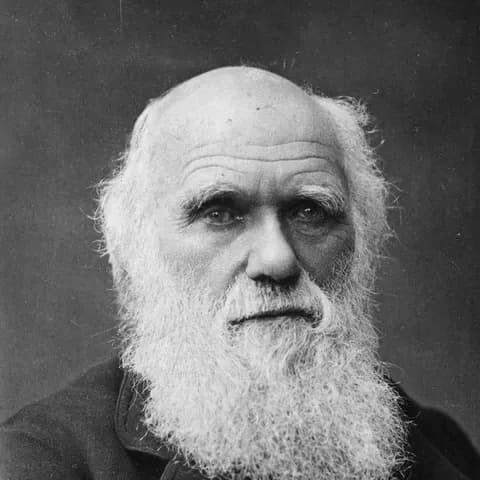 Charles Darwin's IQNaturalist & Biologist, estimated 140+140+
- Lewis Terman's IQPsychologist, estimated 140140
- David Wechsler's IQPsychologist, estimated 140140
- Edward Jenner's IQPhysician, estimated 140140
- George Washington Carver's IQAgricultural Scientist, estimated 140140
Rankings that include Fleming
- The highest IQ scientists in historyRanked 68 of 74
- The highest IQ Nobel Prize winnersRanked 27 of 35
Keep exploring
- Abstract Conceptual ThinkingSign of high intelligence
- Rapid Learning SpeedSign of high intelligence
- Armin Arlert's IQAttack on Titan, fan estimate 140
- Izaya Orihara's IQDurarara!!, fan estimate 140
People also search for
All 307 historical IQ estimates, ranked with ranges and sources.
Fleming's IQ is 140. What's yours?
Fleming's estimate comes from the historical record. Yours can come from a real test: 25 visual reasoning questions.
25 questions · about 12 minutes
Sources
- Alexander Fleming, biographical, Nobel Prize. Official biography covering his education and discoveries.
- Alexander Fleming, Encyclopaedia Britannica. Summarises the discovery of penicillin and lysozyme.
- Cox, C. M. (1926). The Early Mental Traits of Three Hundred Geniuses. Stanford University Press.
- Simonton, D. K. (2009). Genius 101. Springer.
- Cattell, R. B. (1971). Abilities: Their Structure, Growth, and Action. Houghton Mifflin.
Last reviewed October 2026. How we estimate historical IQ