George Washington Carver IQ
George Washington Carver's IQ is unknown. LifeScore uses about 140 (range 125 to 155) as an editorial marker for the scientist born into slavery who earned a master's degree and taught crop rotation at Tuskegee.
Carver's IQ is 140. What's yours?
25 questions · about 12 minutes
Think you're smarter than George Washington Carver? Try question 1.
Which option completes the grid? One tap, no sign-up.
Key facts
- Estimated IQ
- IQ 140
- Known for
- Crop rotation for Southern farmers and work on peanuts
- Lived
- Agricultural Scientist, c. 1864–1943
- Basis
- No documented estimate; editorial marker from the record
- Confidence
- Very low. Born after 1850, so outside the Cox 1926 study. No IQ test result is known.
Carver has no test score. 140 is an editorial marker for a scientist born into slavery who reached a master's degree and national fame.
George Washington Carver in brief
George Washington Carver was born into slavery in Missouri in the early 1860s. Freed after the Civil War, he worked his way through school, was refused by one college because he was Black, and studied botany at Iowa State, earning a master's degree in 1896. Booker T. Washington then hired him at the Tuskegee Institute in Alabama, where he spent nearly fifty years teaching farmers crop rotation and new uses for peanuts and sweet potatoes. He died in 1943.
What was George Washington Carver's IQ?
No figure exists. LifeScore lists about 140 as an editorial marker, range 125 to 155. It rests on his self-driven education after slavery, a master's degree in botany and decades of applied agricultural research and teaching.
Did George Washington Carver invent peanut butter?
No. Peanut butter existed before his work. He did promote peanuts as a crop and published bulletins listing many products and recipes from peanuts, sweet potatoes and soybeans, which gave rise to the popular claim of 300 peanut uses.
Why is Carver important?
Cotton had exhausted Southern soils. Carver taught farmers to rotate cotton with nitrogen-fixing crops such as peanuts and sweet potatoes, and found uses for those crops so farmers could sell them. He became one of the most famous Black Americans of his time.
Did Carver patent his products?
He held only three patents, for cosmetics and paints made from peanuts and clay. He said his ideas came from God and that he should not profit from them, so most of his methods were published openly in bulletins written for farmers.
How smart was George Washington Carver?
- 01
Crop rotation
Taught soil restoration to thousands of Southern farmers. - 02
Tuskegee Institute
Nearly fifty years of teaching and research. - 03
Agricultural bulletins
Practical guides for poor farmers. - 04
National monument
In 1943 his birthplace became the first national monument to a Black American.
How Carver thought
Carver turned a problem, worn-out soil, into a system: rotate crops, then create markets for the new crops. He also translated science into plain advice for farmers who had little schooling, which takes real verbal and practical intelligence.
The evidence behind the estimate
An estimate built from the historical record, not a recovered test score.
What supports it
- He earned a master's degree from Iowa State in 1896.
- He testified to the US Congress in 1921 on the value of peanuts.
- His Tuskegee bulletins are preserved and document his work.
What it cannot prove
- Popular legends exaggerate his inventions, which can distort assessments.
- His career faced severe racial barriers.
- An editorial marker is a comparison aid built from achievement, not a measurement, and two careful readers could place it ten points apart.
Carver compared with Washington, Douglass, Mendel
| Figure | Estimate | Range |
|---|---|---|
| George Washington Carver | 140 | 125–155 |
| Booker T. Washington | 140 | 125–155 |
| Frederick Douglass | 150 | 135–165 |
| Gregor Mendel | 145 | 130–160 |
How would you score?
Where would you land next to George Washington Carver?
George Washington Carver's 140 is an estimate from the historical record, with a working range of 125 to 155. On the standard IQ scale an IQ of 140 sits at the 99.62nd percentile: about 1 in 261 people score that high. Nobody can test Carver now. You can find out where you sit on the same scale.
- 100Average adult50th percentile
- 130Gifted linetop 2%, about 1 in 44
- 140Carver's99.62nd percentile, about 1 in 261
- ?Youscored on the same scale
25 questions · about 12 minutes
Psychological profile
George Washington Carver's IQ is represented here by a retrospective estimate of 140, not a verified test result. George Washington Carver is best known for exceptional practical science. The useful question is what the surviving evidence shows, not whether a precise modern score can be recovered.
Devout, gentle and practical. A teacher who wanted science to help poor farmers.
The dominant archetype here is The Teacher. This archetype shapes decision patterns: what feels natural, what creates friction, and what blind spots tend to emerge.
Estimated IQ is 140. This is a rough estimate based on documented accomplishments and contemporary accounts, not a literal measurement.
Key traits
Practical Science
He was the first Black student at Iowa State Agricultural College.Persistence
He ran a mobile classroom, the Jesup Wagon, to teach farmers in the field.Teaching
Despite the legend, he did not invent peanut butter.
One thing most people do not know
He painted, and one of his paintings was shown at the 1893 World's Columbian Exposition in Chicago.
George Washington Carver: common questions
Was George Washington Carver a genius?
What personality type was George Washington Carver?
What can we learn from George Washington Carver?
The IQ-style test the NFL used
George Washington Carver's IQ is an estimate. Yours could be real.
Before the draft, NFL teams gave prospects the Wonderlic: 50 questions in 12 minutes, and almost nobody finishes. We collected 241 reported player scores, each with its source. The average working adult scores about 21.
People with similar IQ estimates
George Washington Carver's estimate of 140 falls in the genius level IQ range. Want your own number rather than George's? Take the free IQ test or the quick IQ test. See what an IQ of 140 means, place it on the IQ chart or check how rare it is with the IQ rarity calculator.
- Lewis Terman's IQPsychologist, estimated 140140
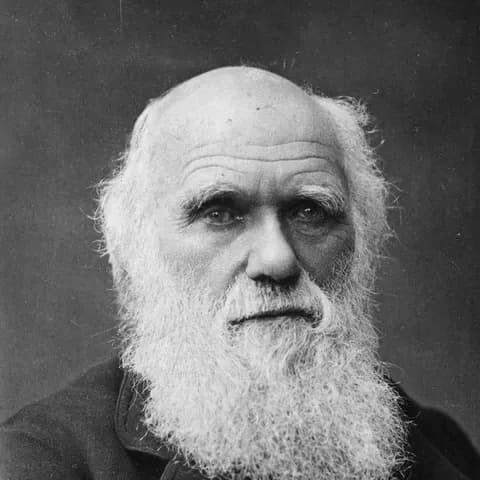 Charles Darwin's IQNaturalist & Biologist, estimated 140+140+
- Alexander Fleming's IQBacteriologist, estimated 140140
- David Wechsler's IQPsychologist, estimated 140140
- Edward Jenner's IQPhysician, estimated 140140
Rankings that include Carver
- The highest IQ scientists in historyRanked 71 of 74
- The highest IQ inventors in historyRanked 17 of 21
Keep exploring
- High Working Memory CapacitySign of high intelligence
- Creative Divergent ThinkingSign of high intelligence
- Armin Arlert's IQAttack on Titan, fan estimate 140
- Izaya Orihara's IQDurarara!!, fan estimate 140
People also search for
All 307 historical IQ estimates, ranked with ranges and sources.
Carver's IQ is 140. What's yours?
Carver's estimate comes from the historical record. Yours can come from a real test: 25 visual reasoning questions.
25 questions · about 12 minutes
Sources
- George Washington Carver, Encyclopaedia Britannica. Summarises his life, education and agricultural work.
- George Washington Carver, Wikipedia. Covers his early life, Tuskegee career and the peanut legend.
- Cox, C. M. (1926). The Early Mental Traits of Three Hundred Geniuses. Stanford University Press.
- Simonton, D. K. (2009). Genius 101. Springer.
- Cattell, R. B. (1971). Abilities: Their Structure, Growth, and Action. Houghton Mifflin.
Last reviewed October 2026. How we estimate historical IQ