Jonas Salk IQ
Jonas Salk's IQ is unknown. LifeScore uses about 140 (range 125 to 155) as an editorial marker for the virologist whose inactivated polio vaccine was declared safe and effective in April 1955.
Salk's IQ is 140. What's yours?
25 questions · about 12 minutes
Think you're smarter than Jonas Salk? Try question 1.
Which option completes the grid? One tap, no sign-up.
Key facts
- Estimated IQ
- IQ 140
- Known for
- The first effective polio vaccine
- Lived
- Virologist, 1914–1995
- Basis
- No documented estimate; editorial marker from the record
- Confidence
- Very low. Born after 1850, so outside the Cox 1926 study. No IQ test result is known.
Salk has no test score. 140 is an editorial marker for the scientist who led the defeat of polio in the United States.
Jonas Salk in brief
Jonas Salk was born in New York City in 1914 to Jewish immigrant parents and was the first in his family to attend college. He studied medicine at New York University, worked on influenza vaccines with Thomas Francis, and moved to the University of Pittsburgh in 1947. There he developed an inactivated polio vaccine, proved safe and effective in a 1954 field trial of about 1.8 million children. He founded the Salk Institute and died in 1995.
What was Jonas Salk's IQ?
No figure exists. LifeScore lists about 140 as an editorial marker, range 125 to 155. It rests on early academic progress, college at 15, and on leading the development of a vaccine against a disease that paralysed tens of thousands of Americans a year.
How did Salk's polio vaccine work?
He grew poliovirus, killed it with formaldehyde and injected it. The dead virus could not cause disease but taught the immune system to recognise it. Many scientists, including Albert Sabin, believed only a live vaccine would work; Salk's results proved them wrong.
Did Salk patent the polio vaccine?
No. In a 1955 television interview he said "Could you patent the sun?" Lawyers for the foundation that funded the work had also concluded it probably could not be patented, but the answer captured his public image.
Why did Salk not patent the polio vaccine?
Asked on television in 1955 who owned the patent, he replied, "Well, the people, I would say. There is no patent. Could you patent the sun?" Lawyers had in fact concluded that the vaccine probably could not be patented, because it relied on earlier published methods.
How smart was Jonas Salk?
- 01
Polio vaccine
Announced safe and effective on 12 April 1955. - 02
The 1954 field trial
About 1.8 million schoolchildren, the "polio pioneers", took part. - 03
Influenza vaccine
Earlier work with Thomas Francis on a killed-virus flu vaccine. - 04
Salk Institute
Founded the research institute in La Jolla, California, in the early 1960s.
How Salk thought
Salk applied known principles in a practical way rather than chasing a new theory. He trusted that a killed virus could immunise and organised the lab work around making it safe and scalable. That is applied problem solving under pressure.
The evidence behind the estimate
An estimate built from the historical record, not a recovered test score.
What supports it
- His vaccine was proved effective in the 1954 Francis field trial.
- Polio cases in the United States fell sharply after vaccination began.
- He founded a leading research institute.
What it cannot prove
- The work depended on John Enders' method of growing poliovirus in culture.
- Achievement reflects education, opportunity, persistence and collaboration as well as raw reasoning ability.
- An editorial marker is a comparison aid built from achievement, not a measurement, and two careful readers could place it ten points apart.
Salk compared with Pasteur, Fleming, Jenner
| Figure | Estimate | Range |
|---|---|---|
| Jonas Salk | 140 | 125–155 |
| Louis Pasteur | 155+ | 140–165 |
| Alexander Fleming | 140 | 125–155 |
| Edward Jenner | 140 | 125–155 |
How would you score?
Where would you land next to Jonas Salk?
Jonas Salk's 140 is an estimate from the historical record, with a working range of 125 to 155. On the standard IQ scale an IQ of 140 sits at the 99.62nd percentile: about 1 in 261 people score that high. Nobody can test Salk now. You can find out where you sit on the same scale.
- 100Average adult50th percentile
- 130Gifted linetop 2%, about 1 in 44
- 140Salk's99.62nd percentile, about 1 in 261
- ?Youscored on the same scale
25 questions · about 12 minutes
Psychological profile
Jonas Salk's IQ is represented here by a retrospective estimate of 140, not a verified test result. Jonas Salk is best known for exceptional focus. The useful question is what the surviving evidence shows, not whether a precise modern score can be recovered.
Driven, idealistic and focused. He chose the practical problem over the prestigious one.
The dominant archetype here is The Healer. This archetype shapes decision patterns: what feels natural, what creates friction, and what blind spots tend to emerge.
Estimated IQ is 140. This is a rough estimate based on documented accomplishments and contemporary accounts, not a literal measurement.
Key traits
Focus
He entered the City College of New York at 15.Practical Science
The 1954 trial of his vaccine was the largest medical experiment in American history to that time.Public Spirit
Asked who owned the patent, he replied: "Could you patent the sun?"
One thing most people do not know
He married the artist Françoise Gilot, Picasso's former partner, in 1970.
Jonas Salk: common questions
Was Jonas Salk a genius?
What personality type was Jonas Salk?
What can we learn from Jonas Salk?
The IQ-style test the NFL used
Jonas Salk's IQ is an estimate. Yours could be real.
Before the draft, NFL teams gave prospects the Wonderlic: 50 questions in 12 minutes, and almost nobody finishes. We collected 241 reported player scores, each with its source. The average working adult scores about 21.
People with similar IQ estimates
Jonas Salk's estimate of 140 falls in the genius level IQ range. Want your own number rather than Jonas's? Take the free IQ test or the quick IQ test. See what an IQ of 140 means, place it on the IQ chart or check how rare it is with the IQ rarity calculator.
- George Washington Carver's IQAgricultural Scientist, estimated 140140
- Lewis Terman's IQPsychologist, estimated 140140
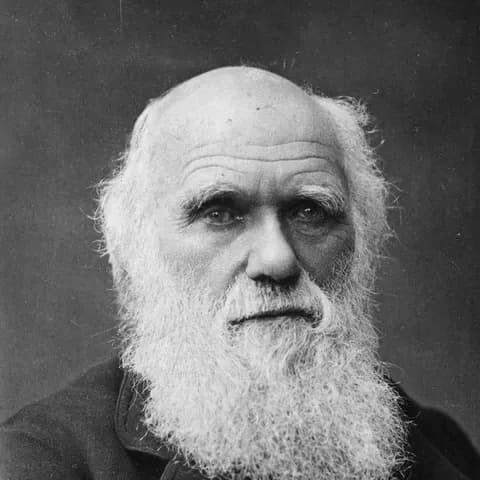 Charles Darwin's IQNaturalist & Biologist, estimated 140+140+
- Alexander Fleming's IQBacteriologist, estimated 140140
- David Wechsler's IQPsychologist, estimated 140140
Rankings that include Salk
- The highest IQ scientists in historyRanked 72 of 74
Keep exploring
- Complex Problem DecompositionSign of high intelligence
- Rapid Verbal ProcessingSign of high intelligence
- Armin Arlert's IQAttack on Titan, fan estimate 140
- Izaya Orihara's IQDurarara!!, fan estimate 140
People also search for
All 307 historical IQ estimates, ranked with ranges and sources.
Salk's IQ is 140. What's yours?
Salk's estimate comes from the historical record. Yours can come from a real test: 25 visual reasoning questions.
25 questions · about 12 minutes
Sources
- Jonas Salk, Encyclopaedia Britannica. Summarises his life and the polio vaccine.
- Jonas Salk, Wikipedia. Covers his education, the 1954 trial and the patent remark.
- Cox, C. M. (1926). The Early Mental Traits of Three Hundred Geniuses. Stanford University Press.
- Simonton, D. K. (2009). Genius 101. Springer.
- Cattell, R. B. (1971). Abilities: Their Structure, Growth, and Action. Houghton Mifflin.
Last reviewed October 2026. How we estimate historical IQ