Jean-Jacques Rousseau IQ
Jean-Jacques Rousseau's IQ is estimated at 128 to 150. Catharine Cox's 1926 study gave him a corrected 150, lower than most Enlightenment writers; he never took a test. He was largely self-taught and made his name with an essay at 38.
Rousseau's IQ is 130+. What's yours?
25 questions · about 12 minutes
Key facts
- Estimated IQ
- 130+
- Known for
- The Social Contract and Emile
- Lived
- Philosopher & Writer, 1712–1778
- Basis
- Cox 1926 historiometric estimate
- Confidence
- Low. Rousseau died in 1778. No IQ test was ever given; the figure comes from a 1926 study that rated historical figures from biographies.
Cox's corrected estimate for Rousseau was 150, well below Voltaire. A self-taught writer with a thin childhood record scores lower in her method than his impact deserves.
What was Rousseau's IQ?
Rousseau never took an IQ test. Catharine Cox's 1926 study gave him a corrected estimate of 150. Adjusted for the Flynn effect that is about 128, so LifeScore uses a range of 128 to 150, with 130+ as the marker. His influence is far larger than the number suggests.
Why is Rousseau rated lower than Voltaire?
Cox gave Voltaire 190 and Rousseau 150. She scored early signs of precocity, and Voltaire's schooling and early verse are well documented while Rousseau was an apprentice and wanderer who educated himself later. The gap reflects the evidence she could find as much as the two men.
What is the Social Contract?
It is Rousseau's 1762 book, which opens with the line that man is born free and everywhere he is in chains. It argues that a legitimate government rests on the general will of the people. The book strongly influenced the French Revolution and later democratic thought.
Where does the 150 figure come from?
The 150 is Catharine Cox's corrected estimate from her 1926 study of 301 eminent people born between 1450 and 1850. She rated each person from biographical records of what they could do as a child and young adult, then corrected for gaps in the record.
Cox's numbers sit on an old ratio-IQ scale. One secondary tabulation subtracts about 22 points for the Flynn effect, which puts Jean-Jacques Rousseau near 130.
LifeScore lists 130+, and the working range of 130 to 150 spans both figures. None of them is a test result.
How smart was Jean-Jacques Rousseau?
- 01
The Discourse on the Arts and Sciences
The 1750 essay that won a Dijon prize launched his career at 38. - 02
The Social Contract
His 1762 book argued that political authority rests on the general will. - 03
Emile
His 1762 book on education argued for learning through experience and shaped modern teaching ideas. - 04
The Confessions
His frank autobiography helped create the modern memoir.
How Rousseau thought
Rousseau thought through contrast. He set natural against artificial, simple against refined, and then argued that society corrupts what nature gives. He wrote from feeling first and refined the argument afterwards, which made his work persuasive and hard to pin down.
The evidence behind the estimate
An estimate built from the historical record, not a recovered test score.
What supports it
- Cox's 1926 study gave Rousseau a corrected estimate of 150, which falls to about 128 after a Flynn-effect adjustment.
- He published The Social Contract and Emile in 1762, both highly influential.
- He was largely self-taught and won the 1750 Dijon essay prize.
What it cannot prove
- Influence and originality are not the same as test-style reasoning.
- His childhood record rests heavily on his own Confessions, which are not always reliable.
- Cox's scale runs higher than modern deviation IQ, by roughly 22 points in one tabulation.
Rousseau compared with Voltaire, Hume, Kant
| Figure | Estimate | Range |
|---|---|---|
| Jean-Jacques Rousseau | 130+ | 130–150 |
| Voltaire | 170+ | 170–190 |
| David Hume | 160+ | 160–180 |
| Immanuel Kant | 160+ | 155–175 |
Psychological profile
Jean-Jacques Rousseau's IQ is represented here by a retrospective estimate of 130+, not a verified test result. Jean-Jacques Rousseau is best known for exceptional originality. The useful question is what the surviving evidence shows, not whether a precise modern score can be recovered.
Self-taught, emotional and original. Wrote with force about nature, freedom and the self, and fell out with nearly everyone he knew.
The dominant archetype here is The Rebel. This archetype shapes decision patterns: what feels natural, what creates friction, and what blind spots tend to emerge.
Estimated IQ is 130+. This is a rough estimate based on documented accomplishments and contemporary accounts, not a literal measurement.
Key traits
Originality
He had little schooling and worked as an engraver's apprentice, a servant and a music copyist.Emotional Writing
He also composed an opera, Le devin du village, performed for the king in 1752.Self-teaching
He fell out with friends such as Diderot and Hume and came to believe he was persecuted.
One thing most people do not know
Rousseau earned a living for years as a music copyist and also wrote a dictionary of music.
Jean-Jacques Rousseau: common questions
Was Jean-Jacques Rousseau a genius?
What personality type was Jean-Jacques Rousseau?
What can we learn from Jean-Jacques Rousseau?
More famous IQs
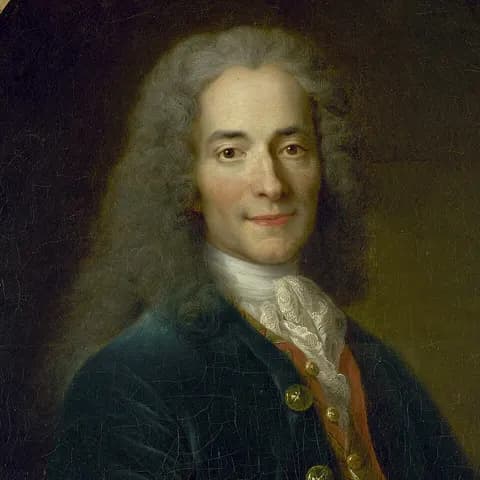 Voltaire IQWriter & Philosopher170+
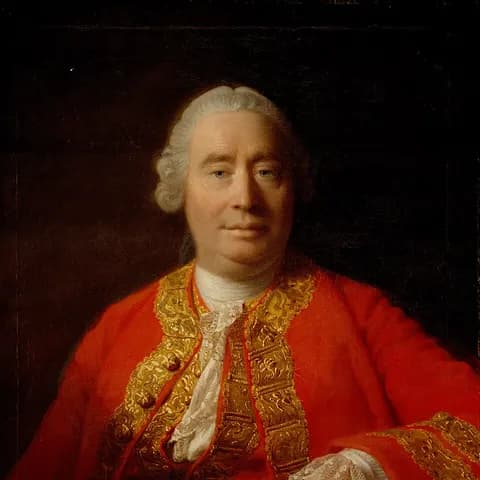 David Hume IQPhilosopher & Historian160+
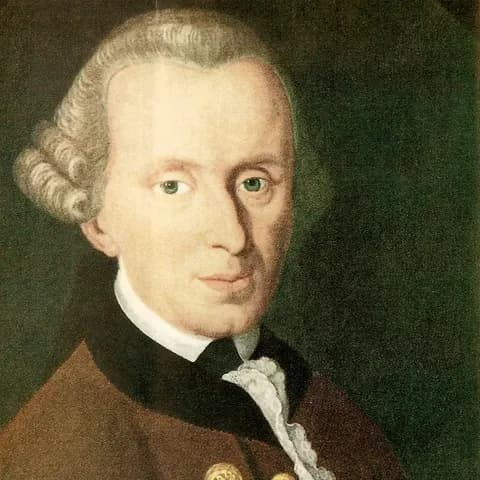 Immanuel Kant IQPhilosopher160+
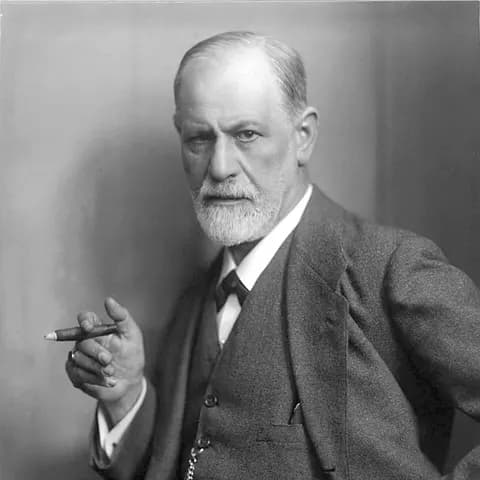 Sigmund Freud IQFather of Psychoanalysis140+
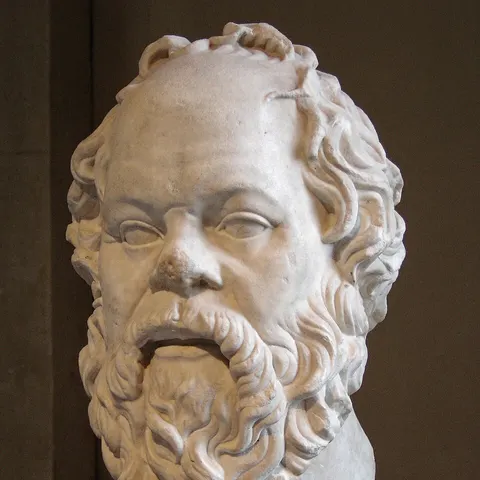 Socrates IQPhilosopher155+
- Confucius IQPhilosopher145+
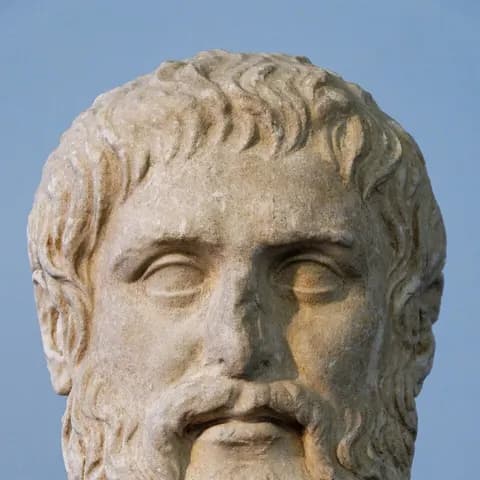 Plato IQPhilosopher160+
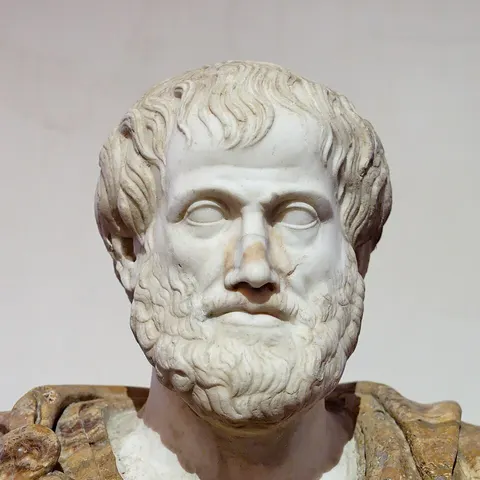 Aristotle IQPhilosopher & Polymath160+
Keep exploring
- All famous IQs, ranked157 figures with ranges and sources
- What an IQ of 130 meansPercentile, rarity and classification
- What an IQ of 150 meansPercentile, rarity and classification
- Quick Pattern RecognitionSigns of high intelligence
- Rapid Learning SpeedSigns of high intelligence
- Einstein IQ testA short visual reasoning challenge
Rousseau's IQ is 130+. What's yours?
Rousseau's estimate comes from the historical record. Yours can come from a real test: 25 visual reasoning questions.
25 questions · about 12 minutes
Sources
- Jean-Jacques Rousseau, Stanford Encyclopedia of Philosophy. Scholarly account of his life and political and moral philosophy.
- The Early Mental Traits of Three Hundred Geniuses (Cox, 1926), Stanford University Press, via Internet Archive. The original historiometric study. Cox rated 301 eminent people born 1450 to 1850 from records of their childhood and youth.
- Cox's IQ estimates of 301 eminent geniuses, IQ Comparison Site. Secondary tabulation of Cox's corrected estimates, with a version adjusted by about 22 points for the Flynn effect.
- Cox, C. M. (1926). The Early Mental Traits of Three Hundred Geniuses. Stanford University Press.
- Simonton, D. K. (2009). Genius 101. Springer.
- Cattell, R. B. (1971). Abilities: Their Structure, Growth, and Action. Houghton Mifflin.
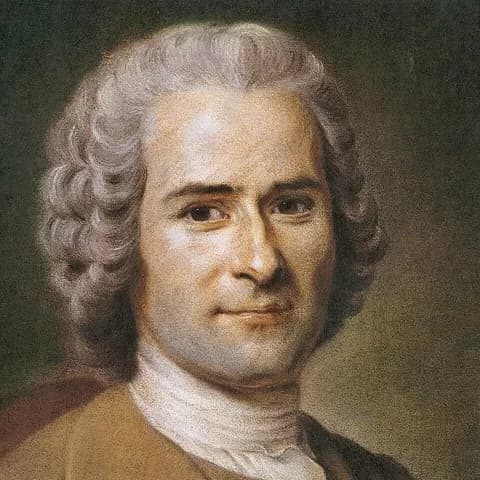
- Portrait: Maurice Quentin de La Tour · Public domain · Wikimedia Commons
Last reviewed September 2026. How we estimate historical IQ