Einstein IQ test: are you smarter than Einstein?
There is no real Einstein IQ test, because Einstein never took one. His famous 160+ is an estimate from his work. The fair way to compare is to take a reasoning test yourself and see where your score sits against his estimate.
Einstein's IQ is estimated at 160+. What's yours?
25 questions · about 12 minutes
What would you score? Try question 1.
Which option completes the grid? One tap, no sign-up.
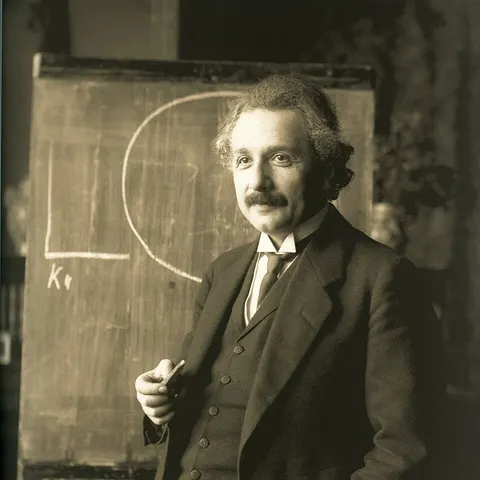
What was Einstein's IQ?
- 160+
- Popular estimate
- 150 to 170
- Plausible range
- Low
- Confidence
- None
- Tested score on record
There is no authenticated record that Einstein took a modern standardized IQ test. Einstein’s exceptional scientific reasoning is directly evidenced; the popular 160 figure is an unverified retrospective estimate.
Einstein lived from 1879 to 1955, so IQ tests existed for most of his adult life, but no score was ever published. He was also outside Catharine Cox's famous 1926 study of genius IQs, which only covered people born between 1450 and 1850. And the story that he failed maths is a myth: he had taught himself calculus by about 15.
If his real score were 160, only about 1 in 31,560 people would score that high. The full evidence is on the Albert Einstein IQ profile.
Am I smarter than Einstein?
It is the question behind most searches for an Einstein IQ test, and it has an honest two-part answer.
On a test score, you can compare. Take a reasoning test and you get a number on the same scale as his estimate. A score of 160 would be higher than about 99.997% of people. Most people score between 85 and 115, and 130 is already about the top 2%.
On being Einstein, nobody can. His estimate is a guess from his achievements, and his achievements came from deep knowledge of physics, years of focused work, unusual independence of mind and a lot of imagination, not from puzzle speed alone. A high score says you reason well. It does not say you would have found relativity.
So the useful version of the question is: how does your reasoning compare with the scale his estimate sits on? That one a test can answer.
How your result would compare
Your result is a measurement on a scale where 100 is average. Here are the landmarks, with Einstein's estimate at the far end. Percentages are computed from the normal curve (mean 100, standard deviation 15).
| Score | Higher than |
|---|---|
| 100Average adult | 50.0% of people |
| 115Above average | 84.1% of people |
| 130About the Mensa threshold (top 2%) | 97.7% of people |
| 145Very rare | 99.87% of people |
| 160Einstein (estimate, not a tested score) | 99.997% of people |
Two Einstein-style warm-up puzzles
No physics required: Einstein's specialist knowledge would not have helped him here either. These are practice items written for this page, not questions from the test.
Puzzle 1: Pairs
mediumThis row moves in pairs. What comes fifth?
Tap an option to check your answer.
Puzzle 2: Columns and shading
mediumColumns keep a colour, rows keep a shading, and each shape appears once per row and column. What is missing?
Tap an option to check your answer.
Famous IQ estimates compared
Every number below is an estimate, not a test result. Ranges and confidence ratings come from each person's profile.
| Person | Estimate |
|---|---|
| Albert EinsteinLow confidence | 160+150 to 170 |
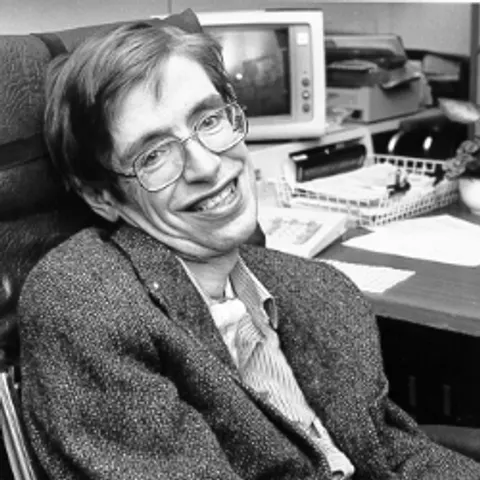 Stephen HawkingLow confidence | 160+150 to 170 |
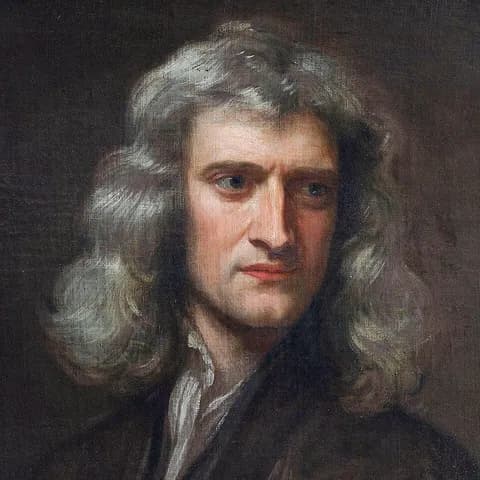 Isaac NewtonLow confidence | 160+160 to 190 |
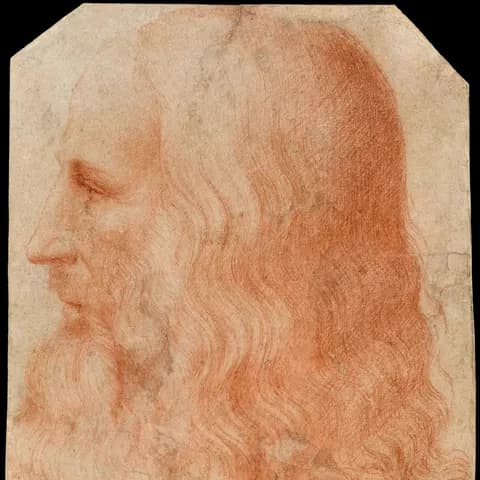 Leonardo da VinciLow confidence | 160+160 to 180 |
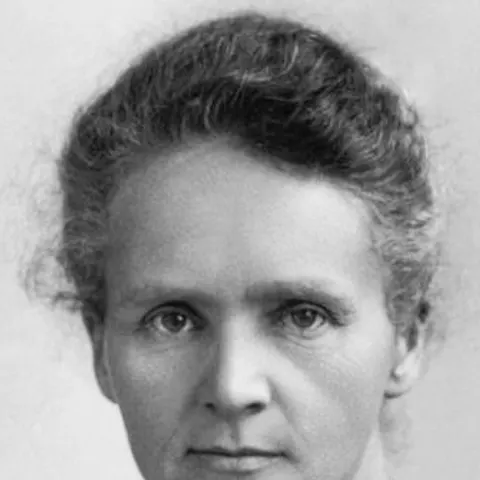 Marie CurieLow confidence | 150140 to 160 |
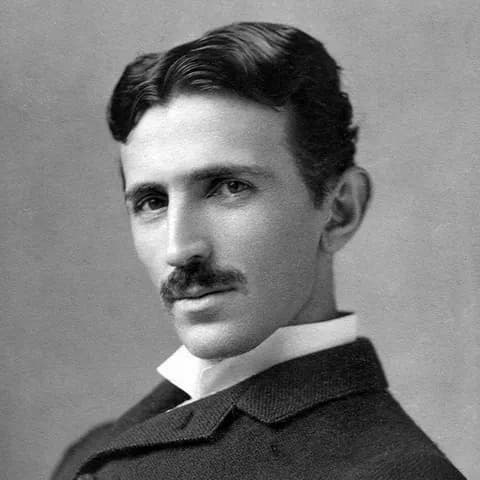 Nikola TeslaVery low confidence | 160+145 to 170 |
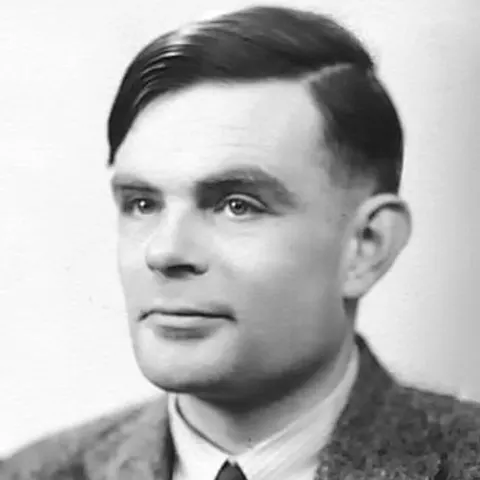 Alan TuringVery low confidence | 170+155 to 180 |
| Richard FeynmanVery low confidence | 160+145 to 170 |
| Bill GatesLow confidence | 155+150 to 165 |
| Elon MuskVery low confidence | 155+140 to 165 |
Stephen Hawking IQ test
No one has a verified IQ score for Stephen Hawking. Asked about his IQ in a 2004 New York Times interview, he said he had no idea, and added that "people who boast about their IQ are losers."
The figure you see quoted, 160+, is an estimate from his achievements, with a plausible range of 150 to 170 and low confidence. Take the test and your result will sit on the same scale that estimate is expressed in.
Da Vinci IQ test
Leonardo died in 1519, nearly four centuries before the first IQ test. Any number is inferred from his notebooks, paintings and engineering designs, so there is no da Vinci score to beat, only an estimate: 160+, range 160 to 180, low confidence.
For perspective, a score of 130 on a modern test already puts you in about the top 2%. Take the test and see how far along the curve you get.
Isaac Newton IQ test
Newton was born in 1643, inside the period covered by Catharine Cox's 1926 study of historical geniuses, which is one reason his name appears in so many IQ lists. Cox worked from biographies, not tests, and her estimates depended heavily on how much was recorded about each person's early life.
This site's estimate for Newton is 160+, with a range of 160 to 190 and low confidence. No one has a verified score, so the fair comparison is your measured result against his estimated range.
Bill Gates IQ test
Bill Gates has never published an IQ score. He is widely reported to have scored 1590 out of 1600 on the SAT, which is a college admissions test, not an IQ test.
The estimate on his profile is 155+ (range 150 to 165, low confidence). Take the test to see how your own measured result compares with that estimate.
Elon Musk IQ test
Elon Musk has not published an IQ score, and none has been verified. Numbers circulating online are guesses.
His profile here carries an estimate of 155+, range 140 to 165, rated very low confidence. Your result from the test will be a measurement; his is not.
Nikola Tesla IQ test
Tesla never took an IQ test. In his 1919 autobiography, My Inventions, he described building and testing machines entirely in his imagination before making them, the kind of visual thinking that estimates of his IQ lean on.
The estimate here is 160+, range 145 to 170, very low confidence. The test below includes five spatial reasoning puzzles if you want to test your own visual imagination.
How the test works, and what it costs
- 25 visual puzzles in five sets: patterns, spatial reasoning, sequences, analogies and rules. Each set runs from easy to hard.
- A 12-minute timer. You can go back and change answers until it runs out.
- No maths formulas, vocabulary or physics.
- The same scoring for everyone. It is not age-adjusted and it is not a clinical assessment.
- No sign-up to start. When you finish, you choose a report to see your result.
Frequently asked questions
Am I smarter than Einstein?
What was Einstein's IQ?
Is there an official Einstein IQ test?
Can I score higher than Einstein?
What IQ did Richard Feynman have?
Who has the highest estimated IQ on this page?
Keep exploring
- Albert Einstein IQ profileThe evidence behind the estimate
- IQs of famous people in historyEvery estimate, with its basis
- IQ test for geniusesWhat counts as a genius-level score
- What an IQ of 160 meansHow rare the famous genius number is
- Am I a genius?Two meanings of genius, and a self-check
- IQ bell curveSee any score on the curve
Einstein's IQ is estimated at 160+. What's yours?
Einstein's number is an estimate. Yours can come from a real test: 25 visual reasoning puzzles on the same scale as his estimate.
25 questions · about 12 minutes
Sources
- Cox, C. M. (1926). The Early Mental Traits of Three Hundred Geniuses. Stanford University Press.
- Nobel Prize Outreach. Albert Einstein: Biographical.
- Solomon, D. (2004, December 12). The Science of Second-Guessing. The New York Times Magazine.
- Gleick, J. (1992). Genius: The Life and Science of Richard Feynman. Pantheon.
- Tesla, N. (1919). My Inventions. Electrical Experimenter.
- Portrait: Ferdinand Schmutzer / Adam Cuerden · Public domain · Wikimedia Commons
By LifeScore Editorial Team. Reviewed October 2026.