Caravaggio IQ
Caravaggio's IQ is unknown; no test or confirmed study figure exists. LifeScore uses about 140 (range 125 to 155) as an editorial marker for the painter whose dramatic light and realism reshaped Baroque art despite a violent life.
Caravaggio's IQ is 140. What's yours?
25 questions · about 12 minutes
Think you're smarter than Caravaggio? Try question 1.
Which option completes the grid? One tap, no sign-up.
Key facts
- Estimated IQ
- IQ 140
- Known for
- Dramatic chiaroscuro and realism in Baroque painting
- Lived
- Painter, 1571–1610
- Basis
- No documented estimate; editorial marker from the record
- Confidence
- Very low. Born inside the period Cox 1926 covered, but we could not confirm a Cox figure from an accessible tabulation, so none is quoted. No IQ test was ever given.
Caravaggio has no test and no Cox figure we could confirm. 140 is an editorial marker for a painter whose visual intelligence transformed European art.
Caravaggio in brief
Michelangelo Merisi da Caravaggio was born in Milan in 1571 and trained there before moving to Rome around 1592. His dramatic paintings, lit by harsh light against deep shadow and using ordinary people as models for saints, made him the most talked-about painter in Rome. He was also violent: in 1606 he killed a man in a brawl and fled. He worked in Naples, Malta and Sicily while seeking a pardon, and died in 1610, aged 38.
What was Caravaggio's IQ?
No figure exists. LifeScore lists about 140 as an editorial marker, range 125 to 155. It rests on visual and compositional skill of the highest order, set against a life of impulsive violence that suggests poor self-control rather than low ability.
What is chiaroscuro?
The use of strong contrasts between light and dark. Caravaggio pushed it to an extreme, called tenebrism, with figures emerging from near-black backgrounds as if lit by a single beam, which gives his scenes their drama.
Did Caravaggio kill someone?
Yes. In May 1606 he killed Ranuccio Tomassoni in a fight in Rome, possibly over a woman or a gambling debt. He was sentenced to death and fled, spending his last four years on the run.
How did Caravaggio die?
He died in July 1610 at Porto Ercole in Tuscany, travelling towards Rome where a pardon awaited. The cause is uncertain. A 2010 study of bones thought to be his found high levels of lead, possibly from paint; others suggest an infected wound from a fight, or malaria. He was 38.
How smart was Caravaggio?
- 01
The Calling of Saint Matthew
A breakthrough commission for a Rome chapel. - 02
Judith Beheading Holofernes
A famously dramatic work. - 03
The Beheading of Saint John
His largest painting, in Malta, the only one he signed. - 04
Influence
Shaped Rembrandt, Velázquez and generations of painters.
How Caravaggio thought
Caravaggio reasoned visually: where should the light fall, and what moment tells the whole story? Choosing the single decisive instant and composing it for maximum impact is visual-spatial problem solving.
The evidence behind the estimate
An estimate built from the historical record, not a recovered test score.
What supports it
- Dozens of his paintings survive.
- Roman court records document his offences.
- His influence on 17th-century painting is well documented.
What it cannot prove
- Few personal writings survive; most evidence is paintings and police records.
- Musical and visual genius draw on abilities, such as pitch memory and visual imagination, that an IQ test only partly samples.
- An editorial marker is a comparison aid built from achievement, not a measurement, and two careful readers could place it ten points apart.
Caravaggio compared with Michelangelo, Rembrandt, Raphael
| Figure | Estimate | Range |
|---|---|---|
| Caravaggio | 140 | 125–155 |
| Michelangelo | 155+ | 155–180 |
| Rembrandt van Rijn | 145+ | 135–155 |
| Raphael | 150+ | 150–170 |
How would you score?
Where would you land next to Caravaggio?
Caravaggio's 140 is an estimate from the historical record, with a working range of 125 to 155. On the standard IQ scale an IQ of 140 sits at the 99.62nd percentile: about 1 in 261 people score that high. Nobody can test Caravaggio now. You can find out where you sit on the same scale.
- 100Average adult50th percentile
- 130Gifted linetop 2%, about 1 in 44
- 140Caravaggio's99.62nd percentile, about 1 in 261
- ?Youscored on the same scale
25 questions · about 12 minutes
Psychological profile
Caravaggio's IQ is represented here by a retrospective estimate of 140, not a verified test result. Caravaggio is best known for exceptional visual intelligence. The useful question is what the surviving evidence shows, not whether a precise modern score can be recovered.
Brilliant, violent and reckless. A painter who lived as dramatically as his pictures.
The dominant archetype here is The Rebel Painter. This archetype shapes decision patterns: what feels natural, what creates friction, and what blind spots tend to emerge.
Estimated IQ is 140. This is a rough estimate based on documented accomplishments and contemporary accounts, not a literal measurement.
Key traits
Visual Intelligence
He painted directly onto the canvas with few preparatory drawings.Realism
His police record includes fights, insults and carrying weapons without a licence.Impulsiveness
Followers across Europe, the Caravaggisti, copied his lighting.
One thing most people do not know
His signature in The Beheading of Saint John is painted in the blood flowing from the saint's neck.
Caravaggio: common questions
Was Caravaggio a genius?
What personality type was Caravaggio?
What can we learn from Caravaggio?
The IQ-style test the NFL used
Caravaggio's IQ is an estimate. Yours could be real.
Before the draft, NFL teams gave prospects the Wonderlic: 50 questions in 12 minutes, and almost nobody finishes. We collected 241 reported player scores, each with its source. The average working adult scores about 21.
People with similar IQ estimates
Caravaggio's estimate of 140 falls in the genius level IQ range. Want your own number rather than Caravaggio's? Take the free IQ test or the quick IQ test. See what an IQ of 140 means, place it on the IQ chart or check how rare it is with the IQ rarity calculator.
- Antonio Vivaldi's IQComposer & Violinist, estimated 140140
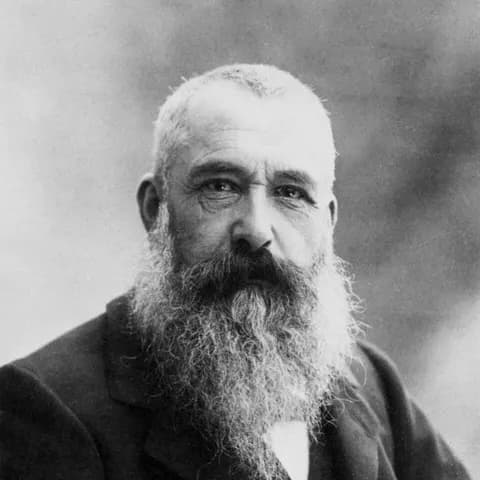 Claude Monet's IQImpressionist Painter, estimated 140+140+
- Johannes Vermeer's IQPainter, estimated 140140
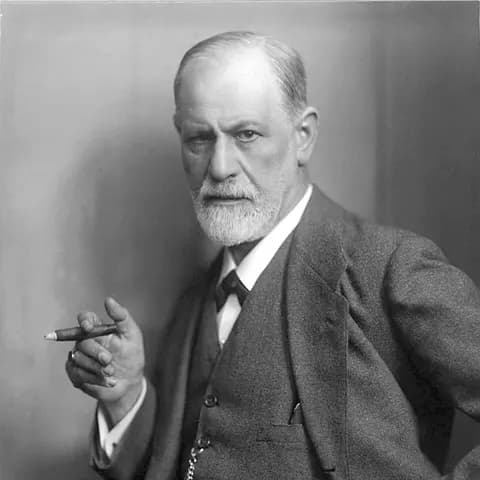 Sigmund Freud's IQFather of Psychoanalysis, estimated 140+140+
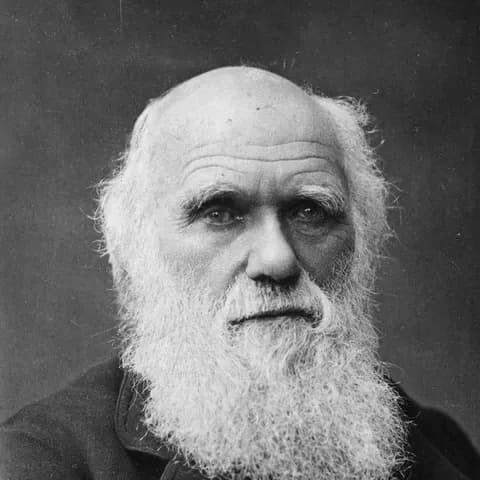 Charles Darwin's IQNaturalist & Biologist, estimated 140+140+
Rankings that include Caravaggio
- The highest IQ artists and painters in historyRanked 7 of 11
Keep exploring
- Cross-Domain Pattern TransferSign of high intelligence
- Subtle Signs Someone is Smarter Than You ThinkSign of high intelligence
- Armin Arlert's IQAttack on Titan, fan estimate 140
- Izaya Orihara's IQDurarara!!, fan estimate 140
People also search for
All 307 historical IQ estimates, ranked with ranges and sources.
Caravaggio's IQ is 140. What's yours?
Caravaggio's estimate comes from the historical record. Yours can come from a real test: 25 visual reasoning questions.
25 questions · about 12 minutes
Sources
- Caravaggio, Encyclopaedia Britannica. Summarises his life, technique and influence.
- Caravaggio, Wikipedia. Covers his paintings, crimes and death.
- Cox, C. M. (1926). The Early Mental Traits of Three Hundred Geniuses. Stanford University Press.
- Simonton, D. K. (2009). Genius 101. Springer.
- Cattell, R. B. (1971). Abilities: Their Structure, Growth, and Action. Houghton Mifflin.
Last reviewed October 2026. How we estimate historical IQ