George Frideric Handel IQ
George Frideric Handel's IQ is estimated at 148 to 170. Catharine Cox's 1926 study gave him a corrected 170; he never took a test. He is said to have written Messiah in about 24 days in 1741.
Handel's IQ is 150+. What's yours?
25 questions · about 12 minutes
Key facts
- Estimated IQ
- 150+
- Known for
- Messiah, Water Music and dozens of operas
- Lived
- Composer, 1685–1759
- Basis
- Cox 1926 historiometric estimate
- Confidence
- Low. Handel died in 1759. No IQ test was ever given; the figure comes from a 1926 study that rated historical figures from biographies.
Cox's corrected estimate for Handel was 170. His output and speed are the evidence, though musical ability and IQ overlap only partly.
What was Handel's IQ?
Handel never took an IQ test. Catharine Cox's 1926 study gave him a corrected estimate of 170. Adjusted for the Flynn effect that is about 148, so LifeScore uses a range of 148 to 170, with 150+ as the marker. His speed of composition is the documented evidence.
How fast did Handel write Messiah?
The manuscript is dated 22 August to 14 September 1741, about 24 days, for a work lasting around two and a half hours. It premiered in Dublin in April 1742. Part of the speed came from reusing his own earlier music, which was normal practice then.
Handel or Bach: who was smarter?
Cox's 1926 figures put Bach at 165 and Handel at 170, a gap inside her margin of error. They were born in the same year, 1685, within 80 miles of each other, but Bach worked in churches and courts while Handel travelled and wrote for the public stage.
Where does the 170 figure come from?
The 170 is Catharine Cox's corrected estimate from her 1926 study of 301 eminent people born between 1450 and 1850. She rated each person from biographical records of what they could do as a child and young adult, then corrected for gaps in the record.
Cox's numbers sit on an old ratio-IQ scale. One secondary tabulation subtracts about 22 points for the Flynn effect, which puts George Frideric Handel near 150.
LifeScore lists 150+, and the working range of 150 to 170 spans both figures. None of them is a test result.
How smart was George Frideric Handel?
- 01
Messiah
He wrote it in about 24 days in 1741, and it premiered in Dublin in 1742. - 02
Water Music
His 1717 suite was first played on a royal barge on the Thames. - 03
Dozens of operas
He wrote around 40 Italian operas for London, running his own opera companies. - 04
Music for the Royal Fireworks
He wrote it in 1749 for a huge outdoor celebration.
How Handel thought
Handel composed fast and borrowed freely, from his own earlier work and from others, then reshaped the material for the singers and theatre in front of him. He treated music as a working business and revised pieces to suit new performers.
The evidence behind the estimate
An estimate built from the historical record, not a recovered test score.
What supports it
- Cox's 1926 study gave Handel a corrected estimate of 170, which falls to about 148 after a Flynn-effect adjustment.
- Messiah was written between 22 August and 14 September 1741.
- He wrote around 40 operas and many oratorios while running his own companies in London.
What it cannot prove
- Musical genius is a specialised ability that IQ tests capture only in part.
- He reused much of his own earlier music, so speed of writing is not purely new invention.
- Cox's scale runs higher than modern deviation IQ, by roughly 22 points in one tabulation.
Handel compared with Bach, Mozart, Beethoven
| Figure | Estimate | Range |
|---|---|---|
| George Frideric Handel | 150+ | 150–170 |
| Johann Sebastian Bach | 160+ | 145–170 |
| Wolfgang Amadeus Mozart | 165+ | 145–175 |
| Ludwig van Beethoven | 155+ | 145–165 |
Psychological profile
George Frideric Handel's IQ is represented here by a retrospective estimate of 150+, not a verified test result. George Frideric Handel is best known for exceptional speed. The useful question is what the surviving evidence shows, not whether a precise modern score can be recovered.
Practical, productive and sociable. A composer and impresario who wrote quickly and adapted to wherever the audience was.
The dominant archetype here is The Creator. This archetype shapes decision patterns: what feels natural, what creates friction, and what blind spots tend to emerge.
Estimated IQ is 150+. This is a rough estimate based on documented accomplishments and contemporary accounts, not a literal measurement.
Key traits
Speed
He moved from Halle to Hamburg, Italy and then London, where he settled in 1712 and became a British subject in 1727.Adaptability
He ran opera companies that went bankrupt more than once and then switched to oratorios.Stage Sense
His eyesight failed in his last years, and he was operated on by the same surgeon who treated Bach.
One thing most people do not know
When Messiah was first performed in London, King George II is said to have stood for the Hallelujah chorus, which began the tradition of standing.
George Frideric Handel: common questions
Was George Frideric Handel a genius?
What personality type was George Frideric Handel?
What can we learn from George Frideric Handel?
More famous IQs
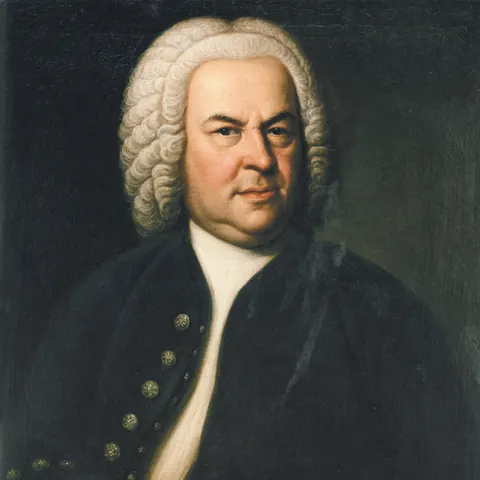 Johann Sebastian Bach IQComposer160+
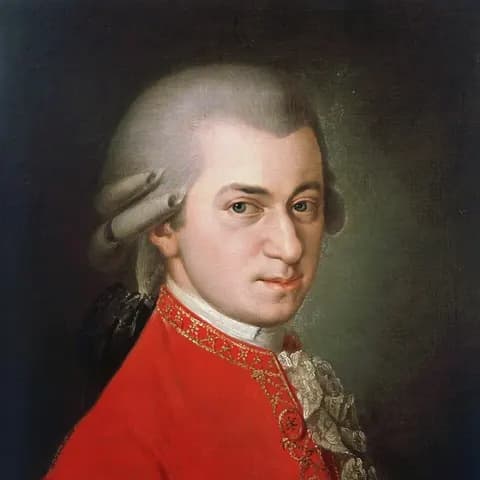 Wolfgang Amadeus Mozart IQComposer165+
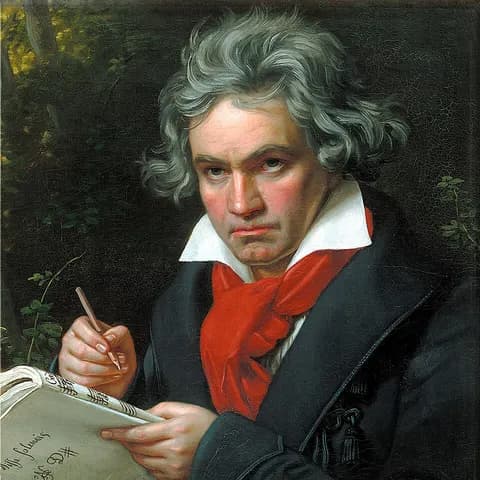 Ludwig van Beethoven IQComposer155+
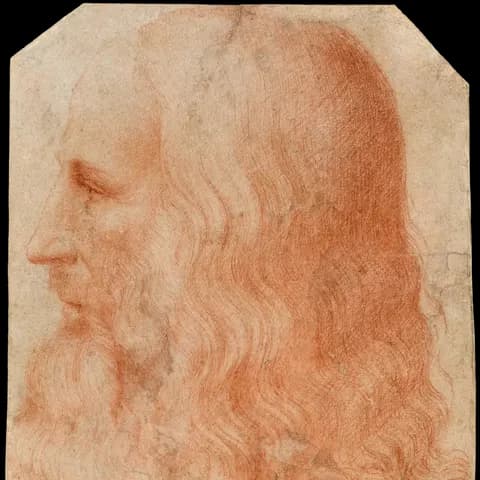 Leonardo da Vinci IQPolymath160+
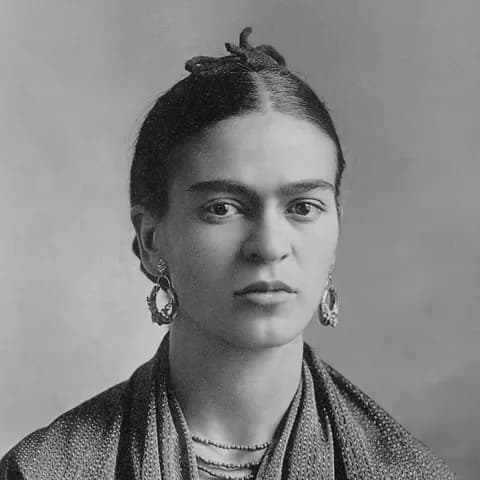 Frida Kahlo IQArtist130+
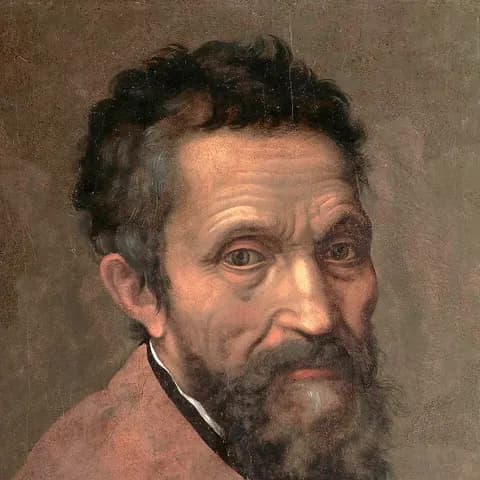 Michelangelo IQArtist & Sculptor155+
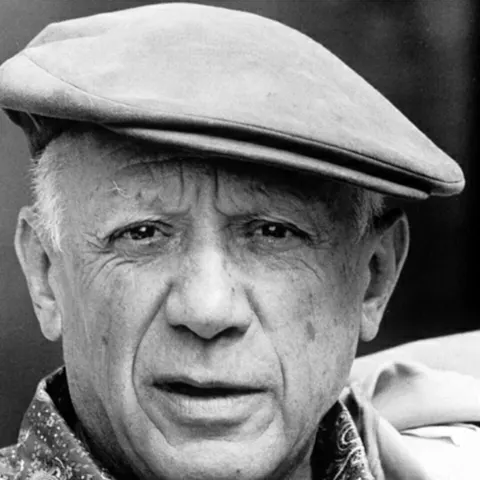 Pablo Picasso IQArtist145+
- Vincent van Gogh IQArtist135+
Keep exploring
- All famous IQs, ranked157 figures with ranges and sources
- What an IQ of 150 meansPercentile, rarity and classification
- What an IQ of 170 meansPercentile, rarity and classification
- Quick Pattern RecognitionSigns of high intelligence
- Rapid Learning SpeedSigns of high intelligence
- Einstein IQ testA short visual reasoning challenge
Handel's IQ is 150+. What's yours?
Handel's estimate comes from the historical record. Yours can come from a real test: 25 visual reasoning questions.
25 questions · about 12 minutes
Sources
- George Frideric Handel, Encyclopaedia Britannica. Biography covering his career in Germany, Italy and London, and the writing of Messiah.
- The Early Mental Traits of Three Hundred Geniuses (Cox, 1926), Stanford University Press, via Internet Archive. The original historiometric study. Cox rated 301 eminent people born 1450 to 1850 from records of their childhood and youth.
- Cox's IQ estimates of 301 eminent geniuses, IQ Comparison Site. Secondary tabulation of Cox's corrected estimates, with a version adjusted by about 22 points for the Flynn effect.
- Cox, C. M. (1926). The Early Mental Traits of Three Hundred Geniuses. Stanford University Press.
- Simonton, D. K. (2009). Genius 101. Springer.
- Cattell, R. B. (1971). Abilities: Their Structure, Growth, and Action. Houghton Mifflin.
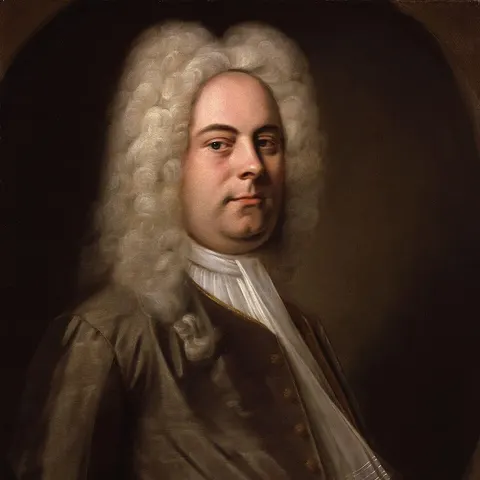
- Portrait: Attributed to Balthasar Denner · Public domain · Wikimedia Commons
Last reviewed September 2026. How we estimate historical IQ