Richard Wagner IQ
Richard Wagner's IQ is estimated at 148 to 170. Catharine Cox's 1926 study gave him a corrected 170; he never took a test. His Ring cycle took about 26 years to write and runs for around 15 hours.
Wagner's IQ is 150+. What's yours?
25 questions · about 12 minutes
Key facts
- Estimated IQ
- 150+
- Known for
- The Ring cycle and the Bayreuth Festival
- Lived
- Composer, 1813–1883
- Basis
- Cox 1926 historiometric estimate
- Confidence
- Low. Wagner died in 1883. No IQ test was ever given; the figure comes from a 1926 study that rated historical figures from biographies.
Cox's corrected estimate for Wagner was 170. The scale and structure of the Ring are the evidence, though musical genius is a specialised kind of ability.
What was Richard Wagner's IQ?
Wagner never took an IQ test. Catharine Cox's 1926 study gave him a corrected estimate of 170. Adjusted for the Flynn effect that is about 148, so LifeScore uses a range of 148 to 170, with 150+ as the marker. The Ring cycle is the main evidence.
How long did the Ring cycle take to write?
About 26 years, from the first prose sketch in 1848 to the final score in 1874. It is four operas, played over four nights, with around 15 hours of music. He wrote the text and the music himself and had a theatre built at Bayreuth to stage it, opening in 1876.
Why is Wagner a controversial figure?
His 1850 essay Judaism in Music is openly antisemitic, and his name was later adopted by the Nazi regime, though he died in 1883. Many music lovers now separate the works from the man, and others find that hard. His ideas about music were also bitterly disputed in his lifetime.
Where does the 170 figure come from?
The 170 is Catharine Cox's corrected estimate from her 1926 study of 301 eminent people born between 1450 and 1850. She rated each person from biographical records of what they could do as a child and young adult, then corrected for gaps in the record.
Cox's numbers sit on an old ratio-IQ scale. One secondary tabulation subtracts about 22 points for the Flynn effect, which puts Richard Wagner near 150.
LifeScore lists 150+, and the working range of 150 to 170 spans both figures. None of them is a test result.
How smart was Richard Wagner?
- 01
The Ring cycle
Four connected operas written over 26 years and first performed in full at Bayreuth in 1876. - 02
Tristan und Isolde
Its 1865 premiere pushed harmony to a point many see as the start of modern music. - 03
His own libretti
He wrote the words for all his mature operas, a rare skill among composers. - 04
The Bayreuth Festspielhaus
He had a theatre designed to his own ideas, with a hidden orchestra pit, and it still stages his works.
How Wagner thought
Wagner planned on a vast scale. He developed leitmotifs, short musical ideas tied to characters and objects, and wove them through hours of music so the orchestra could comment on the action. He thought of opera as a single art that combined drama, poetry and music.
The evidence behind the estimate
An estimate built from the historical record, not a recovered test score.
What supports it
- Cox's 1926 study gave Wagner a corrected estimate of 170, which falls to about 148 after a Flynn-effect adjustment.
- He wrote the words and music for the Ring cycle over about 26 years.
- He designed and opened the Bayreuth Festspielhaus in 1876.
What it cannot prove
- Musical ability is only partly captured by general IQ tests.
- His writings include open antisemitism, a reminder that high ability is not the same as good judgement.
- Cox's scale runs higher than modern deviation IQ, by roughly 22 points in one tabulation.
Wagner compared with Beethoven, Goethe, Nietzsche
| Figure | Estimate | Range |
|---|---|---|
| Richard Wagner | 150+ | 150–170 |
| Ludwig van Beethoven | 155+ | 145–165 |
| Johann Wolfgang von Goethe | 190+ | 190–210 |
| Friedrich Nietzsche | 155+ | 140–165 |
Psychological profile
Richard Wagner's IQ is represented here by a retrospective estimate of 150+, not a verified test result. Richard Wagner is best known for exceptional ambition. The useful question is what the surviving evidence shows, not whether a precise modern score can be recovered.
Grandiose, tireless and uncompromising. Wrote his own libretti, designed his own theatre and demanded a total artwork.
The dominant archetype here is The Creator. This archetype shapes decision patterns: what feels natural, what creates friction, and what blind spots tend to emerge.
Estimated IQ is 150+. This is a rough estimate based on documented accomplishments and contemporary accounts, not a literal measurement.
Key traits
Ambition
He fled Dresden in 1849 after taking part in an uprising and lived in exile for years.Musical Architecture
He was deeply in debt through much of his life and relied on patrons such as King Ludwig II of Bavaria.Self-belief
His antisemitism and his views on race are a lasting stain on his legacy.
One thing most people do not know
Friedrich Nietzsche began as a friend and champion of Wagner and later broke with him in print.
Richard Wagner: common questions
Was Richard Wagner a genius?
What personality type was Richard Wagner?
What can we learn from Richard Wagner?
More famous IQs
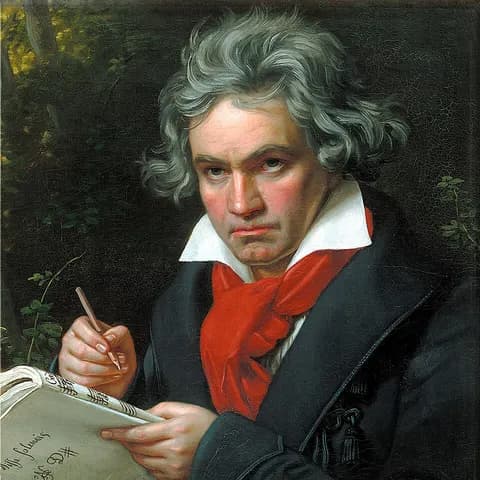 Ludwig van Beethoven IQComposer155+
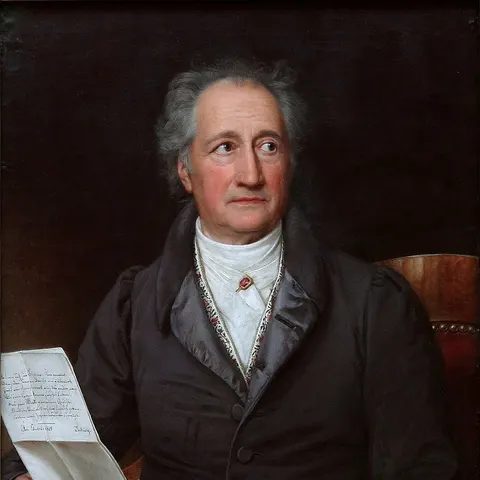 Johann Wolfgang von Goethe IQPoet, Novelist & Scientist190+
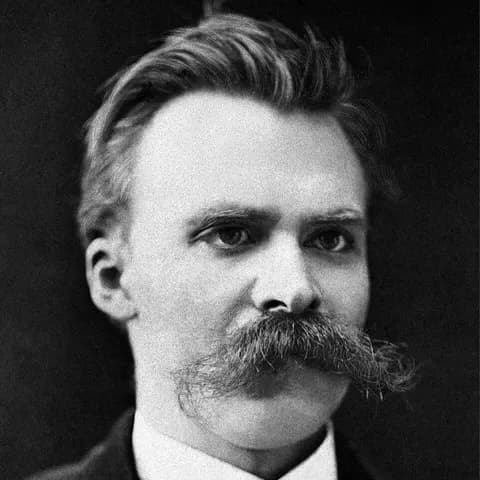 Friedrich Nietzsche IQPhilosopher155+
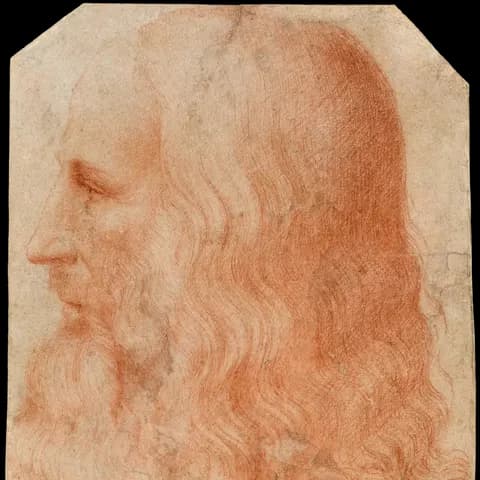 Leonardo da Vinci IQPolymath160+
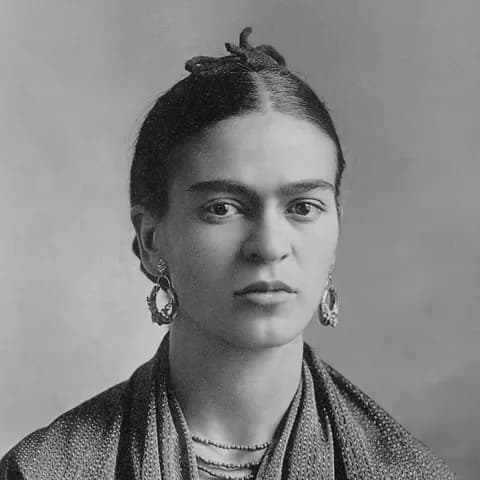 Frida Kahlo IQArtist130+
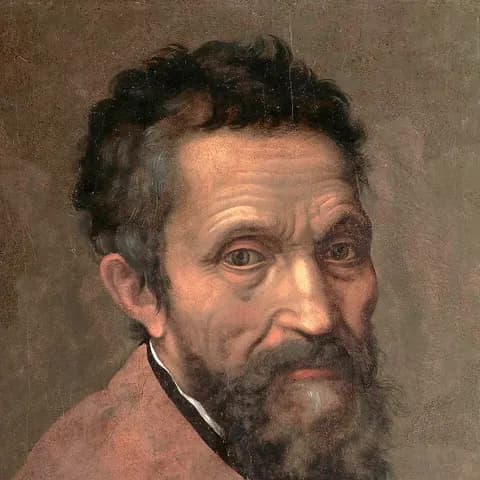 Michelangelo IQArtist & Sculptor155+
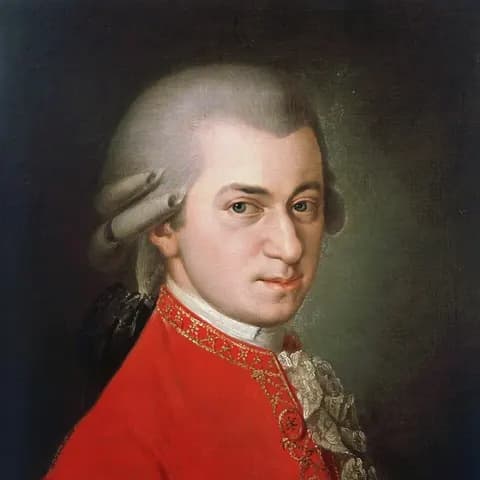 Wolfgang Amadeus Mozart IQComposer165+
 Pablo Picasso IQArtist145+
Keep exploring
- All famous IQs, ranked157 figures with ranges and sources
- What an IQ of 150 meansPercentile, rarity and classification
- What an IQ of 170 meansPercentile, rarity and classification
- Quick Pattern RecognitionSigns of high intelligence
- Rapid Learning SpeedSigns of high intelligence
- Einstein IQ testA short visual reasoning challenge
Wagner's IQ is 150+. What's yours?
Wagner's estimate comes from the historical record. Yours can come from a real test: 25 visual reasoning questions.
25 questions · about 12 minutes
Sources
- Richard Wagner, Encyclopaedia Britannica. Biography covering his operas, exile, patrons and the Bayreuth Festival.
- The Early Mental Traits of Three Hundred Geniuses (Cox, 1926), Stanford University Press, via Internet Archive. The original historiometric study. Cox rated 301 eminent people born 1450 to 1850 from records of their childhood and youth.
- Cox's IQ estimates of 301 eminent geniuses, IQ Comparison Site. Secondary tabulation of Cox's corrected estimates, with a version adjusted by about 22 points for the Flynn effect.
- Cox, C. M. (1926). The Early Mental Traits of Three Hundred Geniuses. Stanford University Press.
- Simonton, D. K. (2009). Genius 101. Springer.
- Cattell, R. B. (1971). Abilities: Their Structure, Growth, and Action. Houghton Mifflin.
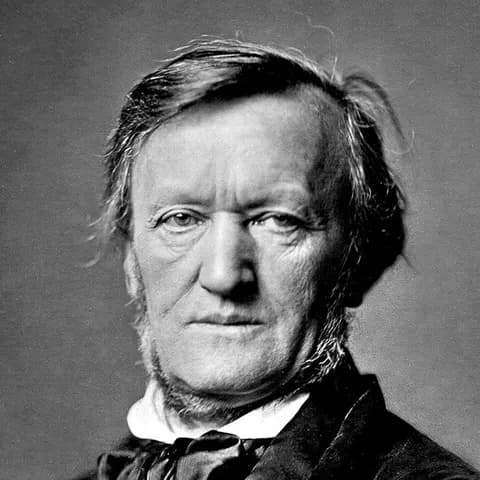
- Portrait: Franz Hanfstaengl · Public domain · Wikimedia Commons
Last reviewed September 2026. How we estimate historical IQ